Introduction to the 990-05-50-03-00 Vibration Transmitter
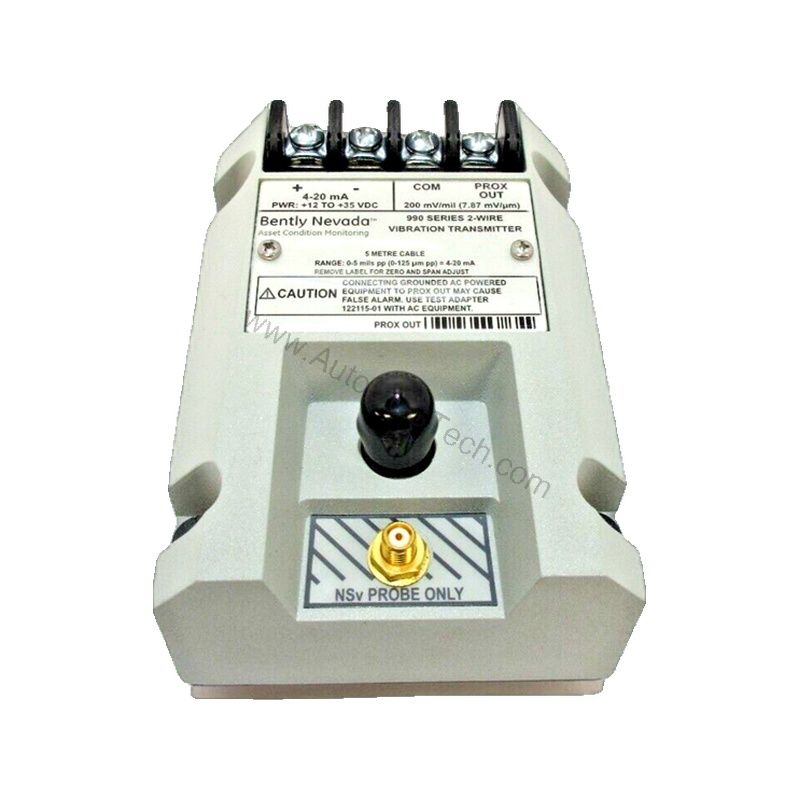
When machinery vibration threatens uptime, the 990-05-50-03-00 from Bently Nevada provides a reliable solution. This 990 Vibration Transmitter converts non-contacting probe signals into a standard 4-20 mA loop output. It is designed for continuous monitoring in industrial environments.
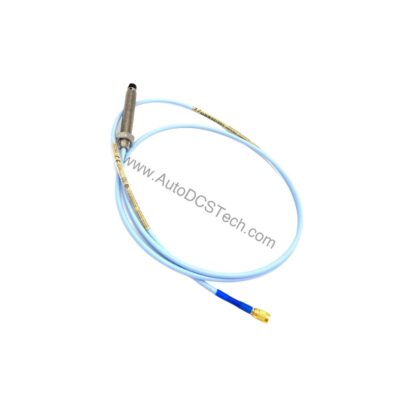
The transmitter accepts one non-contacting 3300 NSv Proximity Probe and extension cable. It operates on a +12 to +35 Vdc input, making it versatile for various power supplies. With a full-scale range of 0-5 mils pp (0-125 μm pp), it suits applications requiring precise displacement measurement.
Key Features and Technical Specifications
The 990-05-50-03-00 offers several features that enhance its performance and reliability:
- Input: Accepts 1 non-contacting 3300 NSv Proximity Probe and extension cable.
- Power: Requires +12 to +35 Vdc input at the transmitter terminal.
- Signal Output: 4 to 20 mAdc over specified full-scale range in 2-wire configuration.
- Loop Accuracy: Within ±1.5% over specified full-scale range, rated from TEST signal input to voltage across a 250 Ω loop resistance.
- Maximum Loop Resistance: 1,000 Ω including cable at 35 Vdc.
- Current Limiting: 23 mA typical.
- Frequency Response: 5 Hz to 6,000 Hz +0, 3 dB.
- Minimum Target Size: 9.5 mm (0.375 in) diameter.
- Probe Gap: Must be gapped between 0.5 and 1.75 mm (20 and 55 mils) from target.
- NOT OK/Signal Defeat: Output goes to less than 3.6 mA within 100 µs after a Not OK condition; restored within 2-3 seconds after removal.
These specs ensure accurate and reliable vibration monitoring. The transmitter's current limiting protects the loop from overcurrent conditions.
Applications and Use Cases
In rotating machinery, excessive vibration indicates potential faults. The 990-05-50-03-00 is ideal for monitoring pumps, motors, fans, and compressors. Its 4-20 mA output integrates easily with PLCs and DCS systems.
For example, in a petrochemical plant, this transmitter can monitor a critical pump's vibration. Early detection of increased vibration allows maintenance teams to address issues before failure. This reduces downtime and repair costs.
Moreover, the transmitter's frequency response covers typical machine vibration frequencies. This makes it suitable for both low-speed and high-speed equipment.
Installation and Setup
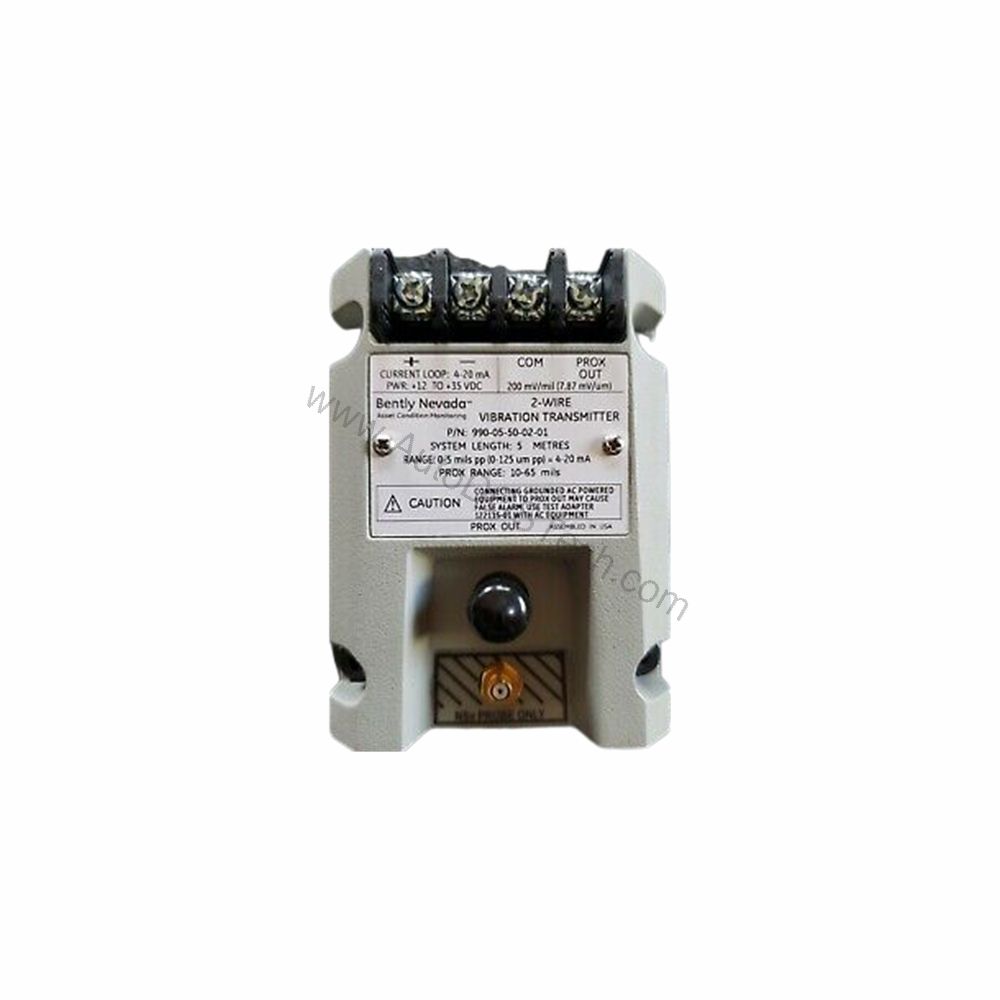
Proper installation ensures accurate readings. The 990-05-50-03-00 mounts using DIN clips and screws (Mounting Option 03). The system length option is 5.0 metres (16.4 feet), allowing flexible probe placement.
During setup, ensure the probe gap is between 0.5 and 1.75 mm (20 and 55 mils). This gap is critical for full-scale range. Connect the probe and extension cable to the transmitter input. Then wire the power supply (+12 to +35 Vdc) and the 4-20 mA loop.
Non-interacting external zero and span adjustments simplify calibration. Always follow the manufacturer's manual for detailed wiring and configuration.
Maintenance and Reliability
Regular inspection of the transmitter and probe is essential. Check the probe gap periodically, as thermal expansion or mechanical shifts can alter it. Ensure the cable connections are secure and free from damage.
The transmitter's design includes current limiting and NOT OK signal defeat. These features enhance reliability by preventing false readings and protecting the loop. In hazardous environments (NonHazardous, Zone 2 or Div 2), the power supply is rated at 28 V.
For long-term reliability, follow the manufacturer's maintenance guidelines. This includes verifying the loop resistance and accuracy periodically.
Troubleshooting Common Issues
If the output is not within the expected 4-20 mA range, check the probe gap and target size. The minimum target size is 9.5 mm (0.375 in) diameter. Also verify the power supply voltage is within +12 to +35 Vdc.
If the signal goes below 3.6 mA, a Not OK condition may be present. This could be due to a faulty probe or cable. The signal should restore within 2-3 seconds after the condition is removed.
For persistent issues, consult the Bently Nevada documentation or contact AutoDCSTech for support.
Compatibility and Integration
The 990-05-50-03-00 is designed for use with Bently Nevada 3300 NSv proximity probes. It provides a standard 4-20 mA output, compatible with most industrial control systems.
The transmitter's 2-wire configuration simplifies integration. It can be powered by a 24 Vdc supply, common in industrial settings. The maximum loop resistance of 1,000 Ω allows for long cable runs.
For hazardous area installations, the transmitter is suitable for NonHazardous, Zone 2 or Div 2 locations. Ensure the power supply is rated at 28 V for these environments.
Product Support and Availability
The 990-05-50-03-00 is available from AutoDCSTech. Please verify current lifecycle status and availability before ordering. Contact our team for technical support and pricing.