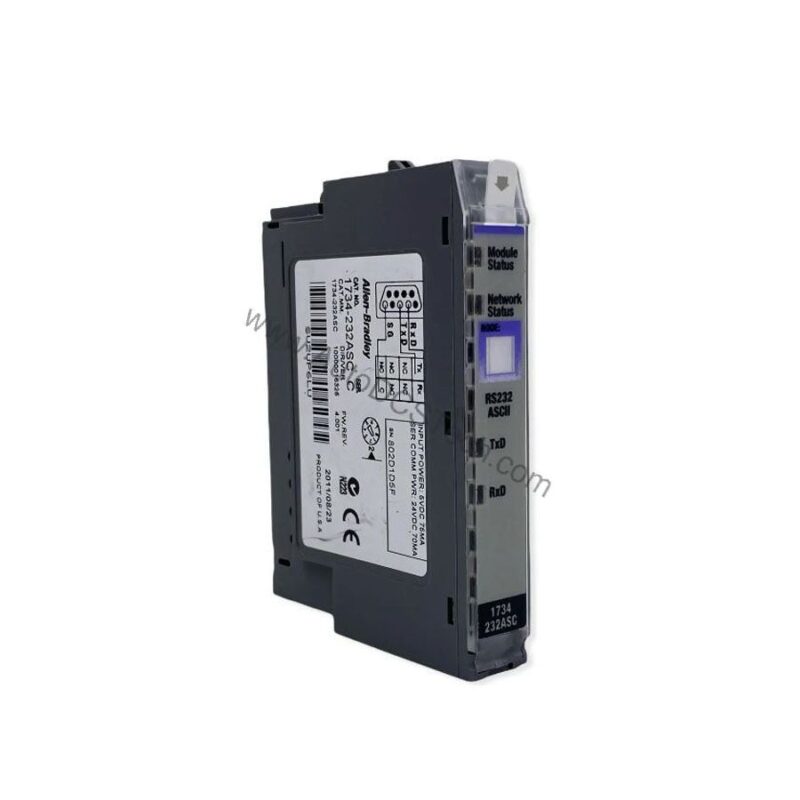
Product Overview
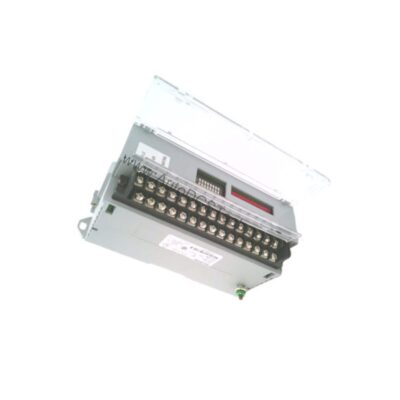
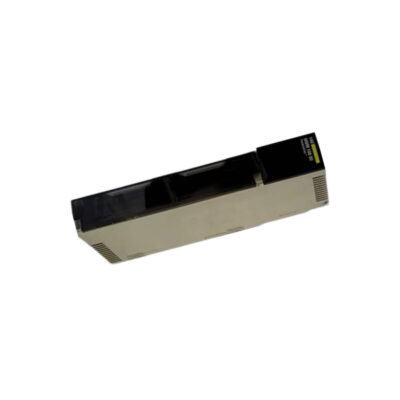
The Allen-Bradley 1734-485ASC is a serial interface module from Rockwell Automation's POINT I/O 1734 series. It is designed to connect ASCII devices (RS-232, RS-485, RS-422) to a DeviceNet network, enabling seamless data transmission. Its compact form factor fits directly onto a DIN rail, saving panel space while delivering robust performance.
Technical Specifications Breakdown
Key parameters for the 1734-485ASC are listed below for quick reference:
| Feature | Specification |
|---|---|
| Manufacturer | Rockwell Automation |
| Brand | Allen-Bradley |
| Part Number | 1734-485ASC |
| Series | POINT I/O |
| Module Type | Serial Interface Module |
| Key Switch Position | 2 |
| Voltage Range | 10-28.8 volts DC |
| Supply Voltage | 24 volts DC nominal |
| Supply Current | 15mA at 24 volts DC |
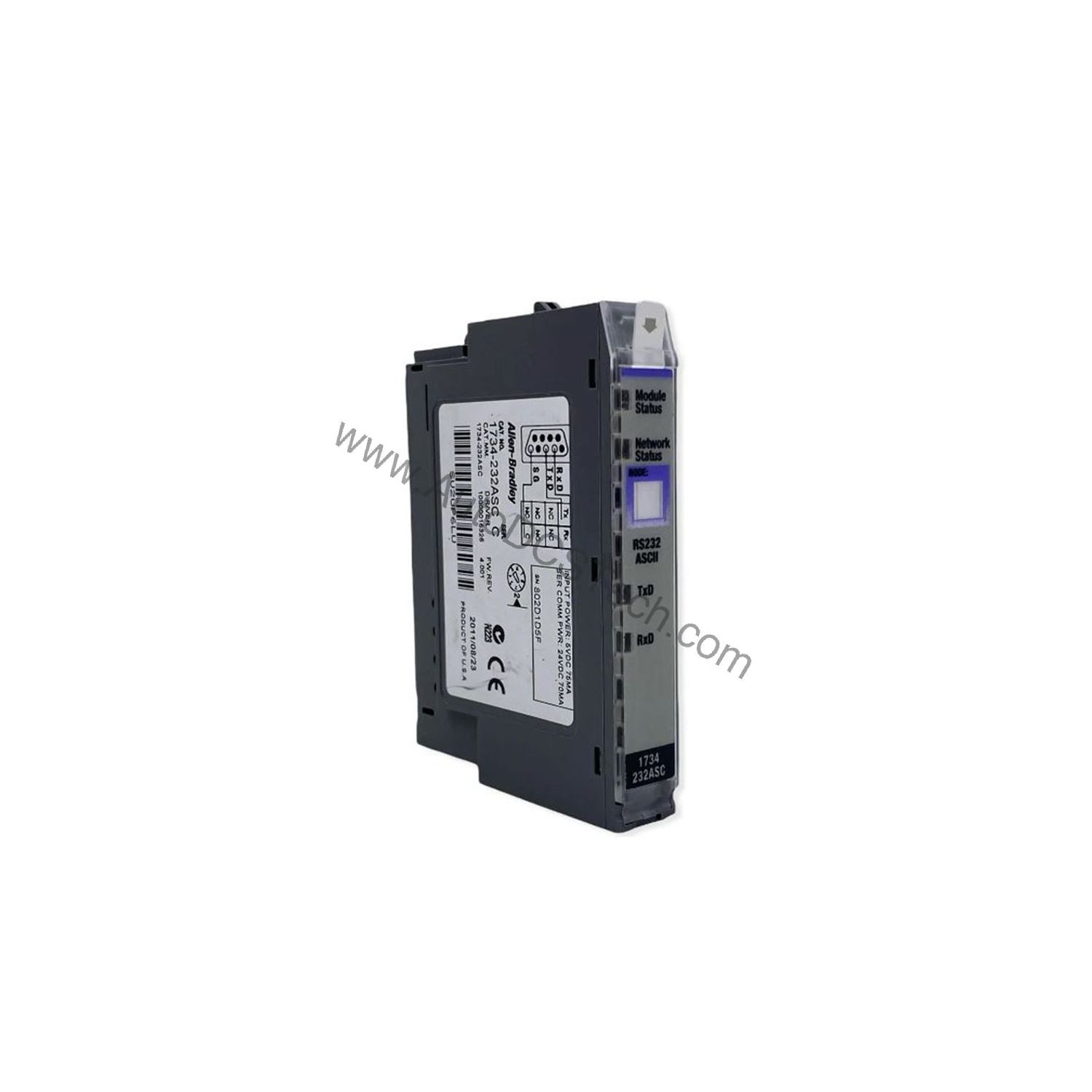
Industry Applications
1. Barcode Scanning and Labeling
In logistics and packaging lines, the 1734-485ASC connects barcode scanners to a central control system. The module transmits scanned data as ASCII strings over DeviceNet, enabling real-time tracking and sortation. Its RS-422 4-wire capability ensures reliable communication over longer distances common in warehouse environments.
2. Weigh Scale Integration
For batch processing and filling applications, serial weigh scales often output weight data in ASCII format. This module captures that data and forwards it to the PLC, allowing precise control of ingredient addition. The 20-byte default buffer size handles typical weight strings, with configurable larger buffers for extended data.
3. Printer and Label Applicator Control
Many industrial label printers use RS-232 or RS-485 serial interfaces. The 1734-485ASC acts as the communication bridge, sending print commands and receiving status responses. This setup is common in pharmaceutical and food packaging where traceability is critical.
Installation and Setup Guidance
Mount the module on a DIN rail within a POINT I/O system. Set the key switch to position 2 before inserting it into the base. Use shielded twisted-pair cables for RS-485 or RS-422 connections to minimize electrical noise. Ground the shield at only one end—preferably at the DIN rail chassis—to prevent ground loops. Do not connect the shield to the removable terminal block's common side, as this module does not support a chassis ground connection on its terminal block.
Wire the serial device to the appropriate pins on the 1734-TB terminal block, matching the module case markings. Power the module with 24V DC nominal (10-28.8V DC range). The module draws 15mA at 24V DC. Configure the ASCII buffer sizes (default 20 bytes transmit and 20 bytes receive) via the DeviceNet master configuration file. Adjust the I/O message size if your application requires longer data strings.
Maintenance and Reliability
Periodically inspect cable connections and shield grounding to ensure signal integrity. Verify that the DIN rail ground connection remains secure. The module's solid-state design requires no routine internal maintenance. Keep the environment within the specified voltage range (10-28.8V DC) to avoid operational issues. Clean the module exterior with a dry cloth; do not use solvents.
The Evolution of Serial Communication in Industrial Automation
In the early days of factory automation, proprietary networks and parallel wiring dominated, limiting flexibility and scalability. The shift to open, serial-based communication protocols like RS-485 and RS-422 revolutionized how devices talk to each other, enabling longer distances and multi-drop configurations. The Allen-Bradley 1734-485ASC serial interface module embodies this evolution, providing a compact, reliable bridge between modern DeviceNet controllers and legacy or specialized ASCII devices.
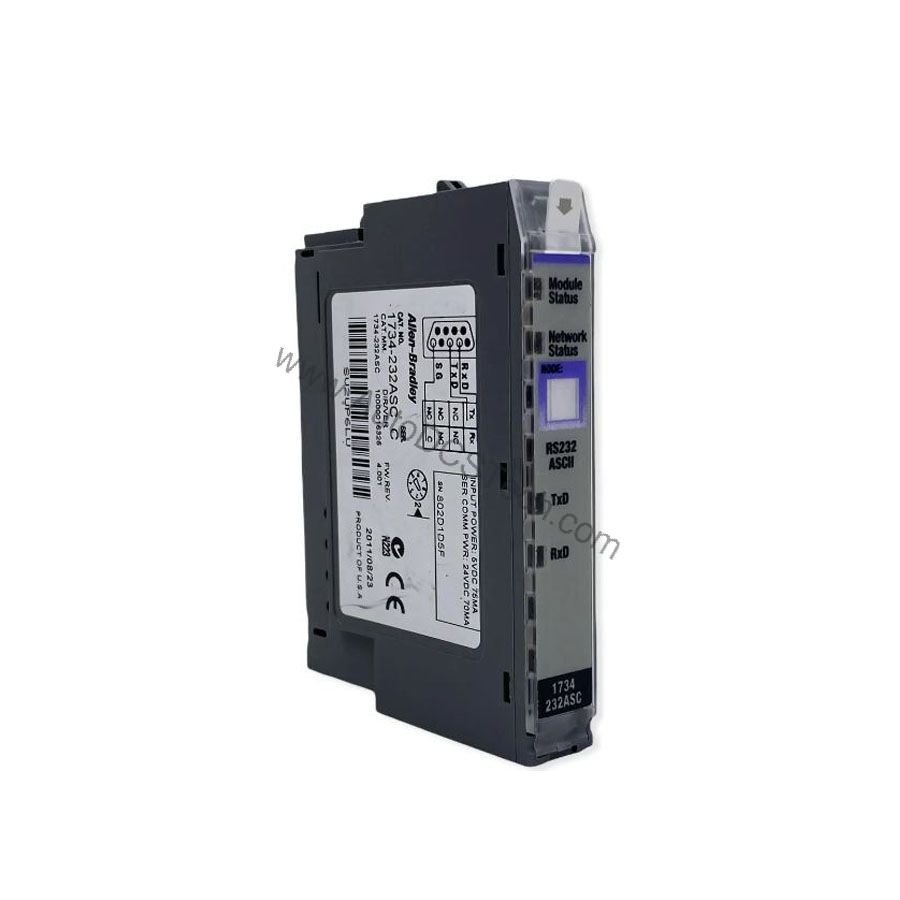
Compatibility and Integration
The 1734-485ASC integrates with Allen-Bradley POINT I/O 1734 series bases and DeviceNet scanners. It communicates with ASCII devices using RS-485 2-wire or RS-422 4-wire networks. The module is compatible with Rockwell Automation's RSLogix 5000 and RSNetWorx for DeviceNet configuration. Ensure your DeviceNet master supports ASCII string data types.
Selection Guide and Purchasing Advice
When selecting a serial interface module for your POINT I/O system, consider the network type (RS-485 vs. RS-422) and the required buffer size. The 1734-485ASC is an choice for general-purpose ASCII device connectivity. For applications needing higher data throughput or additional serial ports, evaluate other modules in the series. AutoDCSTech stocks this module and can advise on compatibility with your existing system.
Troubleshooting and Common Issues
- No communication: Verify the key switch is in position 2 and the module is seated properly. Check that the DeviceNet master is scanning the module's node.
- Data errors: Inspect cable shielding and grounding. Ensure only one end of the shield is grounded. Confirm baud rate and parity settings match between the module and serial device.
- Buffer overflow: If data strings exceed 20 bytes, increase the transmit/receive buffer sizes in the configuration file. Verify the End-of-String Terminator is set correctly.
- Power issues: Confirm supply voltage is within 10-28.8V DC. Measure current draw; if significantly above 15mA, check for short circuits in wiring.
Please verify current lifecycle status and availability with AutoDCSTech before ordering.
Availability & Condition at AutoDCSTech
| Part Number | 1734-485ASC |
|---|---|
| Availability | In Stock |
| Condition | New |
| Warranty | One Year |
| Origin | US |