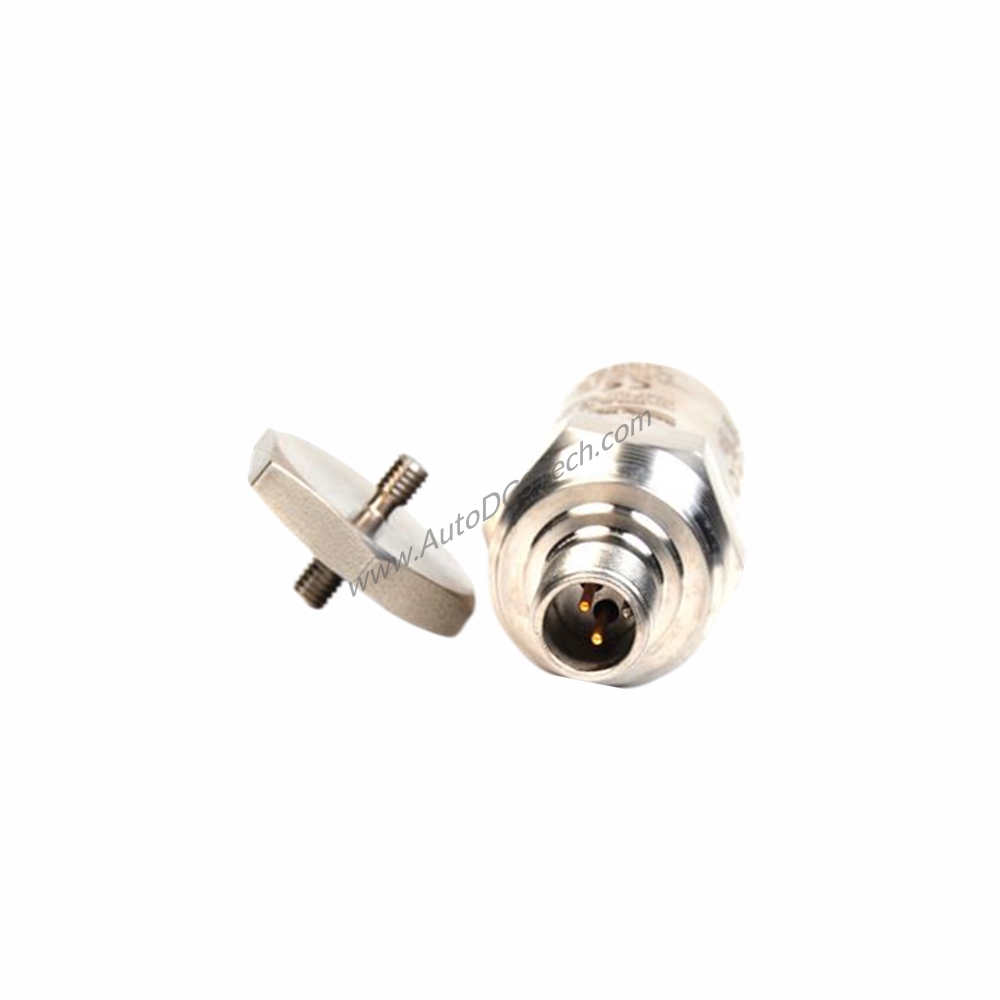
Product Overview
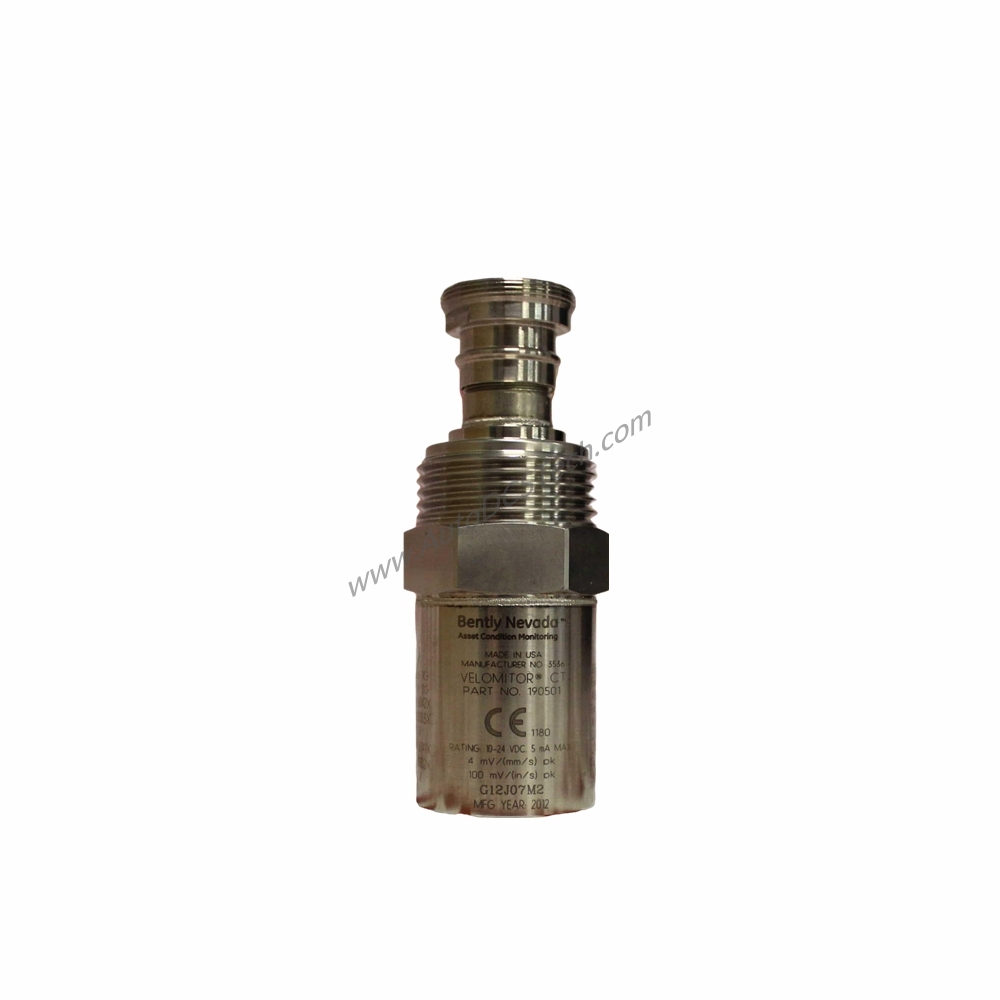
When unplanned downtime strikes rotating machinery, the Bently Nevada 190501-12-00-01 Velomitor CT Velocity Transducer delivers the precise vibration data needed for early fault detection. This rugged sensor converts mechanical velocity into a proportional electrical signal, enabling continuous condition monitoring that reduces maintenance costs and extends equipment life.
Technical Specifications Breakdown
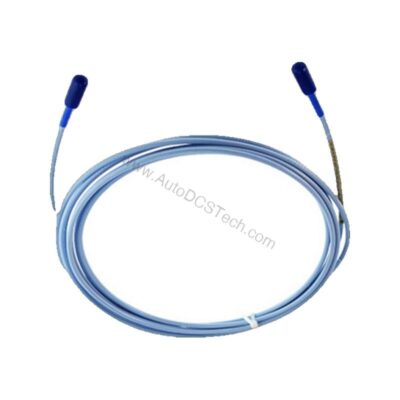
The 190501-12-00-01 offers a sensitivity of 3.94 mV/mm/s (100 mV/in/s) ±5%, ensuring accurate measurement across a wide frequency range. Its frequency response spans 3.0 Hz to 900 Hz (180 to 54,000 cpm) ±1.0 dB and extends to 1.5 Hz to 1.0 kHz (90 to 60,000 cpm) ±3.0 dB, covering most common machinery vibration frequencies. The output bias voltage sits at 10.1 Vdc ± 1.0 Vdc (Pin A referenced to Pin B), with a dynamic output impedance under 400 Ω typical. These specs translate to reliable signal integrity even over long cable runs up to 305 metres (1,000 ft.) using part number 02173006 cable, reducing installation costs by allowing flexible sensor placement.
Industry Applications
In petrochemical plants, the 190501-12-00-01 monitors pumps and compressors for bearing wear and imbalance. Its ATEX/IECEx/CSA (Class I, Zone 0/1) intrinsic safety certification (Ex ia IIC T4) allows direct installation in hazardous areas without expensive isolation barriers, saving thousands per installation point. For power generation turbines, the transducer's transverse response of less than 5% of axial sensitivity minimizes cross-axis errors, improving diagnostic accuracy and reducing false alarms that lead to unnecessary inspections.
Installation & Setup Guidance
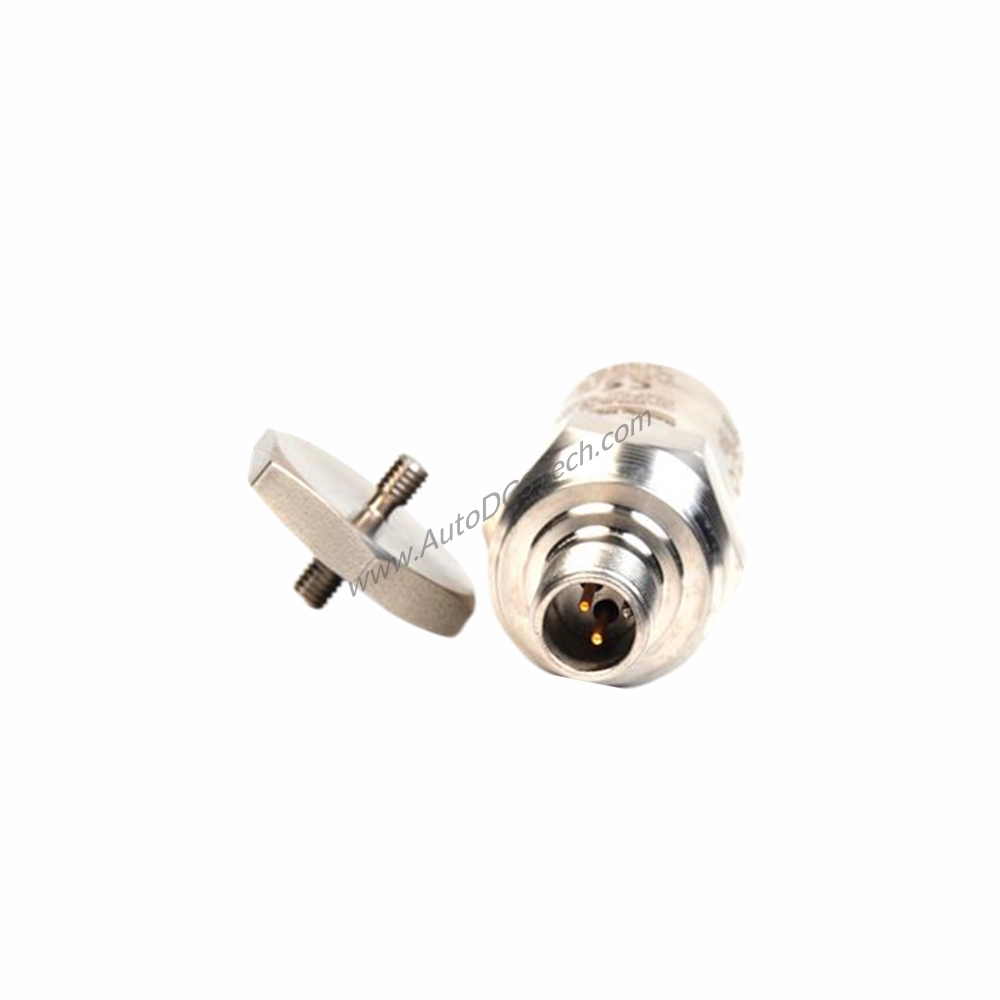
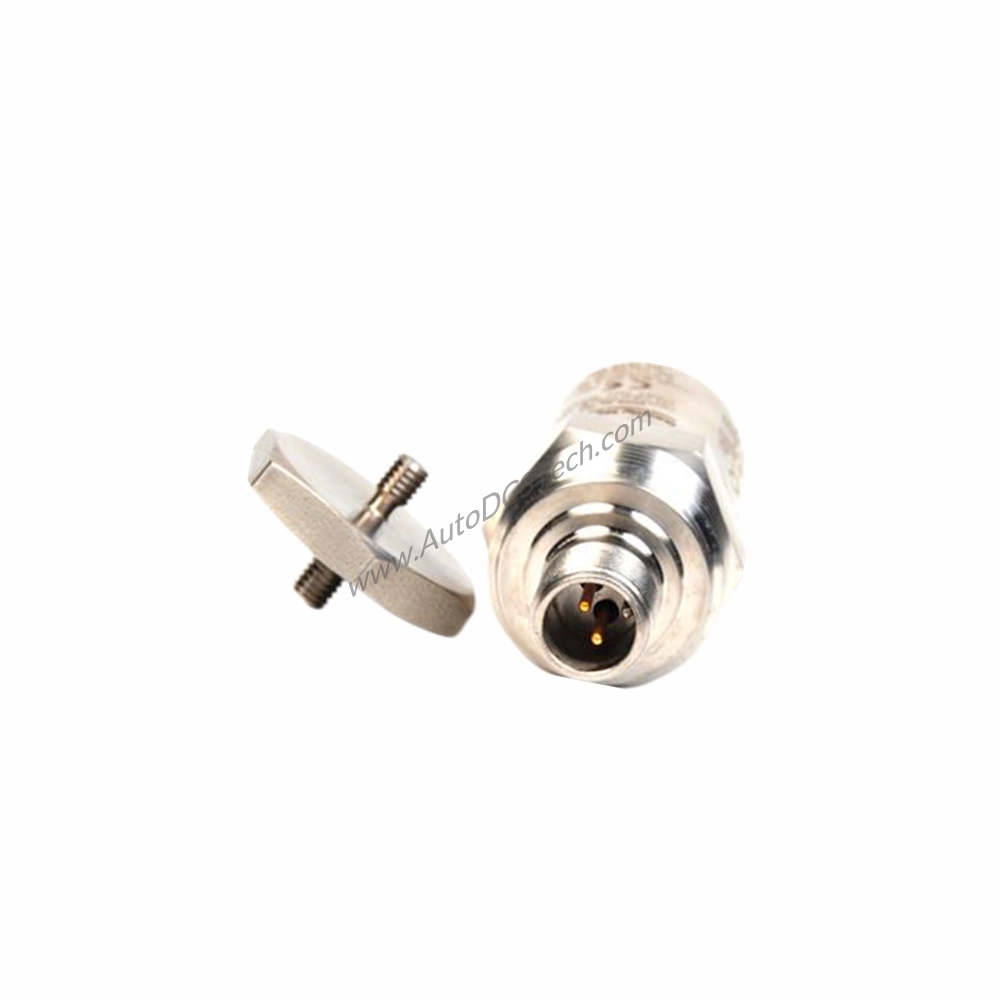
Mount the transducer using the included plate stud 3/8-in 24 to M8x1 hardware option. Apply a mounting torque of 4.5 N-m ± 0.6 N-m (40 in-lbf ± 5 in-lbf) to the 316L stainless steel case for consistent coupling. The 2-pin MIL-C-5015 top connector simplifies wiring, while polarity marking (Pin A goes positive with respect to Pin B when velocity is from base to top) ensures correct orientation. Any mounting angle is acceptable, but ensure the mounting surface is clean and flat (33 mm diameter) to avoid signal degradation.
Maintenance & Reliability
The 190501-12-00-01 requires minimal maintenance due to its robust 316L stainless steel construction and internal electronics isolated from the case. Operating temperature range of -40°C to +85°C (-40°F to +185°F) and 100% condensing humidity tolerance ensure reliable performance in harsh environments. Periodic visual inspection of the cable and connector for damage is recommended. With a shock limit of 5000 g pk, this transducer withstands severe transient events, reducing replacement costs over the equipment lifecycle.
Selection Guide & Purchasing Advice
Before ordering, verify that your application requires the Agency Approval Option 01 (CSA/NRTL/C, ATEX/IECEx/CSA for Class I, Division 1 and Zone 0/1). The 190501-12-00-01 includes the plate stud mounting hardware and MIL-C-5015 connection interface. For replacement or new installations, confirm cable compatibility with part number 02173006 up to 305 metres. AutoDCSTech stocks this model with fast shipping and expert support to help you select the right configuration for your machinery protection system.
Availability & Condition at AutoDCSTech
| Part Number | 190501-12-00-01 |
|---|---|
| Availability | In Stock |
| Condition | New |
| Warranty | One Year |
| Origin | US |