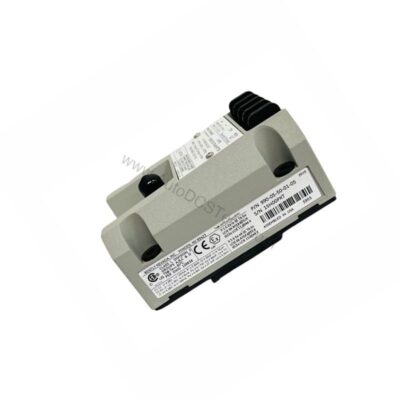
990-04-50-03-01 Vibration Transmitter Overview
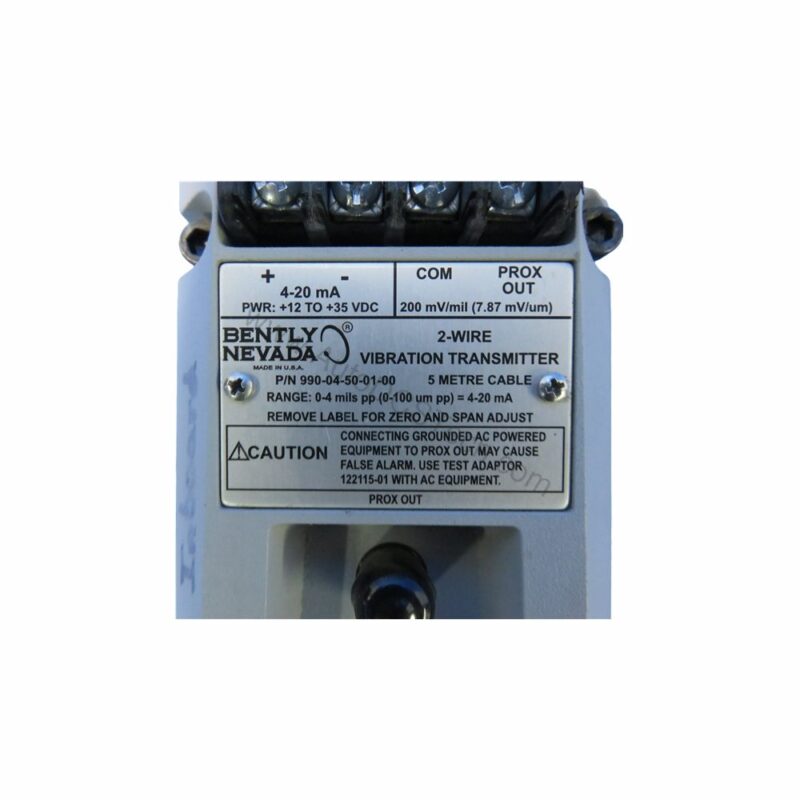
When machine vibration threatens uptime, the 990-04-50-03-01 from Bently Nevada provides a direct, loop-powered solution. This 990 Series transmitter accepts input from a single non-contacting 3300 NSv proximity probe and extension cable, converting dynamic shaft motion into a standard 4-20 mA signal. With a full-scale range of 0-4 mils pp (0-100 μm pp), it suits applications requiring precise vibration monitoring in hazardous areas.
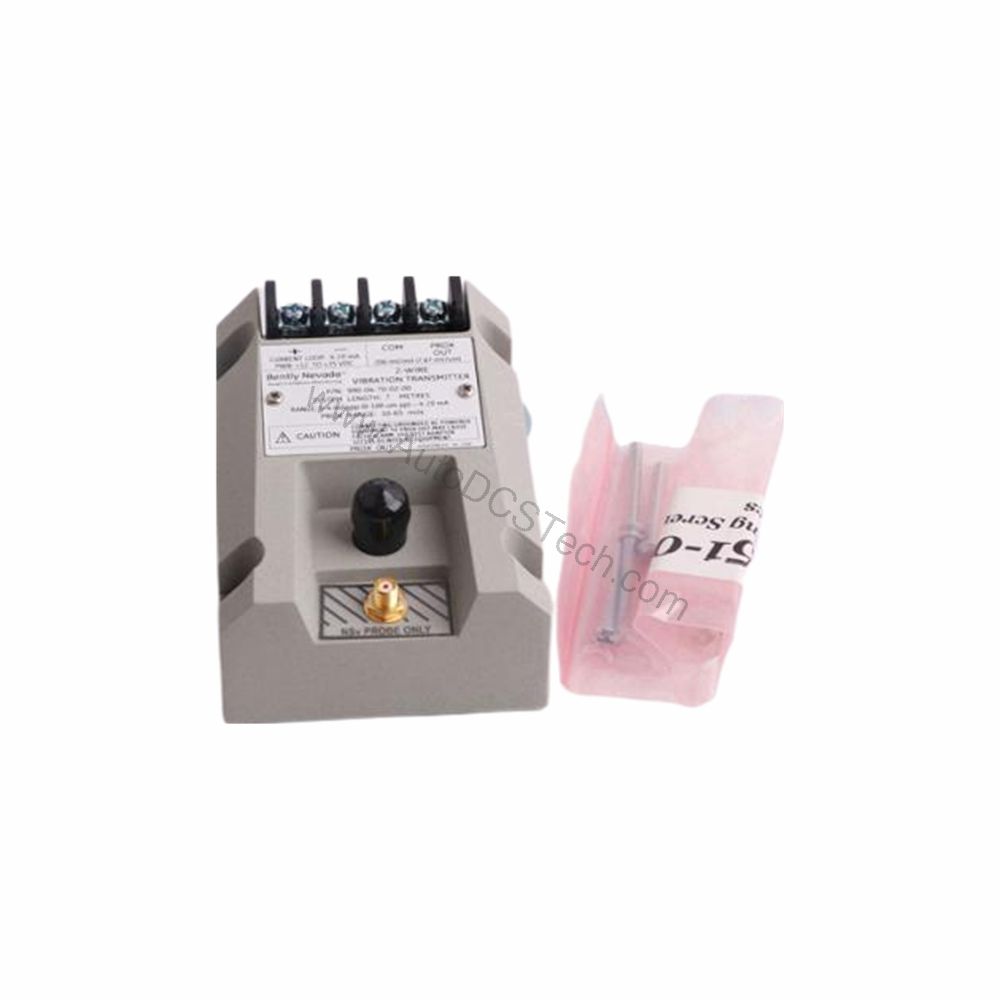
Engineered for reliability, the transmitter operates from a +12 to +35 Vdc supply and delivers a current-limited output. Its compact design and DIN clip mounting simplify installation in existing cabinets. For engineers seeking a straightforward vibration-to-analog interface, this unit reduces complexity while maintaining measurement integrity.
Key Features and Technical Specifications
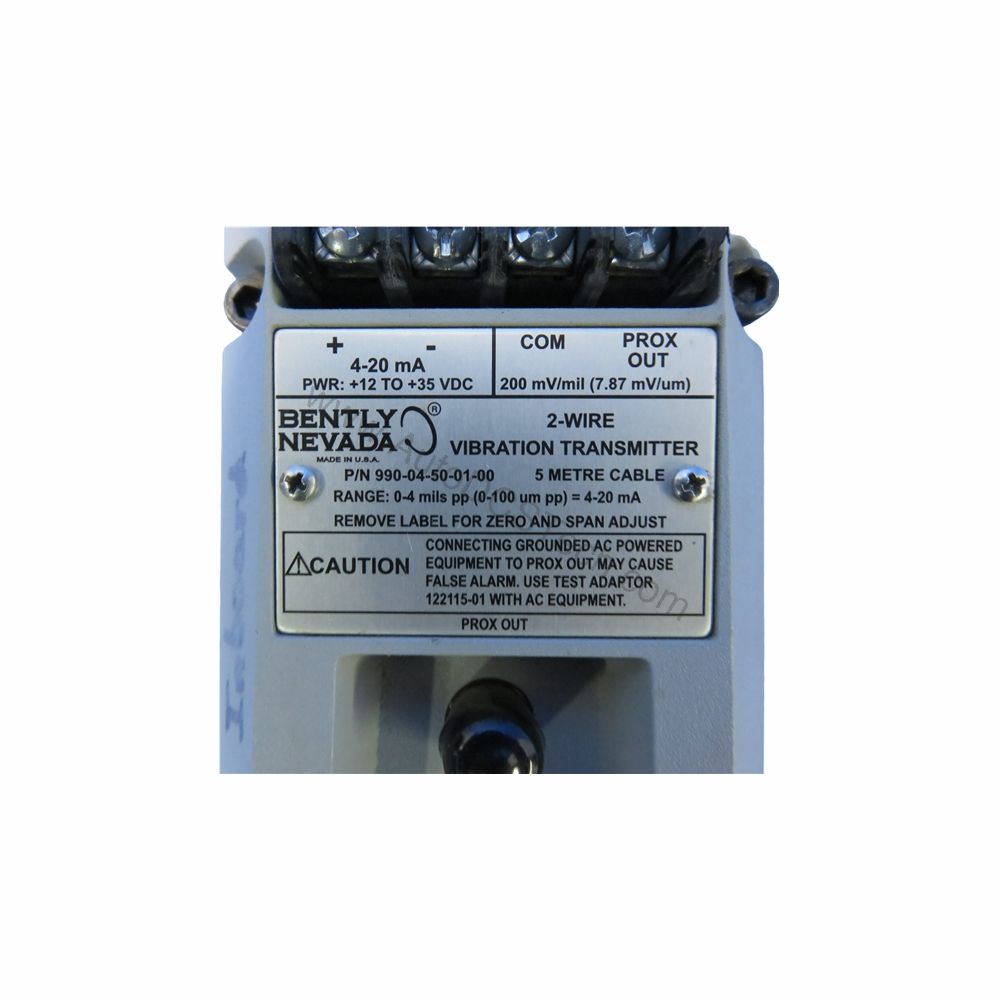
- Full-scale range: 0-4 mils pp (0-100 μm pp) – matches common shaft vibration limits.
- Input: accepts one 3300 NSv proximity probe and extension cable.
- Power: +12 to +35 Vdc at the transmitter terminal.
- Output: 4-20 mA dc over the specified full-scale range in a 2-wire configuration.
- Accuracy: within ±1.5% over full-scale range (from TEST signal to voltage across 250 Ω loop).
- Maximum loop resistance: 1,000 Ω including cable at 35 Vdc.
- Current limiting: 23 mA typical.
- Frequency response: 5 Hz to 6,000 Hz +0, -3 dB.
- Minimum target size: 9.5 mm (0.375 in) diameter.
- Leadwire length: maximum 3 meters (10 feet) for Proximitor Sensor Output (BNC connector).
- Agency approval: CSA Division 2 (option 01).
- Mounting: DIN clips and screws (option 03).
- System length: 5.0 meters (16.4 feet) cable (option 50).
One distinctive feature is the Not OK/signal defeat function. When a Not OK condition occurs, the output drops below 3.6 mA within 100 µs, and it restores within 2-3 seconds after the condition clears. This fast response helps downstream systems react quickly to probe faults.
Comparison with Similar Vibration Transmitters
Compared to other loop-powered vibration transmitters, the 990-04-50-03-01 offers a specific combination of features:
- Versus 4-20 mA loop-powered units without Not OK: This model provides immediate fault indication, improving diagnostic capability.
- Versus transmitters with higher full-scale ranges: The 0-4 mils range is tailored for low-amplitude machinery, offering better resolution in that band.
- Versus units without CSA Division 2: This certification allows installation in hazardous locations, expanding application scope.
- Versus units with longer cable lengths: The 5.0-meter system length is adequate for many local installations, reducing signal degradation.
These differentiators make the 990-04-50-03-01 a strong candidate for retrofits or new installations where reliability and compliance matter.
Applications and Use Cases
The 990-04-50-03-01 is suitable for monitoring shaft vibration in rotating machinery such as pumps, motors, fans, and compressors. Its 4-20 mA output integrates easily with PLCs, DCSs, and standalone monitors. In petrochemical plants or other hazardous areas, the CSA Division 2 approval ensures safe operation. For example, a plant engineer can install this transmitter on a cooling tower fan to detect imbalance before it causes bearing damage. The fast Not OK response also supports predictive maintenance strategies, reducing unplanned downtime.
Installation and Setup
Mounting the 990-04-50-03-01 is straightforward using the DIN clips and screws. Ensure the probe is gapped between 0.5 and 1.75 mm (20 and 55 mils) from the target to achieve full-scale range. Connect the 3300 NSv probe and extension cable to the transmitter input. Wire the loop to a +12 to +35 Vdc supply and a 4-20 mA receiver. Verify that the total loop resistance does not exceed 1,000 Ω at 35 Vdc. After power-up, adjust zero and span using the non-interacting external adjustments. For hazardous area installations, follow local codes and the unit's CSA Division 2 rating.
Maintenance and Reliability
Routine inspection of the probe gap and cable connections helps maintain measurement accuracy. Because the transmitter is loop-powered, it has few active components, contributing to long service life. The current-limiting feature protects the loop from overcurrent conditions. Periodically verify the Not OK function by simulating a fault, ensuring the output drops below 3.6 mA. Keep the unit clean and free from excessive vibration or temperature extremes, as per the manufacturer's manual. With proper care, this transmitter provides years of dependable service.
Troubleshooting Common Issues
If the output remains at 4 mA regardless of vibration, check the probe gap and cable continuity. A reading above 20 mA may indicate a shorted probe or incorrect wiring. If the Not OK signal does not trigger, inspect the probe's internal electronics. For loop resistance issues, measure the total resistance and ensure it stays below 1,000 Ω. Always refer to the Bently Nevada manual for detailed diagnostics. If problems persist, contact AutoDCSTech for support.
Product Support and Availability
The 990-04-50-03-01 is available through AutoDCSTech, an industrial automation parts supplier. In stock and ready to ship, this transmitter can be ordered with confidence. For technical questions or lifecycle status, contact AutoDCSTech directly. Please verify current availability before ordering.