Case Study: Solving Vibration Monitoring in Hazardous Areas
In a petrochemical plant, a critical centrifugal compressor began showing erratic vibration readings. The existing monitoring system could not provide a stable 4-20 mA signal for the DCS, causing frequent false trips. The Bently Nevada 990-05-50-02-05 vibration transmitter solved this by converting the proximity probe signal into a precise loop-powered output, even in the hazardous Zone 2 area where the compressor was located.
What Is the 990-05-50-02-05?
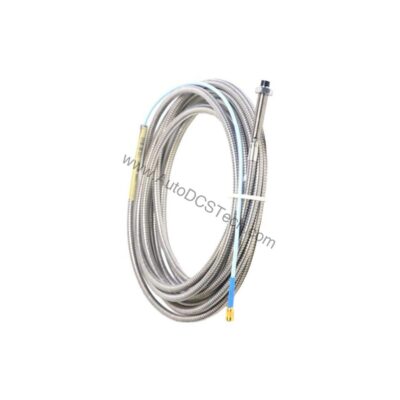
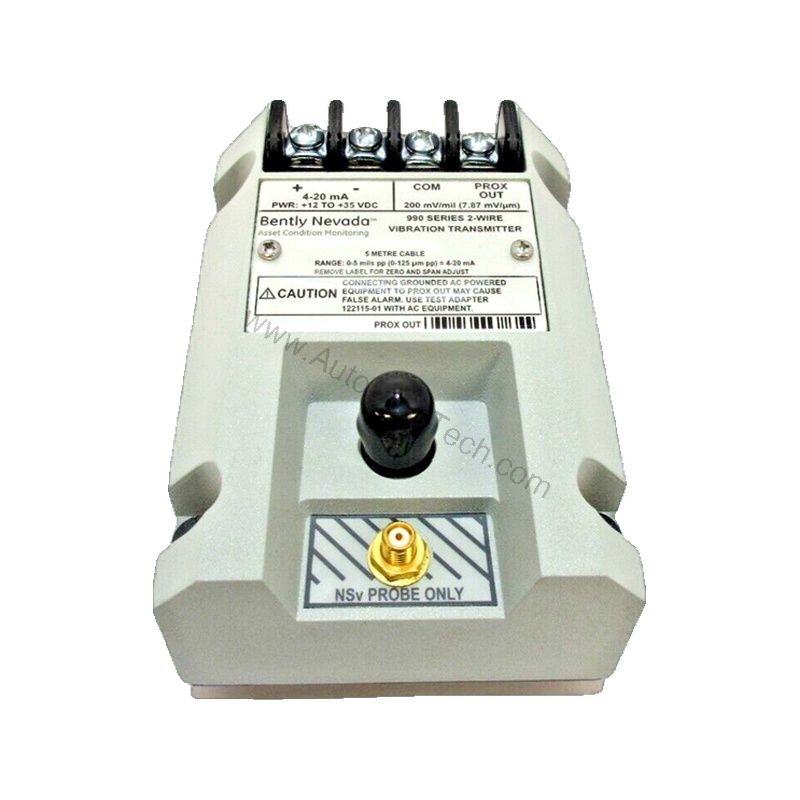
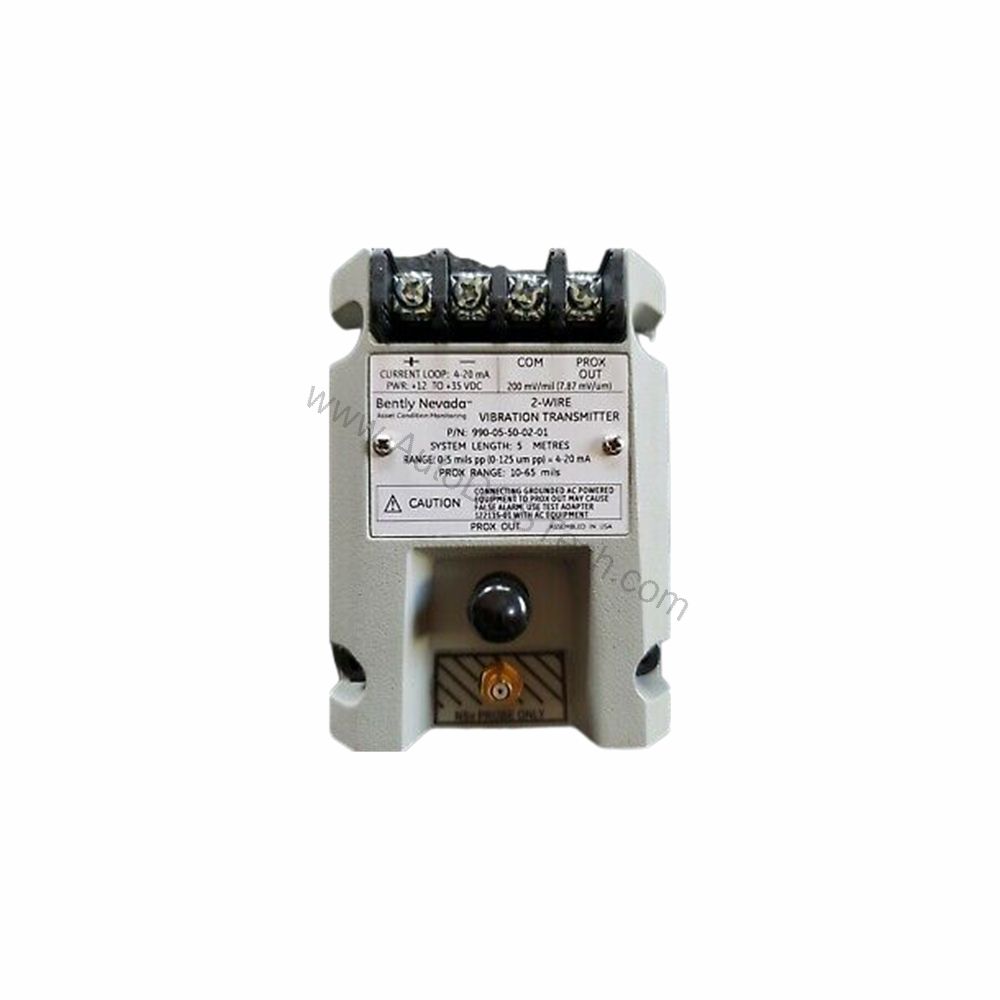
The 990-05-50-02-05 is a 990 Vibration Transmitter manufactured by Bently Nevada. It accepts one non-contacting 3300 NSv Proximity Probe and extension cable, making it ideal for monitoring shaft vibration on rotating machinery. This transmitter is designed for use in non-hazardous, Zone 2, or Division 2 hazardous area locations, with agency approvals including CSA Division 2, ATEX Zone 0, ATEX Zone 2, and ABS maritime approval.
Key Features and Technical Specifications
- Input: Accepts 1 non-contacting 3300 NSv Proximity Probe and extension cable.
- Power: Requires +12 to +35 Vdc input at the transmitter terminal.
- Output: 4 to 20 mAdc over specified full-scale range in 2-wire configuration.
- Accuracy: Within ±1.5% over specified full-scale range, measured from TEST signal input to voltage across a 250 Ω loop resistance.
- Probe Gap: Must be gapped between 0.5 and 1.75 mm (20 and 55 mils) from target to ensure full-scale range.
- Maximum Loop Resistance: 1,000 Ω including cable at 35 Vdc.
- Current Limiting: 23 mA typical.
- Zero and Span: Non-interacting external adjustments.
- Not OK/Signal Defeat: Signal output goes to less than 3.6 mA within 100 µs after a Not OK condition occurs; restored within 2-3 seconds after removal.
- Frequency Response: 5 Hz to 6,000 Hz +0, 3 dB.
- Minimum Target Size: 9.5 mm (0.375 in) diameter.
- Leadwire Length: Maximum for Proximitor Sensor Output (BNC connector) is 3 meters (10 feet).
- Full-scale Option: 05 – 0-5 mils pp (0-125 μm pp).
- System Length Option: 50 – 5.0 meters (16.4 feet).
- Mounting Option: 02 – Bulkhead screws.
- Weight: 0.43 kg (0.9 lbm).
Applications and Use Cases
The 990-05-50-02-05 is commonly used in industries such as oil and gas, power generation, and chemical processing. It is particularly suited for monitoring pumps, compressors, fans, and turbines where shaft vibration is a critical parameter. In hazardous environments, its ATEX and CSA approvals ensure safe operation. For example, in a refinery, this transmitter can provide continuous vibration data to a control room, enabling predictive maintenance and reducing unplanned downtime.
Installation and Setup
When installing the 990-05-50-02-05, ensure the proximity probe is properly gapped between 0.5 and 1.75 mm (20 and 55 mils) from the target. The transmitter requires a +12 to +35 Vdc power supply at the terminal. Connect the 3300 NSv probe and extension cable to the transmitter input. For hazardous area installations, follow the applicable wiring practices and use the bulkhead screw mounting option for secure attachment. Always refer to the Bently Nevada installation manual for detailed instructions.
Maintenance and Reliability
Regular inspection of the 990-05-50-02-05 is essential to ensure reliable operation. Check the probe gap periodically and verify the loop resistance does not exceed 1,000 Ω at 35 Vdc. The transmitter's current limiting at 23 mA typical protects the loop from overcurrent conditions. The Not OK/signal defeat feature quickly indicates faults, allowing for timely corrective action. Following the manufacturer's maintenance guidelines helps extend the service life of the transmitter.
Compatibility and Integration
The 990-05-50-02-05 is designed to work with Bently Nevada 3300 NSv proximity probes and extension cables. Its 4-20 mA output can be integrated with most PLCs, DCSs, and SCADA systems. The 2-wire configuration simplifies wiring, and the non-interacting zero and span adjustments allow for easy calibration. For hazardous area applications, the transmitter is approved for use in CSA Division 2, ATEX Zone 0, and ATEX Zone 2 locations.
Troubleshooting Common Issues
If the output signal is not within the expected range, first verify the probe gap and loop resistance. A gap outside 0.5 to 1.75 mm can cause inaccurate readings. Check the power supply voltage; it must be between +12 and +35 Vdc. If the signal goes below 3.6 mA, it indicates a Not OK condition, which may be due to a faulty probe or wiring. Ensure the leadwire length does not exceed 3 meters (10 feet) to avoid signal degradation. For persistent issues, consult the Bently Nevada technical support.
Product Support and Availability
The 990-05-50-02-05 is available through AutoDCSTech. For current lifecycle status and availability, please contact AutoDCSTech before ordering. Our team can provide technical support and assist with your vibration monitoring needs.