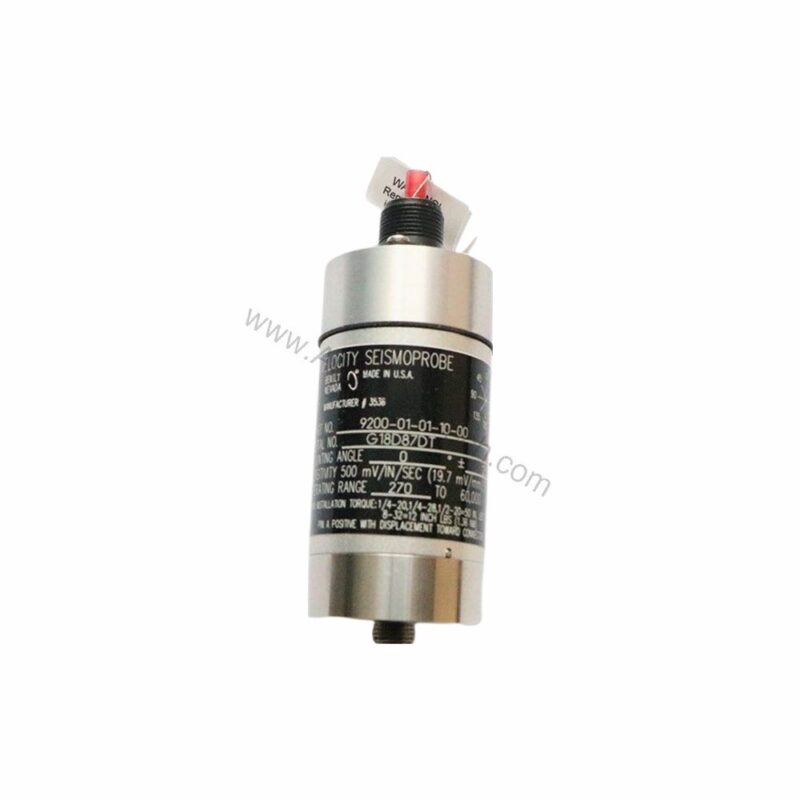
Introduction: The Evolution of Vibration Monitoring
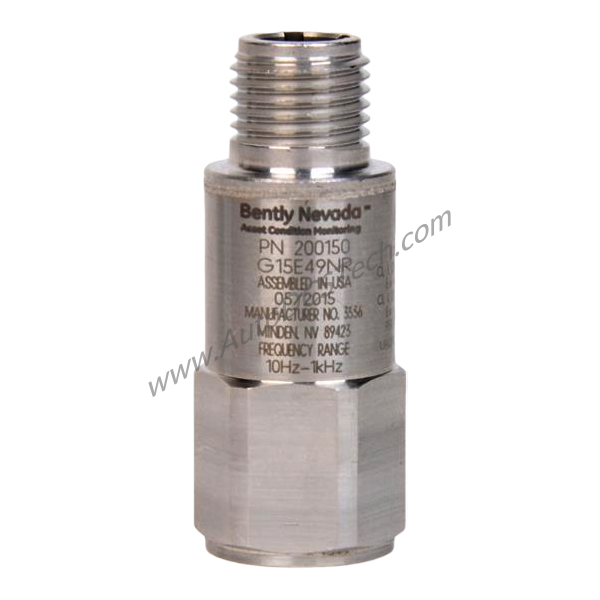
In the early days of industrial rotating machinery, engineers relied on periodic manual measurements to detect vibration issues. These methods were time-consuming and often missed early warning signs. The introduction of continuous vibration transducers changed that, allowing real-time monitoring of machine health. Today, the 9200-03-05-05-00 from Bently Nevada represents a mature, reliable solution in this evolution. It is a two-wire velocity seismoprobe transducer designed to provide accurate velocity measurements for predictive maintenance programs.
This transducer is part of the Bently Nevada 9200 series, known for robust construction and dependable performance. The specific configuration, 9200-03-05-05-00, includes a mounting angle of 90 ±2.5 degrees with a minimum operating frequency of 4.5 Hz (270 cpm). It uses a terminal block top mount connector and a 1/2-in 20 UNF-3A stud mounting base, with no agency approvals required. This model is supplied new and in original factory packing, backed by a 12-month factory warranty.
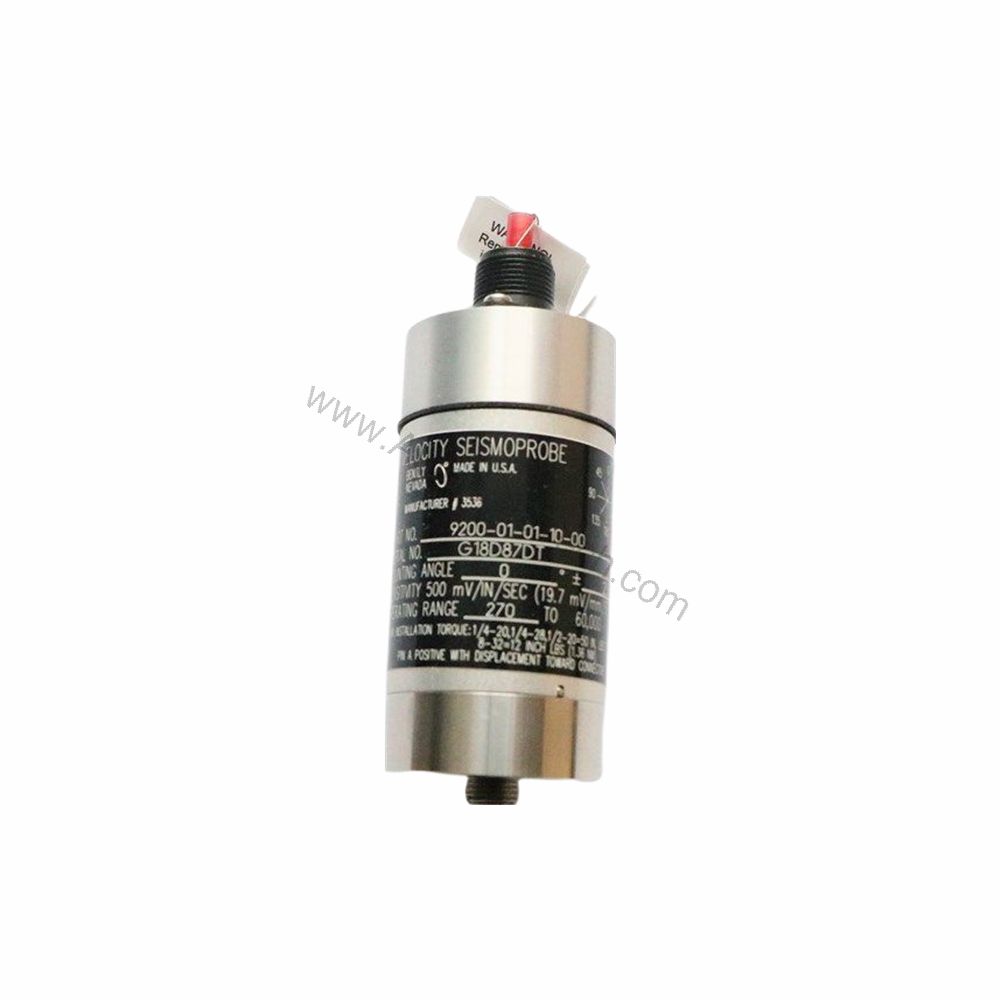
Key Features and Technical Specifications
The 9200-03-05-05-00 offers a sensitivity of 20 mV/mm/s (500 mV/in/s), with a tolerance of ±5% when properly terminated and oriented at the calibration angle. This high sensitivity ensures accurate detection of even subtle velocity changes. The calibration load is 10 kΩ, and the output is taken across pins A and B. The sensitivity temperature coefficient is 0.2%/°C, which means the output remains stable over a wide temperature range.
The dynamic operating range is 2.54 mm (0.100 in) peak-to-peak maximum displacement, and the velocity range is 25 mm/s (1 in/s) at +22 °C casing vibration at 100 Hz with a 10 kΩ load. The coil resistance is 1.25 kΩ ±5%, and the locked coil inductance is 125 mH typical. These electrical parameters ensure compatibility with standard monitoring systems.
- Model: Two-Wire Velocity Seismoprobe Transducer
- Manufacturer: Bently Nevada
- Sensitivity: 20 mV/mm/s (±5%)
- Dynamic Operating Range: 2.54 mm peak-to-peak max displacement
- Velocity Range: 25 mm/s at 100 Hz with 10 kΩ load
- Coil Resistance: 1.25 kΩ ±5%
- Locked Coil Inductance: 125 mH typical
- Operating Temperature: -29°C to +121°C
- Relative Humidity: Up to 95% noncondensing
- Weight: 300 grams typical
One distinctive feature is the mounting angle option. The 03 option specifies a 90 ±2.5 degree mounting angle with a minimum operating frequency of 4.5 Hz. This allows the transducer to be mounted in orientations that optimize measurement accuracy for specific machine configurations.
Applications and Use Cases
The 9200-03-05-05-00 is suitable for a wide range of industrial applications where vibration monitoring is critical. Common uses include monitoring pumps, motors, fans, compressors, and gearboxes. In these environments, the transducer provides continuous velocity data that helps identify imbalance, misalignment, bearing wear, and other mechanical faults. For example, in a chemical plant, this transducer can be installed on a centrifugal pump to detect early signs of cavitation or bearing degradation, allowing maintenance teams to schedule repairs before catastrophic failure occurs.
Furthermore, the transducer's robust design, with an anodized aluminum case and neoprene gasket, ensures reliable operation in dusty and humid conditions. The operating temperature range of -29°C to +121°C makes it suitable for both cold outdoor installations and hot indoor environments. The dust and moisture resistant construction adds to its versatility.
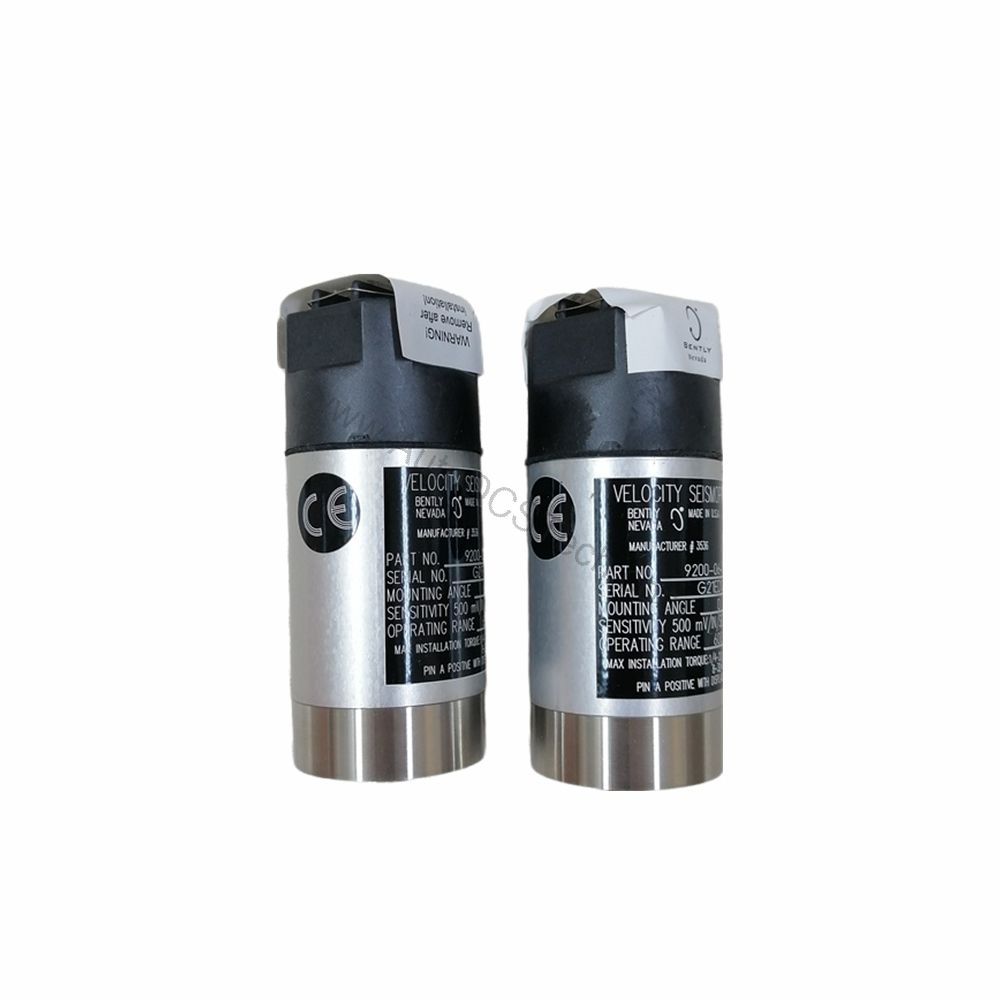
Installation and Setup
Proper installation is essential for accurate vibration measurement. The 9200-03-05-05-00 uses a 1/2-in 20 UNF-3A stud for mounting, which provides a rigid connection to the machine surface. Ensure the mounting surface is clean and flat to achieve optimal coupling. The terminal block top mount connector simplifies wiring, with connections made to terminals A and B. It is important to terminate the transducer with a 10 kΩ load to achieve the specified sensitivity. Also, orient the transducer at the calibration angle (90 ±2.5 degrees) to maintain accuracy.
When routing the cable, avoid sharp bends and potential abrasion points. Use suitable conduit or cable protection if necessary. After installation, verify the output signal using a portable vibration meter to confirm proper operation. If the transducer is to be used in a hazardous area, check the agency approval option; this model has no approvals, so it is not certified for explosive atmospheres.
Maintenance and Reliability
Regular maintenance of the 9200-03-05-05-00 is straightforward. Periodically inspect the mounting stud for tightness, as vibration can loosen connections over time. Check the cable for any signs of wear or damage. The transducer itself is sealed and requires no internal maintenance. However, it is advisable to verify the output sensitivity periodically using a known vibration source to ensure it remains within specification.
Given its robust construction and wide temperature range, the transducer is designed for long service life. The neoprene gasket provides a good seal against moisture and dust, contributing to reliability. By following a simple inspection routine, you can maximize the transducer's lifespan and maintain accurate monitoring.
Compatibility and Integration
The 9200-03-05-05-00 is a two-wire velocity transducer, which means it can be integrated with most Bently Nevada monitoring systems and other compatible vibration monitoring equipment. The 10 kΩ load requirement is standard for many monitoring modules. The output signal, taken across pins A and B, is a velocity-proportional voltage that can be fed into a data acquisition system or a dedicated vibration monitor. For detailed integration guidance, refer to the Bently Nevada documentation or contact AutoDCSTech for support.
Troubleshooting and Common Issues
If the transducer output is not as expected, first check the wiring connections. Ensure that the load is 10 kΩ and that the output is measured across the correct pins. Also, verify that the transducer is mounted at the correct angle and that the mounting stud is tight. If the output is low or erratic, the transducer may be damaged or the cable may be faulty. In such cases, replace the transducer with a new unit. For persistent issues, consult the manufacturer's manual or contact AutoDCSTech for technical assistance.
Product Support and Availability
The 9200-03-05-05-00 is available from AutoDCSTech, an industrial automation parts supplier. It is in stock and ready to ship. For ordering assistance or technical questions, contact AutoDCSTech. Please verify current lifecycle status and availability with AutoDCSTech before ordering.
Availability & Condition at AutoDCSTech
| Part Number | 9200-03-05-05-00 |
|---|---|
| Availability | In Stock |
| Condition | New |
| Warranty | One Year |
| Origin | US |