Introduction
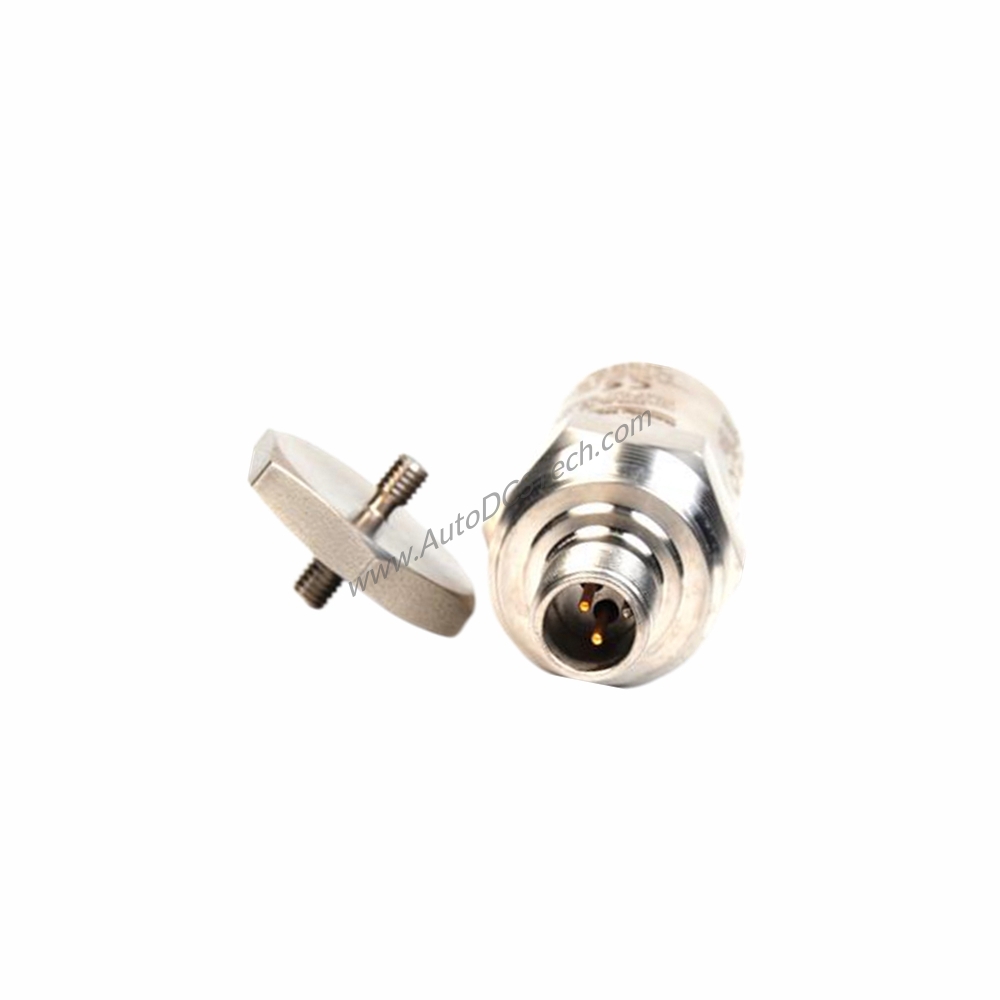
When machinery vibration threatens uptime, the Bently Nevada 190501-11-00-00 Velomitor CT Velocity Transducer delivers precise measurements to keep operations running. This sensor is designed for continuous monitoring in harsh environments, offering a sensitivity of 3.94 mV/mm/s (100 mV/in/s) with ±5% accuracy. Its robust 316L stainless steel case withstands demanding conditions, making it a trusted choice for maintenance engineers focused on reliability.
Technical Specifications Breakdown
Sensitivity and Frequency Response
The transducer provides a sensitivity of 3.94 mV/mm/s (100 mV/in/s) ±5%, ensuring accurate velocity readings. Its frequency response spans 3.0 Hz to 900 Hz (180 to 54,000 cpm) within ±1.0 dB, and extends to 1.5 Hz to 1.0 kHz (90 to 60,000 cpm) within ±3.0 dB. This range covers common rotational speeds, enabling early fault detection.
Output and Impedance
With an output bias voltage of 10.1 Vdc ± 1.0 Vdc (Pin A referenced to Pin B) and a dynamic output impedance under 400 Ω typical, the signal remains stable over long cable runs. The maximum cable length is 305 metres (1,000 ft.) using part number 02173006, with no signal degradation.
Environmental Durability
Operating temperature ranges from -40°C to +85°C (-40°F to +185°F), while storage temperature extends to -40°C to +100°C (-40°F to +212°F). The unit handles 100% condensing humidity (non-submerged) and a shock limit of 5000 g pk maximum. Magnetic field susceptibility is less than 0.0068 mm/s/gauss (0.268 mil/s/gauss) at 50 gauss, 50-60 Hz.
Industry Applications
Rotating Machinery Monitoring
In pumps, compressors, and turbines, the 190501-11-00-00 detects vibration changes that signal bearing wear or imbalance. Its frequency response up to 1.0 kHz captures both low-speed and high-speed faults, helping maintenance teams schedule repairs before catastrophic failure.
Process Plant Reliability
For continuous process industries like oil and gas, the transducer's 316L stainless steel case and internal electronics isolated from the case resist corrosion and grounding issues. The mounting angle flexibility (any orientation) simplifies installation in tight spaces.
Installation & Setup Guidance
Mount the transducer using the provided 3/8-in 24 to 1/4-in 28 stud plate option. Apply a mounting torque of 4.5 N-m ± 0.6 N-m (40 in–lbf ± 5 in-lbf) to ensure proper contact. The MIL-C-5015 connection interface provides a secure, industry-standard link. Polarity is defined: Pin A goes positive with respect to Pin B when velocity is from base to top of the transducer. Verify the mounting surface is clean and flat (33 mm diameter) for optimal coupling.
Maintenance & Reliability
Routine inspection focuses on cable integrity and connector cleanliness. The transducer's 316L stainless steel construction resists corrosion, reducing replacement frequency. Periodic verification of output bias voltage (10.1 Vdc ± 1.0 Vdc) confirms proper operation. With a mounted resonant frequency of 9 kHz minimum (stud mounted, except quick disconnect), the unit avoids resonance interference in most applications.
Compatibility & Integration
The 190501-11-00-00 integrates with Bently Nevada monitoring systems and third-party vibration analyzers that accept velocity transducer inputs. Its 2-pin MIL-C-5015 connector ensures compatibility with standard cabling. For intrinsically safe installations, refer to agency approval options 01 through 04 and drawing 167536.
Selection Guide & Purchasing Advice
Before purchasing, verify the agency approval option matches your area classification (this unit has option 00 = no approvals). Confirm cable length requirements (up to 305 metres) and mounting hardware (1 plate stud 3/8-in 24 to 1/4-in 28). Contact our team to confirm lifecycle status and availability.
Frequently Asked Questions
Q1: What is the sensitivity of the Bently Nevada 190501-11-00-00?
A1: The sensitivity is 3.94 mV/mm/s (100 mV/in/s) with ±5% tolerance.
Q2: What is the maximum cable length for this transducer?
A2: The maximum cable length is 305 metres (1,000 ft.) using part number 02173006, with no signal degradation.
Q3: Can this transducer be used in hazardous areas?
A3: This specific unit (option 00) has no agency approvals. For hazardous locations, select agency approval options 01 through 04.
Q4: What is the operating temperature range?
A4: The operating temperature range is -40°C to +85°C (-40°F to +185°F).
Q5: How do I verify proper polarity?
A5: Pin A goes positive with respect to Pin B when velocity is from base to top of the transducer.
Availability & Condition at AutoDCSTech
| Part Number | 190501-11-00-00 |
|---|---|
| Availability | In Stock |
| Condition | New |
| Warranty | One Year |
| Origin | US |