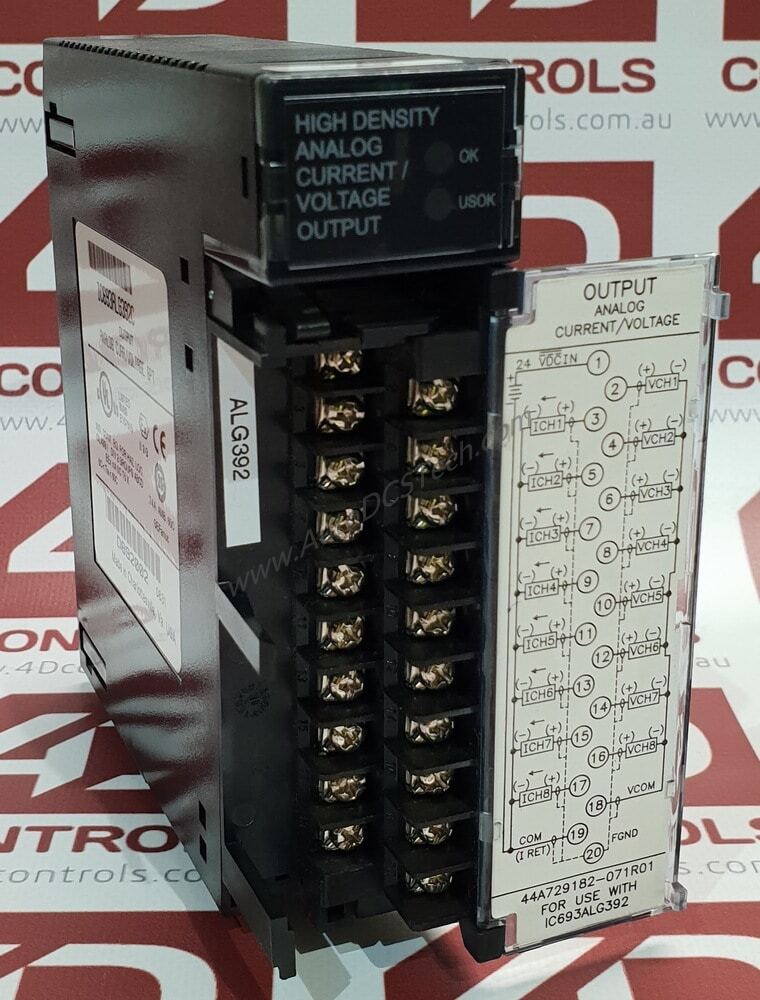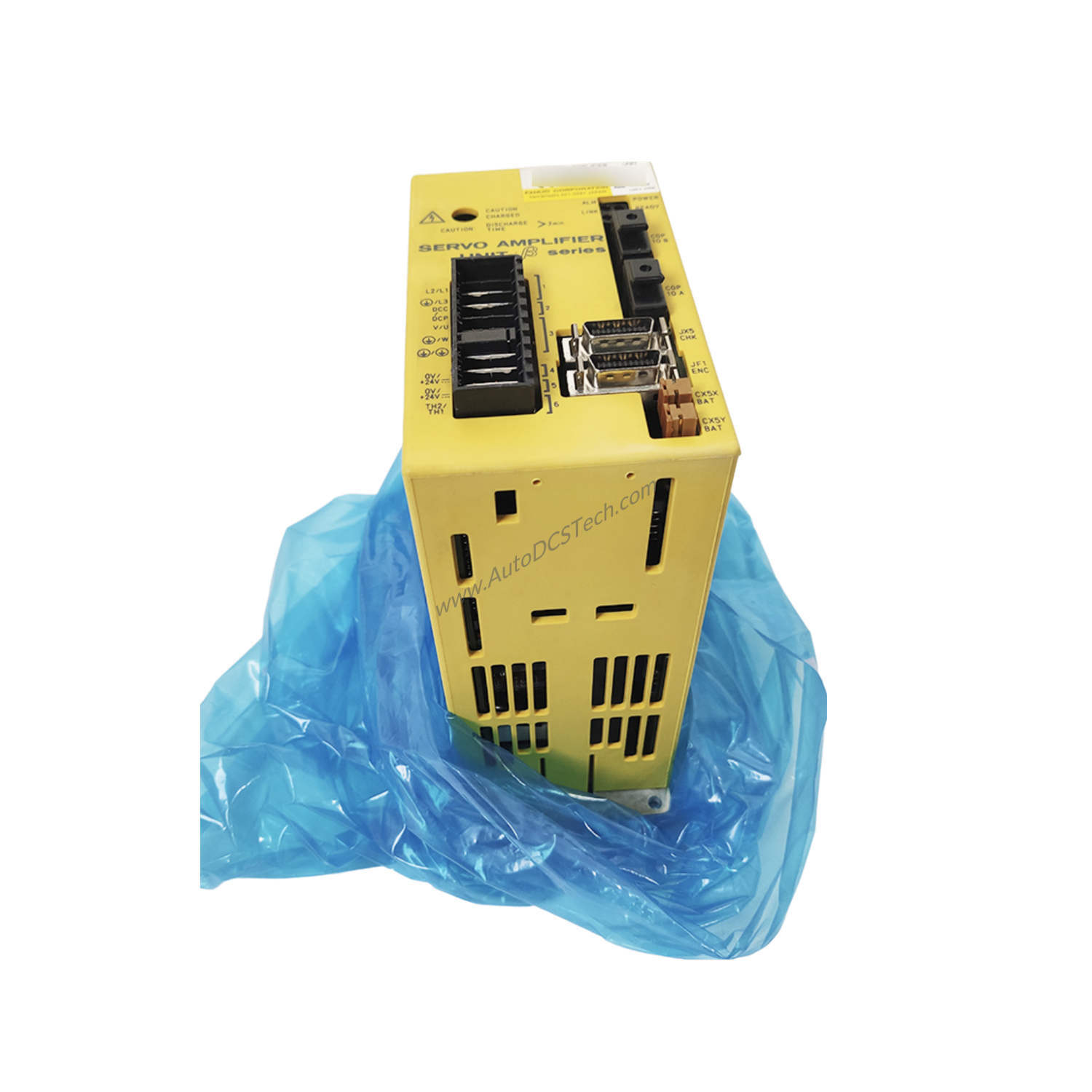
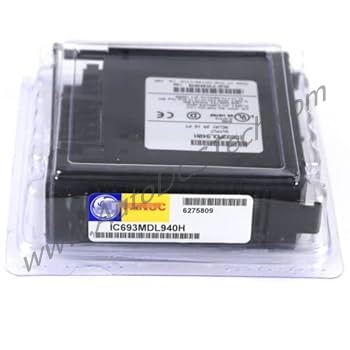
IC693MDL940: 16 Relay Outputs for Series 90-30 Racks
The IC693MDL940 is the 16-point relay output module for the Series 90-30 platform, and it exists because of a specific gap between what solid-state outputs can do and what mixed-voltage loads require. Sixteen individually isolated relay outputs, each able to switch inductive and non-inductive loads across a wide voltage range, is the specification a machine with solenoid valves, contactor coils and lamp banks on different supplies ends up needing.
The isolation is the operative detail. Because each output is individually isolated, a fault on one output circuit cannot propagate to its neighbours, and the field wiring has no common return path back into the controller. That is what allows one module to switch a 240 VAC solenoid and a 24 VDC solenoid without either circuit touching the other reference.
| Feature | Specification |
|---|---|
| Manufacturer | GE Fanuc / GE Intelligent Platforms |
| Brand | GE |
| Part Number | IC693MDL940 |
Series 90-30 Relay Output Modules Compared
Series 90-30 relay output modules split on point count and platform. Confirming the platform before ordering matters: the part numbers are close enough that substituting across platforms is a genuine risk on a maintenance order.
| Related Part Number | Configuration Difference |
|---|---|
| IC693MDL930 | 8-point version of the same Series 90-30 relay output family |
All GE parts · I/O Modules · IC693PWR330 high-capacity supply
Where Relay Outputs Still Win Over Solid-State Outputs
A solid-state output is faster and cheaper, which is why it dominates new designs. Relay outputs remain the correct answer in three situations: the load is highly inductive and switching stress would degrade a transistor; the load switches at mains voltage and the isolation barrier has to be physical; or switching frequency is low enough that relay life is not a constraint.
Solenoid valves, contactor coils, lamp banks and small motors fall into those categories. Where the per-output current rating covers the coil directly, no interposing relay is required — which removes a failure point and halves the panel depth for a bank of sixteen.
Commissioning by Output, Not by Bank
Energise outputs one at a time and confirm the corresponding field device operates, rather than switching the whole bank together. On a 16-point Form A bank this catches mis-mapped output-to-device assignments, which are the most common commissioning error on relay output modules and which otherwise surface as an intermittent machine fault when one device operates out of sequence.
Ordering and Sourcing Notes
Confirm the platform before ordering — Series 90-30 racks take the IC693MDL family, while the mechanically similar IC694MDL family is for PACSystem RX3i and the IC200MDL family is for VersaMax. On a mature platform these are sustained-equipment parts, so availability is worth confirming before committing a downtime window rather than assumed from the model number.
Supply & terms: Stock status: In Stock · Condition: New · Warranty: One Year · Origin: US. Listed by AutoDCS Tech Parts Team · Last updated .
IC693MDL930 8-point · IC693PCM301 coprocessor
Availability & Condition at AutoDCSTech
| Part Number | IC693MDL940 |
|---|---|
| Availability | In Stock |
| Condition | New |
| Warranty | One Year |
| Origin | US |