Product Overview
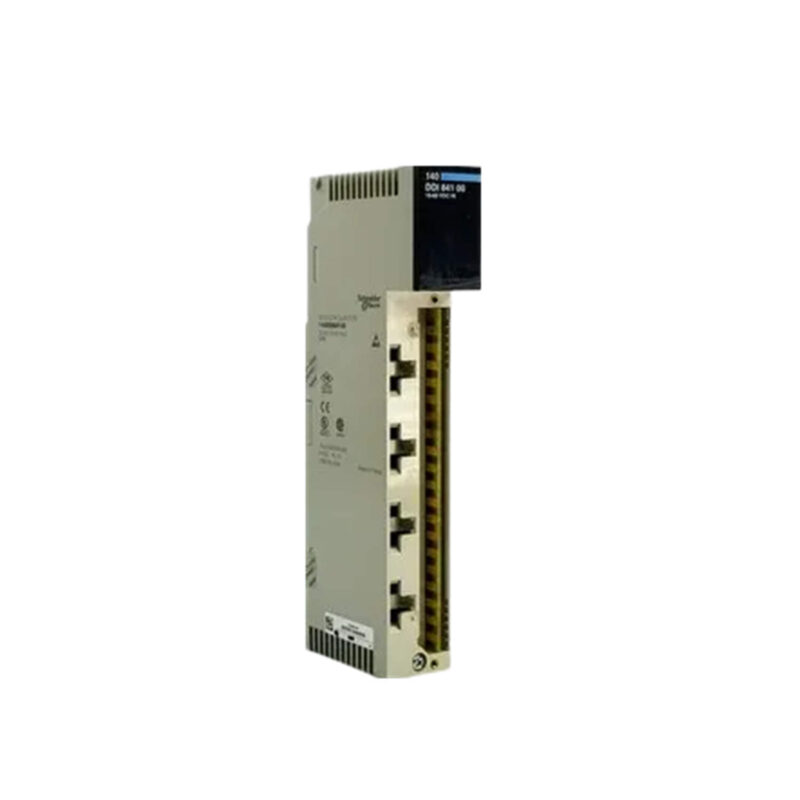
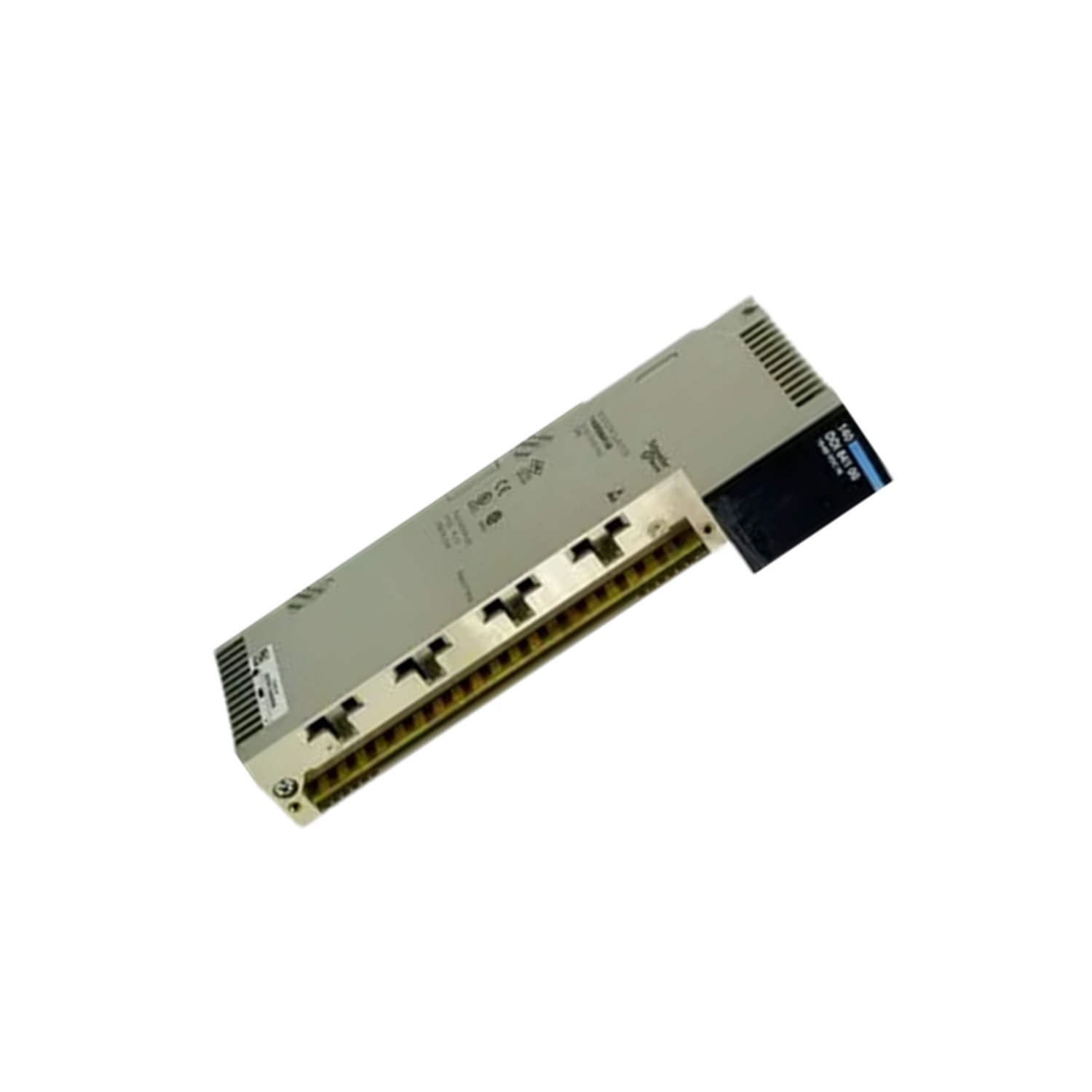
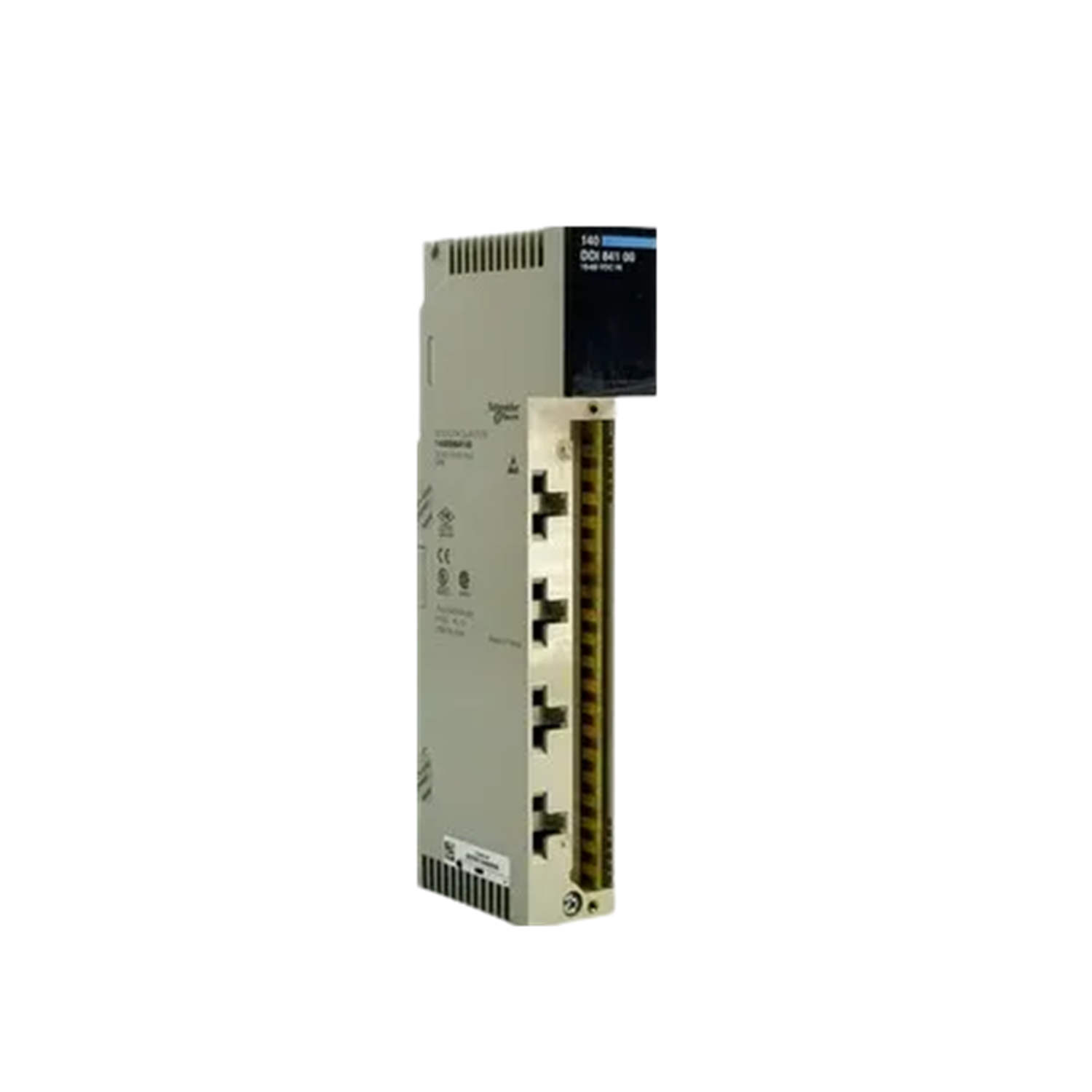
The 140DDI84100C is a DC discrete input module engineered for the Modicon Quantum automation platform. It provides 16 discrete inputs organized into 8 isolated groups, allowing flexible wiring for both positive (sink) logic configurations. With input voltage limits spanning 10 to 60 V and an absolute maximum of 75 V, this module accommodates a variety of signal levels—from 12V DC sensors to 48V industrial controls—without requiring additional signal conditioning.
Technical Specifications Breakdown
Key parameters for the 140DDI84100C are listed below for quick reference:
| Feature | Specification |
|---|---|
| Manufacturer | Schneider Electric |
| Product Line | Modicon Quantum |
| Part Number | 140DDI84100C |
| Discrete Input Number | 16 |
| Group of Channels | 8 |
| Input Voltage Limits | 10 to 60 V |
| Absolute Max Voltage | 75 V |
| Addressing Requirement | 1 input word |
| Switching Frequency | <= 100 Hz |
| Response Time | 4 ms |
| Isolation Between Group and Bus | 2500 Vrms |
| Power Dissipation | 1 W |
| Local Signalling | LED |
| Resistance to Electrostatic Discharge | 4 kV / 8 kV |
| Resistance to Electromagnetic Field | 10 V/m |
Industry Applications
Automotive Assembly Lines: The module's 4 ms response time and 100 Hz switching frequency enable precise detection of part presence and position from inductive proximity sensors, reducing cycle time variability.
Water & Wastewater Treatment: With 2500 Vrms isolation between group and bus, the 140DDI84100C protects the control system from ground loops and transient surges common in pump and valve monitoring applications.
Packaging Machinery: The wide input voltage range (10-60 V) allows direct connection to 24V DC and 48V DC sensors without external converters, simplifying panel wiring and reducing component count.
Installation & Setup Guidance
When installing the module, ensure that the Quantum backplane is powered down. Insert the module into any standard I/O slot and secure it with the locking mechanism. Wire each group's common and input signals according to the positive (sink) logic configuration. Use twisted-pair shielded cable for runs longer than 10 meters to maintain signal integrity. The addressing requirement of 1 input word simplifies configuration in the control software—no complex mapping is needed.
Maintenance & Reliability
The module features conformal coating (Humiseal 1A33) for protection against moisture and contaminants, making it suitable for harsh industrial environments. Operating temperature range is 0 to 60 °C with storage from -40 to 85 °C. Periodic inspection of the LED indicators (green for bus active, red for external fault, and 16 green input status LEDs) provides quick visual diagnostics. No routine calibration is required.
The Evolution of Industrial Signal Processing
In modern manufacturing, the ability to reliably capture discrete signals from sensors, switches, and pushbuttons is the backbone of automated control. As factories evolve toward higher uptime and tighter process control, the demand for robust, high-isolation input modules has never been greater. The Schneider Electric 140DDI84100C, part of the Modicon Quantum series, meets this challenge with a design focused on noise immunity, wide voltage tolerance, and rapid response.
Compatibility & Integration
It is compatible with all Quantum CPUs and remote I/O adapters. The module carries CE, CSA C22.2 No 142, UL 508, and FM Class 1 Division 2 certifications, ensuring compliance with North American and international standards.
Selection Guide & Purchasing Advice
When selecting a discrete input module, consider the voltage range and isolation requirements of your application. The 140DDI84100C is an choice for mixed-voltage environments. AutoDCSTech stocks this module and can advise on lifecycle status and availability. Contact us for pricing and lead times.
Troubleshooting & Common Issues
If the module's Active LED is off, verify backplane power and seating. If the Fault LED is red, check for short circuits or overvoltage on any input. Use the input status LEDs to isolate faulty channels. The module's resistance to electrostatic discharge (4 kV contact, 8 kV air) minimizes damage from handling, but always ground yourself before touching the module.
Availability & Condition at AutoDCSTech
| Part Number | 140DDI84100C |
|---|---|
| Availability | In Stock |
| Condition | New |
| Warranty | One Year |
| Origin | France |