Vimal Kapur, chairman and CEO of Honeywell Technologies, told the Fortune 500 Innovation Forum in Detroit on 16 November 2026 that facilities run themselves about 95 percent of the time, and that fifty years of added software and hardware left the exceptions too complex for the people watching. Honeywell's answer is Forge Cognition.
Forge Cognition is the platform Honeywell introduced on 14 October 2026 with technology from NVIDIA and Dell Technologies. It puts AI agents and real-time digital twins on top of the control systems that already heat, cool, secure and power buildings and plants. It is in pilot at six named sites. It has not been switched to autonomous mode in customer operations, and Honeywell publishes no price, no general-availability date and no production reference customer.
The gap between the Detroit quote and the October release matters for anyone specifying or maintaining the installed base. What follows separates what Honeywell published, what its CTO said on the record, and what is still positioning.
Key takeaways
- The venue and date are confirmed. Fortune 500 Innovation Forum, Detroit, panel "The New Industrial Economy", 16 November 2026; Fortune published the account the same day.
- "50 years" describes the installed base, not a product age. Kapur's argument is that successive layers of software and hardware made exception handling harder for operators, not that the controls stopped working.
- The 95 percent figure is about routine operation. Kapur said facilities largely run themselves, "maybe 95%", with a person left in the loop to handle exceptions.
- Forge Cognition is one platform, not two. Forge Plant Cognition, announced 26 October 2026, is built on Forge Cognition and applied to refining, petrochemical and LNG operations.
- NVIDIA and Dell are technology suppliers, not co-owners. NVIDIA supplies models, simulation libraries and GPUs; Dell supplies compute, storage and services; Honeywell owns the platform and the domain models.
- Autonomy is a mode, not the current state. Manual, semi-autonomous and autonomous modes exist, but the CTO said autonomy has not been opened, with a two-to-three-year horizon.
- The 1.9 million figure is not Honeywell's. It comes from a 2024 Deloitte and Manufacturing Institute study on US manufacturing hiring between 2024 and 2033.
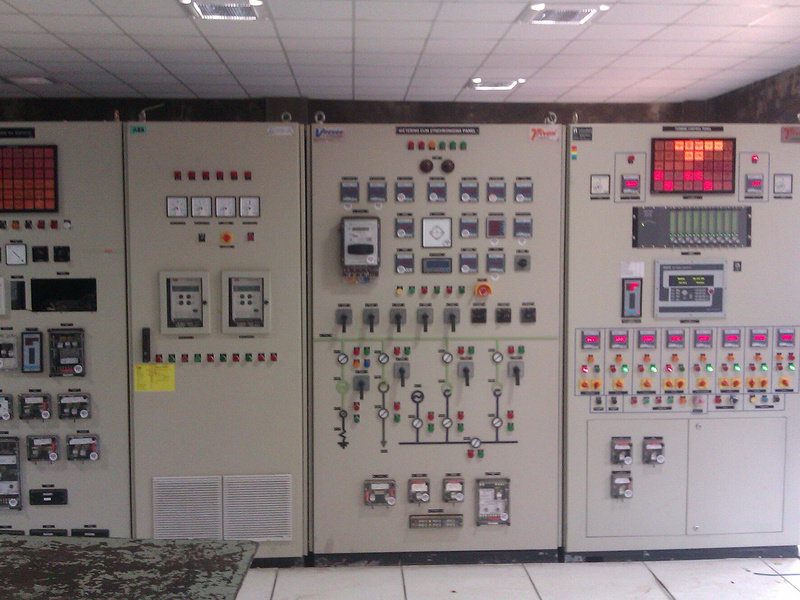
- Nothing here replaces a DCS or a BMS. The platform reads existing systems and coordinates actions across supported ones; the controllers, I/O and field wiring underneath stay in scope for maintenance and spares.
What did Vimal Kapur say at the Fortune 500 Innovation Forum?
Kapur said the automation running hospitals, data centres and refineries began in the 1970s and has grown too complex for the people supervising it, because every generation added more software and physical infrastructure. He put routine operation at about 95 percent self-running, with humans handling exceptions, and called the skilled-labour shortage the reason the problem is now urgent.
Three statements carry the argument. On complexity: "Over the last 50 years since this got created, the systems have become highly complex because we kept adding more and more software and physical infrastructure to it. So human cannot keep up with that at this point of time." On normal operation: those facilities run themselves "maybe 95%", leaving a person "in the loop to handle the exceptions". On the incidents of the preceding fortnight he said complexity is why "humans are not able to keep up with it", producing an "undesired incident". He did not say which one; Fortune noted the FAA ground stop on 13 November and the Microsoft 365 outage that began on 12 November as candidates without attributing either to automation complexity.
His definition of physical AI is narrower than the robotics framing suggests. He called humanoid robots "a very small portion" and placed the value in "every large asset which exists: hospital, data center, life sciences facilities, refineries" — a learning layer over existing automation that carries human knowledge. The constraint he named is data: operational data sits inside a building or a plant, not in the public domain, and turning it into something usable needs people with deep domain knowledge. At Goldman Sachs in April 2026 he had called data access "the first friction".
On employment his line was explicit: "Physical AI is not about job replacement; it's about making humans more productive." He made the same design point at Goldman, saying Honeywell would "likely build systems which are more augmented and less autonomous."
| Claim | Source | What it does not establish |
|---|---|---|
| 50 years of automation complexity | Kapur, Fortune 500 Innovation Forum, 16 November 2026 | That older control systems are unreliable; the point is operator workload at the exception layer |
| About 95% self-running | Kapur, same panel | A measured availability figure; it is his estimate of routine operation |
| 1.9 million unfilled jobs | Deloitte and Manufacturing Institute, 2024 study, cited by Fortune | A Honeywell forecast, a global figure, or a count of current vacancies |
| Reskill within 18 to 24 months | Kapur, same panel | A published workforce programme, budget or headcount target |
What is Forge Cognition, and how does it relate to Honeywell Forge?
Forge Cognition is a self-contained agentic AI and simulation platform for facility operations, introduced on 14 October 2026. It sits inside Honeywell Technologies' Forge intelligence layer, where Forge is the umbrella platform and Forge Cognition is the packaged product, and it overlays existing building and industrial control systems rather than replacing them.
Honeywell's own boilerplate makes the hierarchy explicit. It describes the company as serving building, industrial and process customers "underpinned by our Honeywell Technologies Accelerator operating system and Honeywell Technologies Forge intelligence layer". Forge Cognition is a platform within that layer. It is not a new corporate brand, and it is not a joint venture with NVIDIA or Dell.
In Honeywell's published scope, it does three things:
- Alarm management. Agents classify and verify building-management alarms, correlate related faults and reduce false positives. A dedicated True Alarm agent refines its classification from operator feedback.
- Predictive asset health. Agents watch real-time HVAC data for emerging equipment issues and feed condition-based maintenance.
- Energy intelligence. Digital twin simulations evaluate proposed operating changes for energy reduction while holding occupant comfort.
The architecturally important claim is that it connects to existing deployments instead of requiring a rip-and-replace. Honeywell says the platform overlays the installed base, maps dependencies across multi-vendor assets and converges IT with OT. That claim decides whether a site with an older Honeywell or third-party BMS can use it at all, and it remains a claim: no compatibility matrix or qualified system list is published.
On Forge Performance+, the record is thin in a specific way. Honeywell still lists Forge Performance+ for Buildings, Forge Performance+ for Distribution Centers and Forge Cybersecurity+ as separate offerings on its own industry pages, and its legal terms still carry the Forge Performance+ for Buildings product descriptions. No Honeywell document retires those products or maps them to Forge Cognition. Treat the new platform as an addition to the Forge portfolio until a migration statement exists.
What do NVIDIA and Dell actually contribute?
NVIDIA supplies the AI models, simulation libraries and GPUs, and Dell supplies the compute, storage, cyber-resilience and services layer through the Dell AI Factory with NVIDIA. Both are named technology providers quoted in Honeywell's launch release; neither is described as holding a product, licensing or go-to-market role in the platform.
| Layer | Supplier | Named in Honeywell's release |
|---|---|---|
| Reasoning agents | NVIDIA | Nemotron open models, including the True Alarm agent |
| Digital twin simulation | NVIDIA | Omniverse libraries for physically accurate simulation |
| Vision and sensor agents | NVIDIA | Cosmos open models with the Metropolis VSS blueprint |
| Inference hardware | NVIDIA | RTX PRO GPUs today, DGX Spark planned for far-edge rooms |
| Physics models | NVIDIA | PhysicsNemo framework, named in the plant release |
| Servers and storage | Dell | PowerEdge XE servers and Dell AI Data Platform |
| Resilience and delivery | Dell | Dell cyber resiliency solutions and Dell Services |
The deployment consequence is that inference runs on customer infrastructure. Dell's own release states that Forge Cognition is built on the Dell AI Factory with NVIDIA, and Honeywell's launch material describes local inference on RTX PRO GPUs with expansion to DGX Spark at the far edge. That is an on-premises and edge architecture, which matters where data residency or connectivity is constrained. Honeywell publishes no hosted-cloud option, no subscription tier and no per-site price.
Is Forge Cognition generally available, and who is using it?
Honeywell has not labelled Forge Cognition generally available, in preview or in limited release. Its wording is that customers can engage today to identify and scope deployments, with capabilities expanding over time. Six pilots are named at partner, hospitality, retail, university and Honeywell-owned sites; no production customer and no price are published.
| Site | Type | What Honeywell reports |
|---|---|---|
| NVIDIA Voyager campus, Santa Clara | Corporate campus | Up to 90% fewer unnecessary alerts; up to 10% potential energy and utility reduction identified; comfort score above 95% |
| Fairmont Hotel, Dubai | Hospitality | Pilot site; no results published |
| NEX Mall, Singapore | Retail | Pilot site; no results published |
| Vanderbilt University, US | University | Pilot site; Honeywell separately reports 100+ buildings and 8 million sq ft connected through Forge |
| Honeywell Bangalore | Own campus | Pilot site; no results published |
| Honeywell Richardson, Texas | Own campus | Pilot site; no results published |
Read the Voyager numbers within their scope. "Up to 90%" is an average reduction in unnecessary alerts at that one campus, and the comfort score is a weighted average of temperature, humidity and CO2 across zones. The 10 percent energy figure is a potential reduction identified through simulation, not a metered saving. None of the three is presented as validated across sites.
On autonomy the CTO was direct in the October interview: "We have not opened up an autonomy right now... Maybe we will start running in this mode for probably next two to three years." The product supports manual, semi-autonomous and autonomous modes; the named deployments stop short of the third.
What is Forge Plant Cognition, and how does it differ?
Forge Plant Cognition, announced on 26 October 2026, is the process-industry application built on the Forge Cognition platform for refining, petrochemical and LNG operators. Its first deployment is Dangote's Lekki refinery, where Honeywell estimates more than 29 cents a barrel of benefit and over $60 million a year at full capacity, described as preliminary and gross of implementation costs.
The difference between the two announcements is scope, not architecture. Forge Cognition targets buildings, campuses and facility operations with alarm, asset-health and energy use cases. Forge Plant Cognition adds UOP process expertise, physics-based models and plant-level optimisation for throughput, yield and unplanned downtime. Both name the same NVIDIA and Dell stack, and the plant release states that it is built on the Forge Cognition platform launched earlier that month.
The Dangote figures are vendor estimates with conditions attached, and Honeywell's footnotes say so: gross of implementation costs, not guaranteed, and dependent on refinery configuration, operating conditions, crude slate, utilisation, baseline performance, data quality and product margins. They are input to a business case, not a benchmark. The site is also one of the world's largest single-train refineries, which is why a per-barrel figure turns into a large absolute number.
Is "from automation to autonomy" a delivered capability or a positioning line?
It is positioning with a partial delivery behind it. Honeywell has shipped agentic functions that recommend and, in supported systems, coordinate actions, and it offers an autonomous mode a customer can enable. What has not shipped is unsupervised autonomous operation in a customer plant: the CTO put that two to three years out.
Three statements sit at different distances from delivery. The corporate boilerplate — "uniquely positioned to lead the industrial sector's transition from automation to autonomy" — appears in every press release and is positioning. The product documentation supports manual, semi-autonomous and autonomous modes with operator override at any time, which is a delivered control surface. The on-the-record interview says autonomy has not been opened, which is the current status at customer sites.
The distinction is not academic for a buyer. A semi-autonomous deployment changes alarm handling and maintenance planning and leaves the control loop and its interlocks where they are. An autonomous deployment changes who is accountable for an action taken on a live system, and that has to be settled in the safety case, the change-control procedure and the operator training record before the mode is enabled.
Where does the 1.9 million worker shortfall come from?
The figure comes from a 2024 study by Deloitte and the Manufacturing Institute, which projected that US manufacturers could need as many as 3.8 million additional workers between 2024 and 2033 and that 1.9 million of those jobs could go unfilled. Kapur cited the shortage as context; the number is not a Honeywell forecast.
The same study found that 65 percent of manufacturers surveyed named attracting and retaining talent as their primary business challenge. Two scope notes apply. It is a US manufacturing projection rather than a global industrial figure, and it is projected unfilled demand under stated assumptions rather than a count of today's vacancies. Sites outside the United States should read it as directional.
Kapur's own clock is shorter than the study's decade. He said Honeywell Technologies has more than 50,000 employees and that "next 18 to 24 months, we all have to reskill ourselves", adding that he had personally taken Copilot training. That is a management statement about internal capability, not a published workforce programme.
What does this change for sites running legacy DCS and BMS estates?
It changes the data and integration layer, not the control layer. An agentic platform that reads existing systems still depends on the controllers, I/O modules, cabling and historians underneath it, so the maintenance and spares plan for that layer stays as important as before, and it sets the limit on what a pilot can be scoped to.
Honeywell's own framing supports that reading: Forge connects existing installed assets, contextualises what they report and bridges IT with OT. Nothing in the Forge Cognition release claims it replaces a DCS, a BMS or a safety system, and the plant release positions its value as optimisation on top of existing operations.
For a Honeywell installed base, the practical questions start with what the platform has to read. On an Experion PKS estate that means the controller and server layer: a TK-PRS021 control processor module has to be healthy before any historian feed is trustworthy, and a C300 controller module sits in the same path. Below that, field wiring such as the 9 in I/O link cable assembly for the C300 IOTA is the part that fails quietly and takes a loop down with it.
Two planning consequences follow. First, a pilot needs a measured baseline, and a baseline is only as good as the instruments producing it; a drifting analogue input or a loose I/O link reads as an operational anomaly to an agent that cannot tell instrumentation from process. Second, the governance question is the one the industry already argues about in whether industrial AI agents stay advisory, and it overlaps with the lifecycle logic in OT security planning for legacy PLC estates.
For most sites the first deliverable is an inventory: which controllers, I/O families and cables are actually installed, what their revision status is, and which subsystems a platform would need to read. The Honeywell automation spares range covers that installed base, and building the cross-reference is usually the slow part.
Frequently asked questions
Does Forge Cognition replace a DCS or a building management system?
No. Honeywell describes Forge Cognition as a layer that connects to existing customer deployments and adds agents and digital twins on top, coordinating actions across supported systems. The DCS, BMS, controllers, I/O and field wiring remain the systems of record and stay in scope for maintenance, lifecycle and spares planning.
Can it run without a cloud connection?
Honeywell describes local inference on NVIDIA RTX PRO GPUs with planned expansion to DGX Spark at the far edge, and Dell supplies the infrastructure through the Dell AI Factory with NVIDIA rather than a hosted service. That points to an on-premises and edge architecture, which is what data-residency and restricted-connectivity sites need to confirm. Honeywell has not published an explicit air-gapped qualification.
What has to be true before a site can be scoped?
Three things are checkable now. The existing control systems have to expose readable data from the assets in scope; the site needs a baseline that is not distorted by failing instruments or I/O; and the operating team needs an agreed guardrail — manual, semi-autonomous or autonomous — written into change-control and safety documentation before any mode is enabled.
Sources
- Fortune, 16 November 2026: Honeywell Technologies CEO says 50 years of automation have gotten too complex for the humans running it
- Business Wire, 14 October 2026: Honeywell Technologies Launches Forge Cognition with NVIDIA and Dell Technologies
- Fortune, 14 October 2026: Honeywell Technologies launches a "brain behind the building" with Nvidia and Dell
- Dell Technologies, 14 October 2026: Honeywell Technologies Builds Forge Cognition on Dell AI Infrastructure
- Honeywell Technologies, 26 October 2026: Honeywell Technologies Launches Forge Plant Cognition with Dangote
- Honeywell Technologies, 29 June 2026: Honeywell Technologies launches as independent, pure-play automation company
- Honeywell Forge platform page: the intelligence layer, the Accelerator operating system and connected-site figures
- Deloitte and The Manufacturing Institute, 2024: US manufacturing workforce study, the source Fortune cites for the 3.8 million and 1.9 million figures
All sources were checked on 17 November 2026. Figures are quoted as published; where a company did not state a detail, this article says so rather than filling the gap.
Talk to us
If you are scoping a data or agent layer over an existing Honeywell estate, the starting point is the installed base: which controllers, I/O families and cables are in service, and which of them are already causing repeat alarms. Send the part numbers and a short description of the system through the contact page and we can map the control-layer spares against what a platform like Forge Cognition would need to read.
Related components
- Honeywell TK-PRS021 Control Processor Module for Experion PKS
- Honeywell CC-PCNT01 C300 Controller Module
Browse by brand: Honeywell
More in News
Looking for 50?
Browse genuine 50 units, specifications, and pricing — or request a quote from our automation specialists.
View 50 Products & Get a Quote →