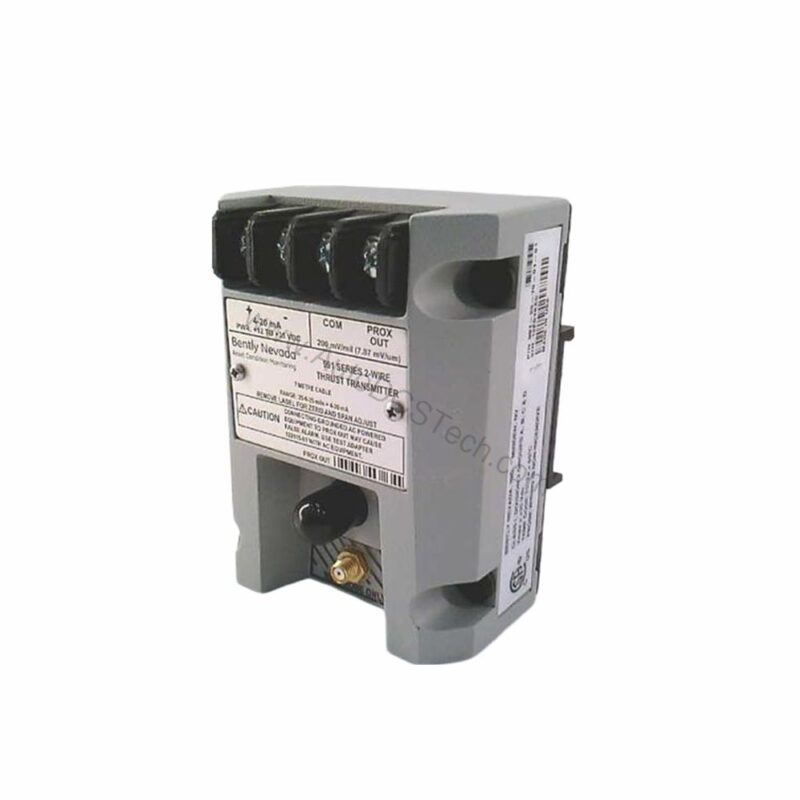
Product Overview: Bently Nevada 991-25-70-03-01 Thrust Transmitter
When axial thrust exceeds safe limits, rotating machinery can suffer catastrophic damage. The 991-25-70-03-01 from Bently Nevada provides continuous monitoring of axial shaft position, helping you detect problems before they escalate. This probe vibration transmitter is designed for thrust monitoring applications, converting proximity probe signals into a standard 4-20 mA output for seamless integration with your control system.
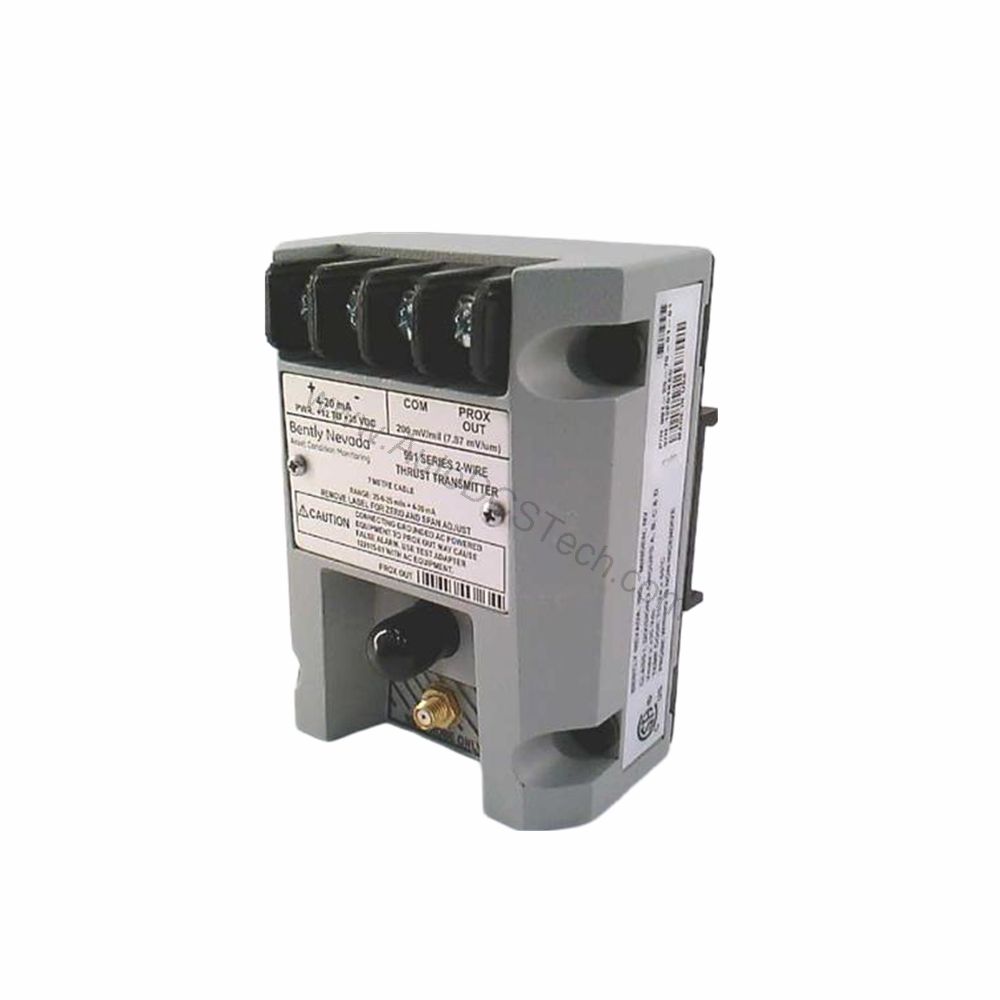
Part of the Bently Nevada 991 series, this model is configured with a 25-0-25 mils full-scale range and a 7.0-meter system length. It mounts on a DIN rail using clips and screws, simplifying installation in existing panels. The unit is CSA Division 2 approved, making it suitable for hazardous locations.
Key Features and Technical Specifications
The 991-25-70-03-01 is engineered for precision and reliability. Here are the core specifications you can expect:
- Output Signal: 4-20 mA DC in a two-wire configuration, providing a direct analog representation of thrust position.
- Power Requirement: +12 to +35 Vdc input at the transmitter terminal, offering flexibility in power supply selection.
- Linear Range: 0.25 to 1.65 mm for Prox Out, suitable for 0.6-0-0.6 mm or 25-0-25 mils current loop linear ranges.
- Accuracy: Within ±1.5% over the specified full-scale range (typical), ensuring dependable measurement.
- Maximum Loop Resistance: 1,000 ohms including cable at 35 Vdc, allowing long cable runs without signal degradation.
- Current Limiting: 23 mA typical, protecting the loop from overcurrent conditions.
- Zero and Span: Non-interacting external adjustments, simplifying calibration and reducing maintenance time.
- Not OK/Signal Defeat: Output drops to less than 3.6 mA within 100 µs after a Not OK condition, and restores within 0.1 seconds after removal.
These features make the 991-25-70-03-01 a robust choice for continuous thrust monitoring. The fast Not OK response is particularly valuable for early fault detection, allowing your team to take corrective action quickly.
Applications and Use Cases
The 991-25-70-03-01 is designed for axial thrust monitoring in rotating equipment such as turbines, compressors, and pumps. In these applications, excessive thrust can indicate bearing wear, misalignment, or other mechanical issues. By providing a continuous 4-20 mA signal, this transmitter enables real-time monitoring and integration with PLCs, DCS, or SCADA systems.
For maintenance engineers, the transmitter's DIN rail mount simplifies installation in existing cabinets. The CSA Division 2 approval expands its usability in areas where flammable gases or vapors may be present, reducing the need for additional enclosures.
Installation and Setup
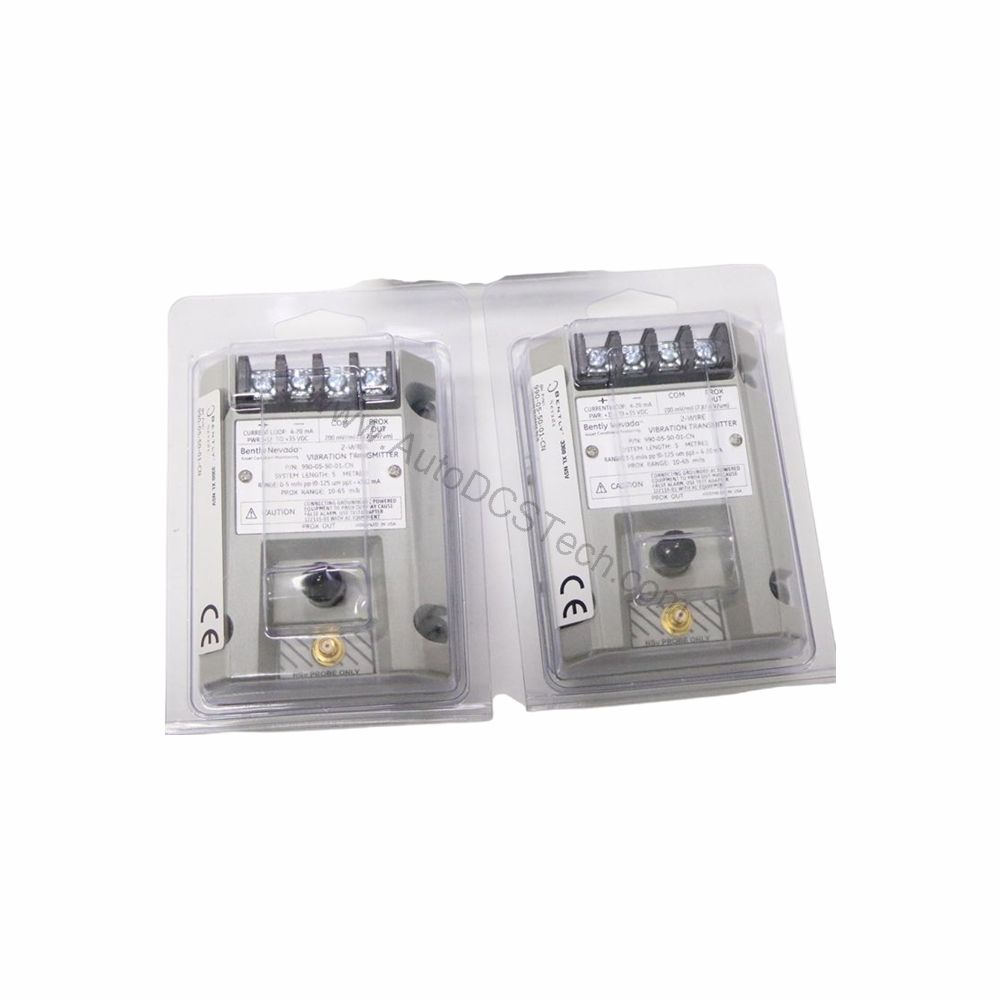
Mounting the 991-25-70-03-01 is straightforward. The unit attaches to a standard DIN rail using the included clips and screws. Ensure the rail is clean and properly grounded to avoid electrical noise. Connect the proximity probe and extension cable to the transmitter input, and wire the output to your control system using a two-wire loop.
Power the transmitter with a +12 to +35 Vdc supply at the terminal. Verify the loop resistance does not exceed 1,000 ohms to maintain accurate readings. After power-up, adjust zero and span using the external potentiometers to match your specific application range. Always follow the manufacturer's manual for detailed wiring and configuration instructions.
Maintenance and Reliability
Regular inspection of the 991-25-70-03-01 is essential for long-term reliability. Check the mounting clips and screws periodically to ensure they remain tight. Verify the probe and cable connections are secure and free from corrosion. The transmitter's operating temperature range of -35°C to +85°C allows use in demanding environments, but avoid exposing it to temperatures outside this range.
Because the unit has no moving parts, maintenance is minimal. However, it is wise to test the Not OK function periodically by simulating a fault condition to confirm the output drops below 3.6 mA. This quick check ensures the safety feature operates correctly when needed.
Compatibility and Integration
The 991-25-70-03-01 accepts one non-contacting 3300 NSv proximity probe and extension cable. This makes it compatible with Bently Nevada's 3300 series sensors, which are widely used in industrial vibration monitoring. The 4-20 mA output can be connected to any analog input module, making it easy to integrate into existing control systems.
For maintenance engineers, this means you can replace older transmitters or expand monitoring points without major system changes. The standard output signal ensures broad compatibility with PLCs, DCS, and data acquisition systems.
Common Issues and Troubleshooting
If the output signal is not within the expected range, first check the power supply voltage. The transmitter requires +12 to +35 Vdc; if the voltage is too low, the output may be inaccurate. Next, verify the loop resistance is below 1,000 ohms. High resistance can cause voltage drops and affect the signal.
If the output goes below 3.6 mA, the transmitter is in a Not OK state. This can be triggered by a faulty probe, cable break, or internal failure. Inspect the probe and cable for damage, and confirm the target is within the linear range. If the issue persists, consult the Bently Nevada manual or contact AutoDCSTech for support.
Availability and Support
The 991-25-70-03-01 is available from AutoDCSTech, your trusted supplier of industrial automation parts. We stock this model and can ship it promptly to minimize downtime. For technical questions or ordering assistance, contact our team. Please verify current lifecycle status and availability with AutoDCSTech before ordering.