When Redundancy Cannot Compromise Determinism
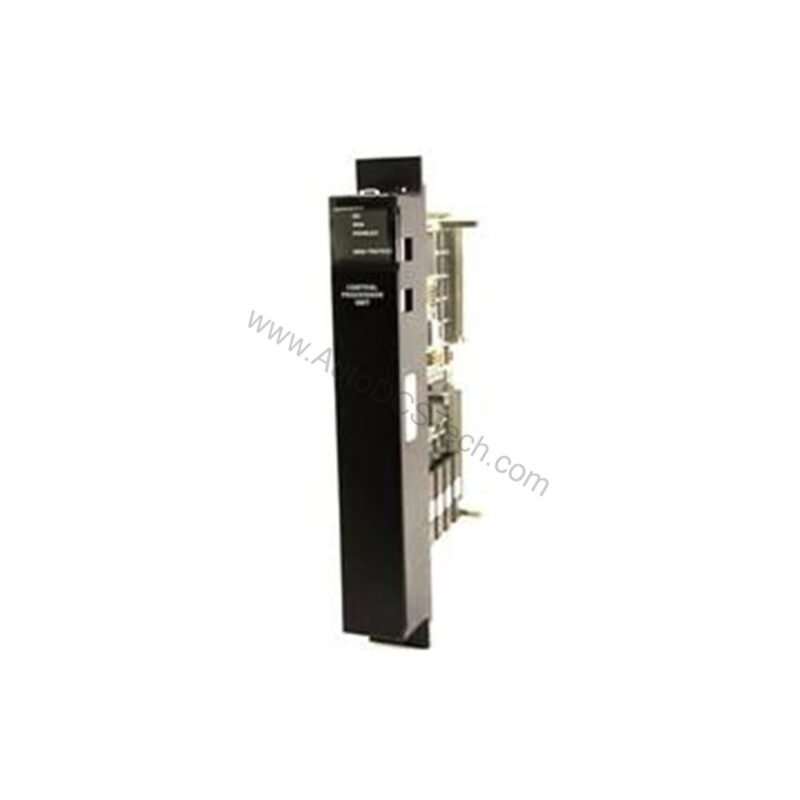
In a triple modular redundant (TMR) process safety system, three CPUs vote on every output. A single timing anomaly—one CPU drifting microseconds out of lockstep—can trigger a vote mismatch and a spurious trip. The engineering challenge is not merely adding redundancy; it is ensuring each CPU executes the same instruction stream with deterministic timing while sharing a VME-compatible backplane. The GE Fanuc IC697CPU789 addresses this by pairing a 32-bit 80386DX processor clocked at 16 megahertz with TMR support in a single-slot module. For the controls engineer specifying a Series 90-70 TMR architecture, the IC697CPU789 is the exact CPU that maintains synchronization across the redundant triad.
Architecture and Electrical Specifications
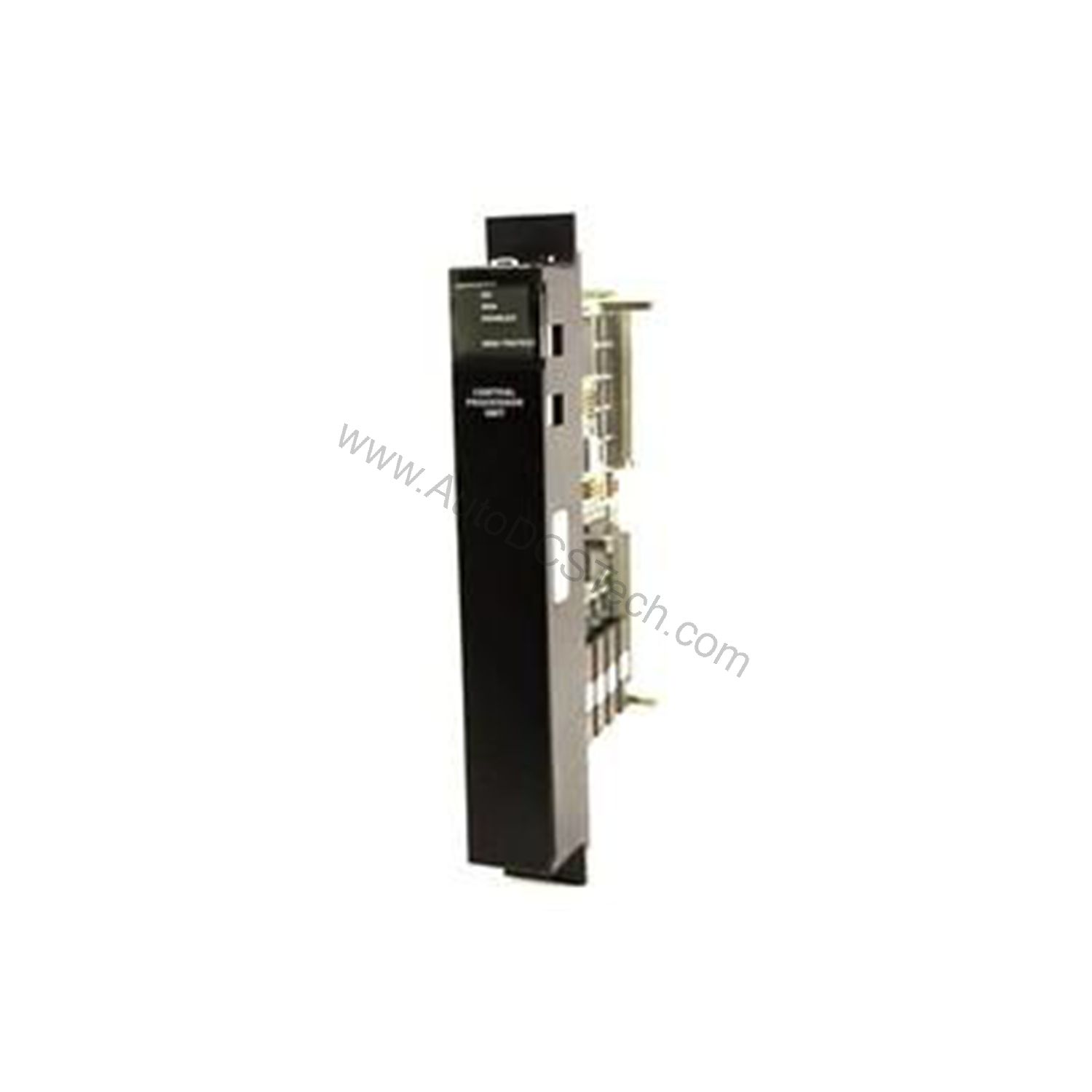
The IC697CPU789 is a 32-bit expandable Central Processing Unit for IC66 TMR systems. Its single-slot design integrates 512 kilobytes of battery-backed expansion memory, of which a maximum of 200 kilobytes is available for user application programs and data. The module communicates with other PLC modules through the VME-compatible rack backplane, and it draws 1.6 Amps from the 5 Volts DC PLC bus. A single serial port supports both RS-422 and RS-485 protocols, enabling direct connection to programming terminals or serial devices without additional interface hardware.
| Parameter | Specification |
|---|---|
| Product type | CPU module |
| Series | Series 90-70 |
| Triple Modular Redundancy | Yes |
| Processor | 80386DX, 16 megahertz |
| Maximum RAM | 512 kilobytes |
| Voltage input | 5 Volts DC |
| Current draw | 1.6 Amps |
| Serial port | 1 (RS-422 / RS-485) |
These verified ratings define the module's electrical envelope. The 5 Volts DC input is drawn directly from the PLC bus; no external supply is required for the CPU itself. The 1.6 Amps current draw must be accounted for in the backplane power budget, particularly in fully loaded racks. The 16 megahertz clock speed provides deterministic scan performance for the TMR voting logic, while the 512 kilobytes of RAM accommodates the application program and data tables within the 200-kilobyte user limit.
I/O Capacity and TMR Voting
In simplex mode, the IC697CPU789 supports up to 12,000 discrete inputs/outputs in any mix, 8,000 analog inputs, and 8,000 analog outputs. Under TMR operation, the module supports 2,048 voted discrete inputs, 2,048 voted discrete outputs, and 1,024 voted analog inputs. These capacities allow the CPU to handle large-scale process control while maintaining triple-vote integrity on critical loops. The voted I/O limits are exact and should be used for sizing redundant I/O racks; exceeding them compromises the TMR voting scheme.
Integration with Series 90-70 Systems
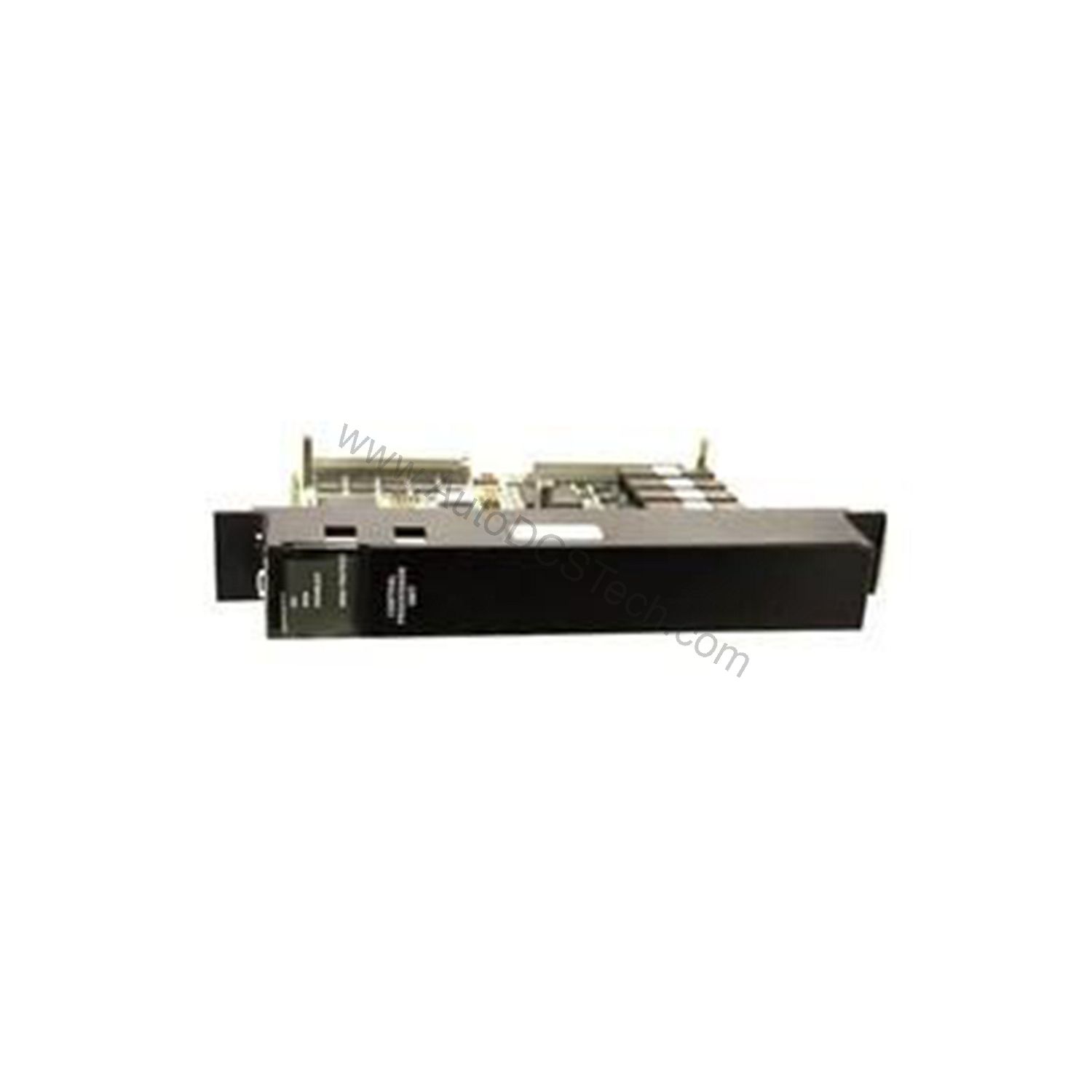
The IC697CPU789 is compatible with GE Fanuc 90-70 PLCs and supports various option modules, including an alphanumeric display coprocessor, a bus controller for IC660/IC661 I/O, an I/O link interface, and IC697 series discrete and analog I/O modules. The serial port's RS-422 and RS-485 support allows multidrop connections to operator interfaces or remote programming devices. When integrating the CPU into a VME-compatible rack, ensure that the backplane power supply can deliver the required 1.6 Amps at 5 Volts DC alongside other modules. The OEM and system integrator are responsible for proper installation and operation in accordance with the hardware installation manual.
Commissioning and Diagnostic Behavior
After the module is installed and system power is turned on, the top LED should start blinking. Upon completion of diagnostics, the top LED becomes steady and the second and third LEDs remain off, indicating the CPU is ready to be programmed. After programming, the toggle switch on the CPU can be moved to the desired position. This LED sequence provides a precise, repeatable commissioning check: a blinking top LED confirms the module is executing its power-up self-test, while a steady top LED with the other two off confirms diagnostic completion. Any deviation from this pattern should be investigated before proceeding to program execution.
Reliability and Maintenance
The battery-backed RAM requires periodic battery inspection to prevent loss of application programs during power cycles. In TMR configurations, each CPU in the triad should be verified for identical firmware and memory configuration to ensure vote consistency. Environmental factors such as ambient temperature and backplane voltage stability directly affect the 16 megahertz clock's timing margin; maintain the rack within the specified operating conditions. Because the module draws 1.6 Amps from the 5 Volts DC bus, verify power supply headroom during routine maintenance to avoid undervoltage conditions that could cause diagnostic faults.
Support and Availability
The IC697CPU789 is in stock and ready to ship from AutoDCSTech. For engineering-grade precision in specifying your TMR CPU replacement or upgrade, contact AutoDCSTech with your exact requirements for precise matching.
Availability & Condition at AutoDCSTech
| Part Number | IC697CPU789 |
|---|