Guangdong Keruisi CNC Technology opened subscription for its Shanghai STAR Market IPO on 29 October 2026, offering 17.13 million shares at RMB 45.37 each. The company is China's largest domestic seller of full direct-drive machine tools, and the detail that carries the listing is vertical integration: it builds 100% of its CNC systems in-house, 99.95% of its servo drives and 99.71% of its linear-motor magnet plates. That integration is real, but it stops short of the whole machine. The position feedback scales, linear-motor coils and precision guide rails are still bought in, mostly from Europe and Japan. Understanding where the line falls explains both the company's 52% gross margin and its main supply-chain risk.
Key takeaways
- The event: Keruisi (SSE: 688827, subscription code 787827) opened its IPO on 29 October 2026 at RMB 45.37 per share, a 41.86x offer price-to-earnings ratio against an industry average of 38.85x.
- The product: Full direct-drive machining centers, where every linear and rotary axis is driven by a motor without a ballscrew, gearbox or coupling, plus the CNC systems, drives and linear motors inside them.
- The integration claim: CNC systems 100% self-produced since 2023, servo drives 99.95% and linear-motor magnet plates 99.71% in 2025, up from 66.67% and 53.37% in 2023.
- The gap: Glass scales, linear-motor coils and precision guide rails are still imported, so the feedback end of the control loop remains externally dependent.
- The financials: Revenue grew from RMB 253 million in 2023 to RMB 409 million in 2025, with net profit rising from RMB 35.6 million to RMB 76.5 million and gross margin from 44.75% to 52.24%.
- The caveat: More than 60% of machine-tool revenue still comes from three-axis machines, and the five-axis share fell from 18.92% in 2023 to 10.65% in 2025.
The offer at a glance
The listing is small in absolute terms but priced at a premium to the sector. Keruisi is raising money to expand machine-tool production, develop its next-generation intelligent CNC system and build out turnkey machining solutions, not to acquire another business.
| Item | Detail |
|---|---|
| Company | Guangdong Keruisi CNC Technology Co., Ltd. (钶锐锶) |
| Exchange and code | Shanghai Stock Exchange, STAR Market; 688827; subscription code 787827 |
| Subscription date | 29 October 2026 |
| Offer price | RMB 45.37 per share |
| Offer P/E | 41.86x, against an industry average of 38.85x |
| Shares offered | 17.1286 million, 25% of the post-issue share capital |
| Gross proceeds | RMB 777.1 million; RMB 682.4 million net of issue costs |
| Implied market value | About RMB 3.1 billion at the offer price |
| Use of proceeds | Machine-tool production base, next-generation CNC system R&D, turnkey machining-solution R&D, working capital |
| Sponsor | Guotai Haitong Securities |
What Keruisi actually makes
Keruisi is not a generic machine-tool builder that buys a control from FANUC or Siemens and bolts it onto a cast-iron frame. It sells two things that reinforce each other: complete direct-drive machining centers, and the CNC systems, servo drives and linear motors that go inside them. In 2025, machine tools produced RMB 312.2 million of revenue, or 76.42% of the total, while CNC systems contributed RMB 85.3 million, or 20.88%.
The control business has two product families. The U series is a PWM-type CNC system, the architecture long associated with high-end milling and, in China, with Heidenhain. The N series is a bus-type system that sends motion commands digitally over a fieldbus and is sold to machine builders and automation companies, including FANUC Robotics. Having both is unusual among Chinese suppliers: most have one, and few have either at volume. Keruisi says it has sold more than 20,000 CNC systems to date, used on precision milling machines, grinders, five-axis machine tools, five-axis laser cutters, force-controlled grinding equipment and automated cells.
The flagship K-540iH shows where the machine design sits. It is a 500 × 400 × 200 mm vertical machining center with a 42,000 rpm HSK-E40 integral spindle, 11 kW spindle motor, 60 m/min rapid traverse (shipped setting 18 m/min), acceleration of 0.6 to 1.0 g depending on axis, a 20-tool magazine and a 1.55-second chip-to-chip time. The bed is mineral cast rather than cast iron, chosen for damping and thermal stability. Those numbers describe a machine aimed at micro-holes, micro-slots, optical molds, graphite molds for 3D glass forming, connectors and small aerospace or medical parts, not at heavy stock removal.
PWM and bus controls: why owning both matters
The two control types are not marketing labels. They describe how the CNC tells the drive what to do, and that choice shapes the machine, the cabinet and the service model.
| Control type | What it means in practice |
|---|---|
| PWM type (U series) | The CNC issues pulse-width-modulated command signals to each drive. The architecture is deterministic, well understood by machine builders, and dominant in high-precision milling where Heidenhain built its position. It suits machines with a fixed axis count and tight interpolation requirements. |
| Bus type (N series) | The CNC sends digital motion commands over a fieldbus. Cabling is simpler, axis count is easier to expand, and drives can report detailed diagnostics back to the control. It suits five-axis machines, automation cells and anything that needs to coordinate many axes or exchange data with a factory network. |
Owning both lets Keruisi put its own PWM control on its own machines, where it controls tuning and cost, and sell bus controls to other machine builders, where it competes with FANUC, Siemens and Mitsubishi. Those three accounted for roughly 65% of China's CNC system market in 2025, according to industry data cited in Chinese coverage, so the opening is narrow. Keruisi's own share of the domestic high-end CNC system market reached 19.41% in 2025, a figure that reflects the high-end segment rather than the whole market.
What full direct drive changes at the machine level
A conventional machine converts rotary motor motion into linear motion through a ballscrew, couplings and bearings. A full direct-drive machine removes that chain. The forcer of a linear motor is mounted on the moving axis, and the magnet plate is fixed to the bed; the axis is the motor. Rotary axes use torque motors in the same way.
The mechanical consequences are straightforward. There is no backlash, no screw whip, no coupling wind-up and no wear surface between the motor and the tool. Stiffness and dynamic response rise, which is how a machine of this size reaches 60 m/min and 1 g. Accuracy stays stable over time only if the feedback scale and the thermal management are equally good, because there is no mechanical reduction to average out small errors.
The costs are equally real. Linear motors generate heat in the winding, so the axis needs cooling and the bed needs a thermal strategy. Magnet plates exert strong attraction forces, which complicates assembly, crash protection and vertical-axis holding. And the machine's accuracy is only as good as its scale: a direct-drive axis has no fallback if the encoder or scale is contaminated or misaligned. That is why the imported part of the bill of materials matters more than its share of cost.
Auditing the 100% claim
The prospectus discloses self-production rates component by component, which is more useful than a single headline number. The pattern is clear: Keruisi makes the electronics and the motor magnetics, and buys the precision mechanical and optical parts that require long-established suppliers.
| Component | Status in the prospectus |
|---|---|
| CNC system | 100% self-produced in 2023, 2024 and 2025, including hardware and software |
| Servo drive | 99.95% self-produced in 2025, up from 66.67% in 2023 |
| Linear-motor magnet plate | 99.71% self-produced in 2025, up from 53.37% in 2023 |
| Spindle, bed, rotary table | Mainly sourced from domestic suppliers |
| Linear-motor coil, precision guide rail, glass scale | Mainly purchased from established suppliers in developed countries; few qualified alternatives |
This is the most important table in the listing. The company's own risk section warns that extreme geopolitical conditions could interrupt supply of those imported components. It also creates an odd competitive position: Heidenhain is the incumbent Keruisi is displacing in PWM controls, and, according to the company's product pages for the K-540i and K-540iH, the supplier of the glass scales on those machines. The company does not disclose how much of its scale purchases come from any single supplier.
For a machine buyer, the practical reading is that "100% self-produced CNC" covers the brain, the drive electronics and the motor magnetics, but not the eyes. A spare-parts strategy that stocks only the control and drive misses the component most likely to stop a direct-drive machine: the feedback scale and its cable.
The numbers behind the listing
Growth has been consistent, and the margin is unusual for the sector. So is the working-capital profile.
| Period | Revenue, net profit and gross margin |
|---|---|
| 2023 | Revenue RMB 253.3 million; net profit RMB 35.6 million; gross margin 44.75% |
| 2024 | Revenue RMB 316.6 million; net profit RMB 63.2 million; gross margin 48.84% |
| 2025 | Revenue RMB 409.0 million; net profit RMB 76.5 million; gross margin 52.24% |
| First half 2026 | Revenue RMB 248.2 million, up 34.08%; net profit RMB 52.6 million, up 40.48%; gross margin 52.60% |
| First three quarters 2026 (forecast) | Revenue RMB 350–370 million, up 28.52–35.86%; net profit RMB 68–78 million |
The gross margin is roughly 22 percentage points above the average of listed Chinese machine-tool peers, which the company attributes to vertical integration. That explanation is plausible: making the control, drive and magnet plate in-house captures margin that would otherwise go to suppliers. But the balance sheet adds a second explanation. Accounts receivable reached RMB 249 million at the end of 2025, equal to 60.83% of revenue, and RMB 87.07 million of that was overdue. Operating cash flow was RMB 20.3 million against net profit of RMB 76.5 million, a net cash ratio of 0.27.
None of that makes the growth fictitious. It does mean the margin is partly financed by customers, and that a slowdown in collections would hit cash before it hit reported profit. For a supplier evaluating Keruisi as a customer or a partner, payment terms deserve as much attention as the specification sheet.
Who buys, and what for
Keruisi says it has served more than 700 customers. The named list includes Foxconn, Changying Precision, Luxshare Precision, Sunwoda, Zhaowei Machinery, FANUC Robotics and Japan's Sodick. That mix explains the end-market profile: consumer electronics, automotive and aerospace accounted for 69.56% of machine-tool revenue in 2025, down slightly from 73.12% in 2024 but still the core.
The newer demand is more interesting for the wider market. In 2025, AI servers, semiconductors and robotics together produced 17.54% of machine-tool revenue. Those are applications where the part is often a thin-wall housing, a cold plate, a connector mold or a small precision component, and where cycle time and surface finish matter more than the ability to remove large volumes of metal. That is exactly the envelope a high-speed direct-drive machine occupies. It is also why the listing has attracted attention beyond the machine-tool sector: the same capacity is being bought by electronics and data-center supply chains.
The category is still small. Frost & Sullivan data cited in Chinese coverage put China's full direct-drive machine-tool market at RMB 4.22 billion in 2023, with an estimate of RMB 13.28 billion by 2029. Keruisi's RMB 409 million of 2025 revenue is therefore a modest share of a growing niche, which is consistent with both the growth story and the 2.21% overall high-end milling share.
The detail that complicates the high-end story
The "domestic high-end" label needs context. Keruisi ranked first among Chinese suppliers by full direct-drive machine-tool sales in 2024, and it held 11.61% of the domestic high-end CNC milling market in 2025. But its share of the overall high-end milling market, including foreign brands, was 2.21%. The company is a leader in a niche, not in high-end machining overall.
More telling is the product mix. Three-axis machines still generate more than 60% of revenue. Five-axis machines, the category that carries the highest technical and price premium, fell from 18.92% of revenue in 2023 to 10.65% in 2025. The company is growing fastest in high-precision three-axis work, where its direct-drive platform competes on accuracy and surface finish, not in the five-axis aerospace and mold work that defines the top of the machine-tool market.
That is not a reason to dismiss the business. A high-precision three-axis machine doing optical molds and connector cavities is a genuine substitute for imported equipment, and the volume is larger than the five-axis segment. But buyers and investors should read "high-end" as "high-precision three-axis plus a smaller five-axis line," not as a claim on the entire high-end market. The company's own expansion plans, including a five-axis portfolio and turnkey solutions, are an attempt to change that mix.
What this means for machine owners and parts buyers
For anyone running a direct-drive machine, the listing changes little at the spindle. What it does change is the second-source landscape. A domestic builder with in-house controls and drives can support its installed base with faster electronics replacement and, eventually, more competitive pricing. It also puts pressure on the imported control vendors that have dominated high-end milling in China.
The service reality is less tidy. A direct-drive machine concentrates value in a small number of components: the CNC, the servo drive, the linear motor, the scale and the spindle. When one fails, the machine stops, and the lead time for a replacement often decides the outage. Machine owners typically keep a spare drive and a spare scale read head rather than a spare motor, because the motor is bulky and the drive is the more common electronic failure. Cables are the cheapest insurance and the most frequently overlooked.
That logic applies across brands. For FANUC-based cells, the FANUC brand index covers servo amplifiers and CNC hardware, including the A06B-6079-H301 servo amplifier and the A02B-0211-B501 Power Mate H control. Motors are the other half of the pair, such as the A06B-0064-B203 AC servo motor. Mitsubishi-equipped machines use a different family, represented by the HG-KR73J 0.75 kW servo motor with a 22-bit encoder, while older Yaskawa Sigma II axes map to drives such as the SGDH-10AE.
Feedback is where mixed-brand machines get difficult. A Siemens 6FX2001-5FP24 PROFIBUS encoder and a DRIVE-CLiQ motor encoder cable illustrate the connector and protocol conventions that have to match, even when the control is not Siemens. Cabinet hardware matters too: a SINAMICS 7.5 kW power module for drive power, an ABB SD833 24 V DIN-rail supply for control power, and a Schneider BMXSRA0405 safety relay output module for the interlock chain. Branch protection and switching sit alongside them, using parts such as the Siemens 3RV6021 motor protection circuit breaker and the 3RT6015 contactor.
You can browse those families directly: servo drives, cables and connectors, power supplies and safety and protection. For a related look at how servo platforms are being repositioned for light-duty machine building, see our analysis of the Omron C6 servo launch; for the automation side of the same trend, the Yaskawa and GAZOO Racing welding cell is a useful case study.
A checklist for direct-drive machine maintenance
- Identify the feedback type first. Record the scale brand, model, resolution and signal type for every axis. A direct-drive machine cannot run open-loop, so the scale is a critical spare, not an accessory.
- Stock the drive, not just the motor. Servo drives fail more often than motors and are easier to store. Match the drive to the motor code and the control's interface, not just the power rating.
- Treat cables as consumables. Encoder and power cables flex, get pinched and pick up noise. Keep one spare of each critical length and check shield grounding during every service.
- Protect the thermal chain. Linear motors and spindles depend on cooling. A chiller fault or a blocked filter can damage a motor before the control reports an error.
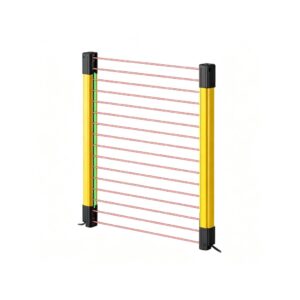
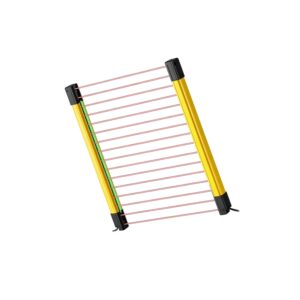
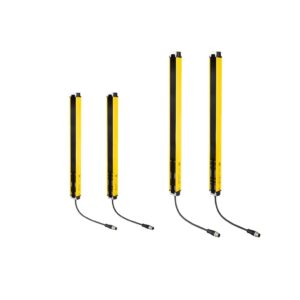
- Check the safety chain separately. Door interlocks, light curtains, safety relays and the drive's STO input are independent of the CNC's motion logic and need their own test routine.
- Plan for magnetic forces. Replacing a linear-motor forcer or magnet plate is not a routine swap. Follow the builder's fixture and demagnetization procedure, and never open the axis without mechanical restraint.
Frequently asked questions
What is Keruisi and why is its IPO significant?
Keruisi is a Chinese builder of full direct-drive CNC machine tools and the CNC systems, servo drives and linear motors inside them. Its IPO matters because it is the first listed pure play in this segment and because it produces 100% of its CNC systems in-house, a rarity among Chinese machine-tool builders.
What does 100% self-produced CNC mean?
It means Keruisi designs and manufactures the CNC hardware and software itself rather than buying a control from FANUC, Siemens, Mitsubishi or Heidenhain. It does not mean the whole machine is made in-house: glass scales, linear-motor coils and precision guide rails are still purchased, mainly from suppliers in developed countries.
What is the difference between PWM-type and bus-type CNC systems?
A PWM-type CNC sends pulse-width-modulated command signals to each servo drive and is common in high-precision milling. A bus-type CNC sends digital motion commands over a fieldbus, which simplifies cabling, supports more axes and provides richer diagnostics. Keruisi sells both the U-series PWM control and the N-series bus control.
How accurate is the K-540iH?
Keruisi says the K-540iH achieved a best single-axis positioning accuracy of 0.7 micrometers in testing by China's National Machine Tool Quality Supervision and Inspection Center. The published catalogue specification for the same model is positioning accuracy of 3 micrometers or better and repeatability of 2 micrometers or better, so the 0.7 micrometer figure should be read as a tested best case rather than a guaranteed specification on every machine.
Is Keruisi a five-axis machine tool company?
Partly. It sells five-axis models, but three-axis machines generate more than 60% of revenue, and the five-axis share fell from 18.92% in 2023 to 10.65% in 2025. Its strongest position is high-precision three-axis machining for molds, connectors, optical parts and similar work.
What are the main risks in the listing?
Three stand out. Imported glass scales, linear-motor coils and guide rails create supply exposure. Accounts receivable reached 60.83% of 2025 revenue, with RMB 87.07 million overdue, which weighs on cash flow. And the high-end label rests on a 2.21% share of the overall high-end milling market, with five-axis revenue declining as a proportion of the total.
Sources
- Guangdong Keruisi CNC Technology, prospectus and registration documents for the STAR Market listing, 2026.
- 21st Century Business Herald, "Keruisi opens subscription: PWM and bus CNC systems both in volume sales", 29 October 2026.
- Cailian Press, "Keruisi IPO in brief: CNC systems 100% self-produced, drive self-production at 99.95%", 29 October 2026.
- Sina Finance, "First all-direct-drive machine tool listing: Keruisi opens subscription", 29 October 2026.
- OFweek Industrial Control, "Keruisi registration approved: revenue mix and end-market disclosure", 8 September 2026.
- Keruisi product page, K-540iH high-speed high-precision vertical machining center, gdkrs.com.
Talk to us
If you are maintaining a direct-drive or high-speed machining cell, send us the machine model, control type, servo drive code and the part that is stopping the line. We will check compatible motion, feedback, power and safety hardware and the realistic lead time. Contact our team.