Yaskawa Electric and Toyota's GAZOO Racing have moved AI welding from a demonstration to a production line. On 28 October 2026 the two companies announced that an AI-powered autonomous robot production technology, built on their SFA (Sequence Freezing Arc Welding) process, began operation at the Gamagori GR KART Workshop in September 2026. The robot recognises the condition of a pipe frame, decides how to weld it, checks the result and corrects it. Yaskawa says the system is in practical use in GR KART frame manufacturing and contributes to higher productivity, more consistent quality and lower cost.
Key takeaways
- What was announced: Yaskawa and GAZOO Racing jointly developed an AI-based autonomous robot production technology for arc welding, announced on 28 October 2026.
- Where it runs: The Gamagori GR KART Workshop in Aichi, Japan, where it started operation in September 2026.
- What it does: The robot recognises pipe-frame condition and joint gaps, determines welding conditions, performs the weld, inspects quality and applies correction.
- What it is built on: The SFA process, jointly developed in 2024, which cut roll-cage production from two to three weeks to three days.
- What it uses: MOTOMAN NEXT, Yaskawa's AI robot with an onboard GPU, analysing camera images, welding sound and process data.
- Why it matters: It automates a pipe-frame welding task that previously depended on highly skilled welders, and it is running in real production rather than a pilot cell.
What Yaskawa and GAZOO Racing announced
The announcement is not a laboratory result. Yaskawa describes the GR KART installation as a practical deployment of MOTOMAN NEXT on a customer production line, not a verification or evaluation project. The scope is the complete welding cycle: the robot reads the state of the frame, chooses conditions, welds, inspects the bead and corrects where needed. That closes a loop that normally requires a welder to watch the joint, adjust technique and decide whether the result is acceptable.
| Item | What was announced |
|---|---|
| Partners | Yaskawa Electric Corporation and GAZOO Racing, Toyota's motorsport division |
| Announcement date | 28 October 2026 |
| Deployment | Gamagori GR KART Workshop, Aichi, Japan; operation began September 2026 |
| Base process | SFA (Sequence Freezing Arc Welding), jointly developed in 2024 |
| Robot | MOTOMAN NEXT, equipped with a GPU and AI capabilities |
| Autonomy scope | Recognise welding conditions, judge, weld, inspect quality, correct |
| AI inputs | Visual images, welding sound and various process data |
| Application | GR KART pipe-frame manufacturing |
| Reported outcomes | Higher productivity, quality consistency and lower production cost |
The SFA foundation: slower welding, less distortion
SFA stands for Sequence Freezing Arc Welding. Yaskawa and GR developed it in 2024 to improve the roll cages used in race vehicles, where thin-wall steel tube, tight packaging and driver safety leave little room for distortion or excess metal. The process deliberately controls heat input so that each section of weld solidifies in sequence rather than leaving a large molten pool that pulls the frame out of shape as it cools.
The result was a step change in build time. Yaskawa says SFA reduced roll-cage production from two to three weeks to three days, while improving weld quality and strength and contributing to weight reduction. The process has also been adopted on Super Taikyu Series cars.
In its 2024 account of the project, Toyota Times reported further detail: a thinner and wider bead, bead weight reduced by about 25%, joint strength improved by 10% to 25%, and the ability to weld overhead, vertical-up and vertical-down positions that had previously been difficult. It also noted that SFA can bridge gaps of 2 to 3 mm. Those characteristics are what make the process suitable for a robot: the heat and deposition are controlled by parameters, not only by hand feel.
The trade-off is speed. SFA is slower than a conventional production weld because it allows cooling intervals. Toyota Times drew the contrast directly: a conventional Toyota production line welds on a 60-second takt, roughly ten times faster. For a race car or a low-volume kart frame, that is an acceptable exchange, because the cost of rework and distortion is higher than the cost of a slower pass.
What the AI layer actually does
SFA provides a controllable welding process. The new development adds the decision layer around it. In a pipe frame, the same drawing can produce a slightly different joint every time: the tube may sit a millimetre or two off, the gap may open on one side, the fit-up may change after tack welding, and the heat from the previous pass changes the starting condition for the next one. A fixed robot program cannot absorb that variation. A skilled welder does, by looking, listening and adjusting.
The GR KART system copies that loop. Yaskawa says the robot recognises the state of the pipe frame, including gaps and temperature, and uses MOTOMAN NEXT to determine the optimal action for each situation. It then performs the weld, checks the finished bead and corrects it. The AI combines visual images with welding sound and other process data, which is important: a camera can see the bead shape, but the arc sound carries information about stability, penetration and short-circuit behaviour that a single image may miss.
| Stage | What changes compared with a fixed robot program |
|---|---|
| Recognise | Vision and process data establish the actual fit-up, joint gap and thermal state of the pipe frame. |
| Judge | The AI selects welding conditions for that joint instead of replaying one set of taught parameters. |
| Weld | The robot executes the pass using SFA heat-control parameters suited to the detected condition. |
| Inspect | Camera images, arc sound and process data are analysed to assess bead quality. |
| Correct | The system applies a correction rather than passing a suspect joint downstream. |
Why pipe frames were hard to automate
Tube-frame welding combines three problems that are awkward for conventional automation. First, the parts are flexible: a frame that is accurate on a fixture can spring when it is unclamped. Second, the joint is not a clean butt weld: gaps vary, tube ends are not perfectly mitred, and the torch has to reach around intersections. Third, the quality judgement is tacit. An experienced welder reads the puddle, the arc tone and the way the metal flows, then changes travel speed or angle in real time.
That is why many fabricators still weld frames manually even when they own welding robots. Robots are excellent at repeating a known path in a known condition. They are poor at deciding what to do when the condition changes. The GR KART deployment is interesting because it attacks the decision problem, not just the motion problem. It does not claim to weld any frame; it claims to handle the variation within a defined pipe-frame process.
What it changes on the line
The most immediate change is labour. Yaskawa says the technology automates a process that previously depended on the experience and skill of highly skilled welders. In a country where skilled welding labour is scarce and aging, that is a practical benefit, not a slogan. The second change is knowledge capture. SFA converted welder technique into process parameters; the AI layer converts inspection and correction judgement into a repeatable loop. The knowledge stays in the cell when an individual retires.
The third change is cost. Yaskawa states that the GR KART deployment contributes to lower production cost. GR describes the Gamagori workshop as a place where the kart is manufactured and where new production technology is proven, so the line is both a factory and a proving ground.
It is worth separating the metrics. The two-to-three-weeks-to-three-days figure belongs to roll-cage production with SFA. The GR KART result is described in terms of productivity, quality consistency and cost, without a published cycle-time number. Readers should not assume the kart frame is built in three days simply because the roll cage is.
Where autonomy stops
Autonomous welding does not remove the rest of the welding cell. The robot still needs a fixture that presents the frame repeatably, a torch that is cleaned and aligned, consumables that are replaced on condition, shielding gas that is actually flowing, and a safety system that keeps people out of the arc envelope while allowing loading and unloading. The AI decides within the envelope it has been given; it does not design the joint, qualify the procedure or certify the weld.
That distinction matters for anyone specifying a similar system. The value is not in the word autonomous. It is in how much variation the cell can absorb before it stops, and how clearly it flags a joint it cannot correct. A system that quietly passes a marginal weld is worse than a manual welder who stops the line. The GR KART deployment is credible because it is tied to a defined product, a defined fixture and a defined quality check, not because it promises general-purpose welding intelligence.
The hardware around the robot
Yaskawa's MOTOMAN NEXT is not part of our catalogue. What we stock is the motion, power and safety hardware that keeps automated cells running: the servo drives and motors that position the robot and workpiece, the encoder and power cables that carry feedback and current, the 24 V supply that feeds the controller, and the protection and safety devices around the cabinet.
For Yaskawa-based cells, the Yaskawa brand index is the starting point. Representative motion hardware includes the SGDV 750 W Sigma-5 servo drive, the SGDH 3 kW Sigma-II drive and the SGMGV 1.3 kW servo motor. Feedback faults often sit in the cable rather than the motor or drive, which is why the Siemens V90 encoder cable is a useful reference for connector and length conventions even on a mixed-brand cell.
Panel infrastructure deserves the same attention. The ABB SD833 24 V 10 A DIN-rail supply covers control power, while the Siemens 3RV6021 motor protection circuit breaker and 3RT6015 contactor handle branch protection and switching. Where a cell needs a certified safety layer, the ABB SM812 safety supervision module is an example of SIL 3 hardware used alongside robot safety functions.
You can browse the relevant categories directly: servo drives, cables and connectors, power supplies and safety and protection. For a related look at how servo platforms are being positioned for light-duty machine building, see our analysis of the Omron C6 servo launch.
What to check before automating a pipe-frame cell
- Part envelope and access. Confirm the robot can reach every joint without collision, including the torch body, gas cup and any seam sensor.
- Fit-up tolerance. Measure the real gap distribution, not the drawing tolerance. A process that claims 2 to 3 mm gap capability still needs the fixture to keep gaps inside that band.
- Thermal sequence. Decide the weld order before programming. Distortion is a function of heat input and sequence as much as of robot accuracy.
- Quality definition. Define what the AI is allowed to accept, what it must correct and what it must reject. A visual pass is not the same as a qualified weld.
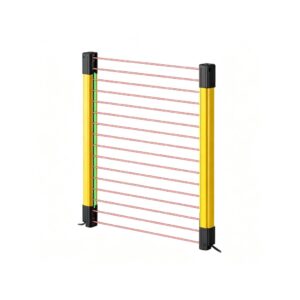
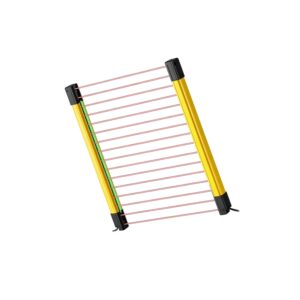
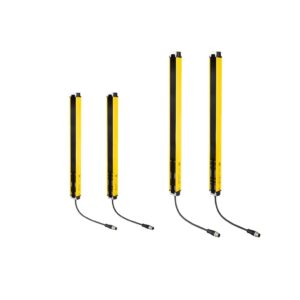
- Safety and access. Loading a frame into a robot cell needs a controlled stop, interlocked doors or light curtains, and a restart procedure that does not put a hand near a hot torch.
- Spares strategy. Keep the servo drive, motor, encoder cable, torch consumables and safety device that stop the cell. The robot is rarely the only single point of failure.
Frequently asked questions
What did Yaskawa and GAZOO Racing announce?
They announced an AI-powered autonomous robot production technology for arc welding, developed jointly and introduced at the Gamagori GR KART Workshop in September 2026. It is used in GR KART frame manufacturing and is described as a production deployment rather than a pilot.
What is the SFA process?
SFA stands for Sequence Freezing Arc Welding. Yaskawa and GAZOO Racing developed it in 2024 for race-car roll cages. It controls heat input so each section of weld solidifies in sequence, reducing distortion. Yaskawa says it cut roll-cage production from two to three weeks to three days.
Which robot is used at the GR KART workshop?
Yaskawa's MOTOMAN NEXT, an AI robot equipped with a GPU. It recognises pipe-frame condition and joint gaps, determines the welding action, performs the weld and carries out post-weld inspection and correction.
What data does the AI analyse?
Yaskawa says the system combines visual images with welding sound and various process data. The sound matters because arc stability and penetration are not always visible in a single camera image.
Is this still a pilot project?
No. Yaskawa states that the technology is in practical use on the GR KART frame line and that it is a deployment on a customer production line. The company also says the project goes beyond verification and evaluation.
Does the system replace skilled welders?
It automates a specific pipe-frame welding process that previously depended on experienced welders. Yaskawa and GR present it as a way to capture welding knowledge and address labour shortages, not as a universal replacement for welding skill or procedure qualification.
Sources
- Yaskawa Electric, "Yaskawa Electric and GAZOO Racing Advance Welding Technology Proven in Motorsports", news release, 28 October 2026.
- Yaskawa Electric, Japanese news release on the GR KART welding deployment, 28 October 2026.
- GAZOO Racing, "安川電機とGAZOO Racing、溶接技術をモータースポーツの現場で鍛え進化", press release, 28 October 2026.
- Toyota Times, "Super Taikyu Round 5 at Suzuka: from three weeks to three days", 2024.
Talk to us
If you are building or maintaining a robotic welding cell, send us the robot model, controller, servo drive and the part that is stopping the line. We will check compatible motion, power and safety hardware and the realistic lead time. Contact our team.