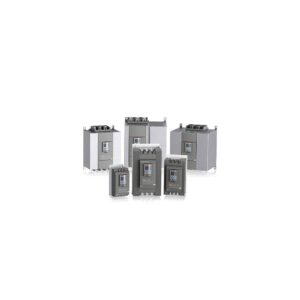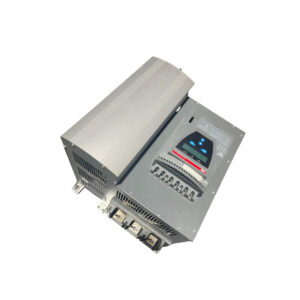
Nidec Drives has extended its Commander S general-purpose AC drive to 11 kW (15 hp) with a new generation it calls Commander S V2, claiming it is the smallest micro drive on the market at that rating and keeping the NFC-based Marshal app as standard, no-extra-cost equipment. That is the announcement. Here is the part that matters for buyers outside China: as of 28 October 2026 the extension exists only as an undated newsroom item on Nidec Drives China site, and the Commander S product page still lists the old range of 0.18 to 4 kW (0.25 to 5 hp). No frame table, voltage-class split, model numbering or current rating for the 11 kW units has been published in any language we could verify. The marketing claim is clear. The engineering data is not there yet, and that gap is where the real decisions sit.
Key takeaways
- The range step is 4 kW to 11 kW. Nidec frames it as consolidation: one Commander S V2 platform across the whole power range instead of a drive family that stops at 5 hp.
- 11 kW at 400 V is a volume rating, not a niche one. ABB ACS180, Siemens SINAMICS V20 and Delta MS300 all already cover it, and all three rate their 11 kW / 15 hp four-pole models at about 25 A. Nidec is competing on cabinet volume and installation time, not on current.
- Commissioning is the differentiator Nidec can prove today. Marshal runs on Android and iOS over NFC, sets a drive in about 60 seconds, clones parameters, and works with the drive unpowered or still in its carton. The closest competitor equivalent on Siemens V20 is the Smart Access module, which is an option that plugs onto the converter.
- Nothing on the current spec page is restated for V2. IP20, EMC categories C1/C2/C3, 150 percent overload, linear and quadratic V/F modes and Modbus RTU all describe the existing range. A 15 hp unit in the same housing family raises different thermal and terminal questions.
- The extension creates overlap inside the Nidec ladder. Commander C already spans 0.25 to 132 kW at normal duty and lists option modules; an 11 kW Commander S sits in the same cabinet space as a low-frame C. Specify on features, not on kilowatts.
- Until an English datasheet exists, treat availability and accessory compatibility as open questions and get model numbers, derating curves and spare-part codes in writing before a project is designed around them.
What Nidec announced, and what it did not
The China newsroom item is short and specific about three things: the new top rating, the space claim, and the app. It says the V2 combines a compact design with higher power in a smaller space, faster commissioning and lower total cost of ownership, that it is the smallest micro drive on the market for 11 kW (15 hp) applications, and that it helps customers maximise cabinet space and simplify installation. It also states that the upgrade lets customers standardise on a single Commander S V2 platform across the full power range, and that the integrated Marshal application is provided free as a standard feature, allowing commissioning, monitoring, diagnosis and support from a smartphone, powered or unpowered, in as little as 60 seconds. Mounting is described as snap-on DIN rail with a compact footprint and side-by-side capability.
What the announcement does not contain is the data an engineer needs. The table below separates the two.
| Item | Stated by Nidec | Still unpublished |
|---|---|---|
| New top rating | 11 kW / 15 hp, described as the smallest micro drive at that rating | Frame sizes, dimensions, weight, and which lower ratings the V2 covers |
| Voltage classes | Not restated for V2; the current page lists 1-phase 100 V and 200 V plus 3-phase 200 V and 400 V | Whether the 11 kW unit exists in single-phase form at all, which is physically constrained at that rating |
| Electrical data | Not stated | Rated output current, input current, overload percentages, trip class |
| Enclosure and EMC | Not restated for V2; existing range is IP20 with EMC categories C1, C2 and C3 | Filter category at 11 kW, whether an IP66 or coated-board variant is planned |
| Model numbering | Not stated | Part numbers, order codes, accessory compatibility with the 0.18 to 4 kW units |
| Availability and region | Not stated | Release date outside China, regional stock, lead time |
Why 11 kW is the load-bearing number
Below 4 kW, a general-purpose drive competes on price and on how few parameters a maintenance technician has to touch. Above it, the same enclosure starts feeding motors that move real air and real water: 11 kW (15 hp) is the standard rating for mid-size fans, centrifugal pumps, small compressors and conveyor drives in HVAC plant, water treatment, packaging lines and material handling. It is also the rating where a drive stops being an accessory on a machine and becomes a line-critical item with a spare on the shelf.
That is the band ABB, Siemens and Delta have occupied for years, and the comparison is closer than a headline suggests. All three publish an 11 kW / 15 hp model for three-phase 400 V service, and all three rate it at roughly the same output current.
| Drive family | Published power range | 11 kW / 15 hp model, 3-phase 400 V | Rated output current | App-based commissioning |
|---|---|---|---|---|
| Nidec Commander S (V2) | Current page: 0.18 to 4 kW (0.25 to 5 hp); newsroom: extended to 11 kW | Not published | Not published | Marshal over NFC, standard and free |
| ABB ACS180 | 0.25 to 22 kW, 200 to 480 V, IP20 | ACS180-04N-25A0-4 (380 to 480 V) | 25 A | Not confirmed in the manufacturer material we checked |
| Siemens SINAMICS V20 | 1AC 200 to 240 V: 0.12 to 3 kW; 3AC 380 to 480 V: 0.37 to 30 kW | 6SL3210-5BE31-1UV0, frame FSD | 25 A | Smart Access module, optional, plugs onto the converter |
| Delta MS300 | 1AC 110 V: 0.2 to 0.75 kW; 1AC 230 V: 0.2 to 2.2 kW; 3AC 230 V: 0.2 to 15 kW; 3AC 460 V: 0.4 to 22 kW | VFD25AMS43ANSAA (460 V class) | 25 A, heavy duty | Not documented in the material we could verify |
Read the current column again before you plan a design around a smaller box. At 11 kW and 400 V, the three established families converge on about 25 A, which is what a four-pole induction motor of that rating draws. A smaller housing therefore does not change the cable, the fuse or the contactor on the line side. It changes the panel layout, the cooling load per unit of door area, and how many drives fit on one DIN rail. Those are genuine advantages in a control cabinet, and they are also the reason the missing dimensions matter more than the missing model numbers.
Two other numbers in that table carry weight. ABB lists safe torque off as standard on ACS180, and Siemens covers up to 30 kW on V20 at 400 V, so an 11 kW Nidec drive is not buying its way into unclaimed territory. Where the current Commander S page does differ from both is voltage breadth: 1-phase 100 V is a genuine variant in that family, and the ACS180 range starts at 200 V, so an 115 V single-phase requirement is a different product line entirely.
Source basis, stated plainly: the ABB figures come from ABB product pages, including the individual SKU page for the 11 kW model. The Siemens voltage-class ranges come from a Siemens product page; the 11 kW model code and current come from a Siemens selection table that we could not open as a canonical datasheet. Every Delta figure comes from catalog material reproduced by channel partners, because the English Delta product URL for MS300 returns a 404. Treat the Delta row as indicative.
Cabinet space is the real currency, and it triggers a checklist
Nidec built the current Commander S around installation speed: a rounded shell that shortens the wiring path, snap-on DIN rail mounting, and side-by-side placement. If the V2 keeps those traits at 11 kW, it will be attractive in exactly the places where panel space is sold by the square centimetre: retrofits inside an existing enclosure, skid-mounted pump packages, and cabinets shared with a PLC and a safety relay.
Before a designer commits, five items need to be read from the datasheet rather than inferred from the launch copy.
- Derating. A compact shell at 15 hp usually means higher power density, which means the rated current is tied to a specific ambient temperature and mounting orientation. Confirm the curve at 40 and 50 degrees C, and confirm whether side-by-side mounting without a gap survives at full load.
- Terminal capacity. 25 A continuous plus a 150 percent overload demands cable that a small terminal block may not accept. Check the maximum conductor cross-section, whether ferrules are allowed, and the stripping length.
- EMC category. The existing range is documented across categories C1, C2 and C3. Category C3 is the industrial-network filter, and at 11 kW the filter volume is not something a compact design gets for free. Ask which category the 11 kW unit ships with and which filter it needs if it does not.
- Enclosure. IP20 means the drive lives inside a cabinet. If the application is a washdown area or an outdoor pump house, look at an IP66-rated alternative instead, such as the Allen-Bradley 22B-D010C104 PowerFlex 40 in IP66.
- Braking. Ask whether the 11 kW unit has a built-in braking transistor and what the minimum resistance is. Fans and pumps rarely need it; a vertical axis or a high-inertia load that stops fast absolutely does.
NFC commissioning is standard equipment, and that is a spares story
The most useful thing in the Commander S material is not the enclosure size. It is the commissioning model. Marshal is offered as standard, at no extra cost, on Android and iOS, and it connects over NFC: bring a phone to the drive and you can read parameters, set the drive, clone a configuration from one unit to another, and run diagnostics. The official page describes a 60-second setup, a FastStart menu with four key parameters, and the ability to commission a drive that is unpowered and still in its box. Control modes on the current range are linear V/F, quadratic V/F, resistive compensation and flux compensation, with Modbus RTU on board, plus PID, energy-saving operation at low demand, control of a motor that is already turning, motor thermal protection and a fire mode that keeps a smoke-extraction fan running until it faults.
For maintenance, that combination changes the workflow in three concrete ways.
First, clone-on-replace turns a drive failure into a five-minute job instead of a parameter-by-parameter reconstruction, provided someone captured the file. Make the golden parameter file part of commissioning sign-off, the same way you would archive a PLC program. Second, in-box setup means a drive can be configured before it is installed, which is worth real money on a shutdown where an electrician is waiting. Third, a phone on the plant network is an IT and OT policy question. NFC is short-range and needs no pairing, which is safer than a radio module, but the app also stores plant data on a personal device. Our piece on CISA 2030 and what the new US cyber strategy means for legacy OT and spares covers how to think about that trade-off without blocking maintenance work.
The competitive contrast is instructive: the closest Siemens equivalent, the Smart Access module used for smartphone or tablet commissioning on V20, is an option that plugs onto the converter. Whether or not Nidec keeps its app free at the new ratings, standard-equipment commissioning is the claim worth checking against your next purchase order.
Where the V2 sits in the Nidec product ladder
Nidec Drives sells the Control Techniques brand with several overlapping general-purpose families, and an 11 kW entry-level drive changes the arithmetic between them.
| Family | Documented range | What it adds over Commander S |
|---|---|---|
| Commander S | 0.18 to 4 kW today; extended to 11 kW per the newsroom item | Baseline: simple applications, NFC app, Modbus RTU, compact mounting |
| Commander C | 0.25 to 132 kW at normal duty, 0.25 to 110 kW at heavy duty | Option modules for control and communications, onboard PLC, higher overload capability |
| NE200 and NE300 | 0.4 to 900 kW | Vector performance and a much wider power envelope |
| Specialist drives | Pump F600, HVAC H300, Elevator E300 families | Application-specific firmware and sequences instead of general-purpose setup |
The practical consequence: at 11 kW, a Commander S V2 now competes with the low frames of Commander C in the same cabinet. If the application needs a fieldbus adapter, an encoder, a second motor or an onboard sequence, the S family is the wrong tier regardless of how small its housing is, because the current S documentation lists Modbus RTU and NFC and no option-module list. Nothing published for the V2 says that changes. In the wider market, Ethernet connectivity at this rating is normally an adapter, and even ABB ACS880 class drives use a separate fieldbus kit such as the ABB FENA-11 Ethernet adapter for that job.
What actually wears on an 11 kW drive, and what to keep on the shelf
Whatever the housing does, the failure modes of a general-purpose drive at this rating are well understood, and most of them are thermal or electrical stress, not software.
| Subsystem | How it fails | Planning rule |
|---|---|---|
| Cooling fan | Bearing wear from run hours and dust; thermal runaway after it stops | Treat as a scheduled replacement rather than a run-to-failure part. The interval comes from the manufacturer data for that frame, not from observed health, so keep one per rating installed on the line |
| DC-link capacitors | Electrolyte dry-out, capacitance loss, ripple alarms; accelerated by high ambient temperature | The usual engineering rule of thumb is that sustained over-temperature cuts electrolytic life sharply. That makes the derating curve a maintenance document, not only a design chart |
| Braking transistor and resistor | Resistor overheating or open circuit on high-inertia stop cycles | Keep the resistor accessible and never boxed against insulation; see the GE 3HAC037682-001 bleeder assembly and the Lenze EMB9351-E braking module as representative parts |
| Line side devices | Contactor welding, fuse degradation, loose terminations after thermal cycling | Re-torque terminals at annual service; stock the 3RT6015-1BB42 contactor class and matching protection |
| Control board and internal PSU | Surge damage, dust tracking, relay wear on the run command | Keep a 24 V DC supply spare such as the Schneider BMXCPS3000 or the Siemens 6ES7307-1EA00-0AA0 SITOP |
| EMC filter | Degradation after a surge; also the part removed during troubleshooting and never refitted | Filter kits such as the Allen-Bradley 22F-RF039-CS and the 22F-RF021-BS 21 A line filter are consumables in a plant with many drives |
Two supply-chain notes belong with that table. Passive components have been the slow part of a drive repair for two years, and our report on resistor lead times stretching to 25 weeks is the reason we recommend buying brake resistors with the drive rather than after it fails. And when a drive family is new, first-year spares availability is usually worse than the catalogue implies, which is the argument for choosing a platform your local channel already stocks.
Six questions to put to your supplier
- Which model numbers cover 5.5, 7.5 and 11 kW, and are they the same mechanical frame as the 4 kW unit or a new one?
- What is the rated output current at 40 and 50 degrees C for heavy duty and normal duty, and is side-by-side mounting allowed without a gap at full load?
- Which EMC category does the 11 kW unit meet without external filtering, and what filter is required for category C3?
- Does the 11 kW unit keep the snap-on DIN rail mounting, and what is the maximum conductor size in the line and motor terminals?
- Is a braking transistor built in at 11 kW, and what is the minimum and maximum resistance value?
- Are the Marshal app functions identical at the new ratings, including cloning from a 4 kW unit into an 11 kW unit?
Frequently asked questions
Is the Commander S extension to 11 kW confirmed for markets outside China?
No. The extension is stated in a newsroom item on the Nidec Drives China site, and that item carries no publication date. As of 28 October 2026 no English language Nidec or Control Techniques page we could reach lists 11 kW, and the Commander S product page still shows 0.18 to 4 kW. Buyers should confirm regional availability in writing.
What does 11 kW mean in horsepower and current?
11 kW is the 15 hp rating. At three phase 400 V, drives in this class from ABB, Siemens and Delta are all rated at about 25 A of continuous output current, which is the current a four pole 11 kW induction motor draws. The physical size of the drive is what differs, not the current.
Is the NFC app a paid option?
Nidec describes the Marshal application as a standard feature provided free of charge on Commander S, for Android and iOS. The comparable Siemens tool for the V20 family, the Smart Access module, is an optional piece of hardware that plugs onto the converter.
Can Commander S replace a drive with fieldbus control?
Not on the documented feature set. The current Commander S page lists Modbus RTU and NFC, with no option module list, while the higher Commander C family documents control and communication option modules and an onboard PLC. If a project needs PROFINET, EtherNet IP or encoder feedback, the Commander C tier or a drive from another vendor is the correct choice.
Should a plant standardise on one drive platform across all ratings?
Standardising reduces training, parameter files and spare part variety, and Nidec presents the V2 as a way to do exactly that. The limit is that a single platform only helps if the ratings you buy are all inside the documented feature set of that platform. A site with vertical axes, regenerative loads or a safety circuit will still need a second tier.
Do you stock the Nidec Commander S or an equivalent drive?
No. Nidec and Control Techniques drives are not part of the catalogue we hold. We stock equivalent general purpose and machine drives from ABB, Siemens, Schneider Electric, Allen-Bradley, Lenze and Yaskawa, along with the filters, resistors, contactors and power supplies around them, and we can cross reference a Commander S rating to a stocked alternative.
Sources
The claims about the extension come from the Nidec Drives China newsroom item titled Nidec Drives CT extends the Commander S series to a maximum of 11 kW (nidec-ct.com, news item 290, undated, accessed 28 October 2026). Existing Commander S specifications, including the 0.18 to 4 kW range, 1-phase 100 V and 200 V and 3-phase 200 V and 400 V inputs, IP20, EMC categories C1, C2 and C3, 150 percent overload, the four V/F and compensation control modes, Modbus RTU, the Marshal application, the 60 second setup, the FastStart menu, snap-on DIN rail mounting and the fan, pump and compressor feature set come from the Commander S product page on the same site (nidec-ct.com/product/199.html, accessed 28 October 2026). The Commander C and NE series ranges are from the corresponding Nidec Drives China product pages and the Nidec group corporate product listing. ABB figures are from the ABB ACS180 product page (abb.com, machinery drives section) and from the ABB catalogue page for the ACS180-04N-25A0-4 model. Siemens voltage class ranges are from the Siemens SINAMICS V20 product page, with the 11 kW model code and current from a Siemens selection table. Delta MS300 figures are from Delta catalog material as reproduced by channel partners, because the English Delta product page for that series is not currently reachable, and they should be treated as indicative rather than confirmed. All third party numbers were checked against at least two independent listings, and anything we could not trace to a manufacturer source is labelled in the text.
Talk to us
If you are designing around an 11 kW drive, whether a Commander S V2 or something you can order this week, our VFD drives catalogue covers ratings across ABB, Siemens, Schneider Electric, Allen-Bradley, Lenze and Yaskawa, including 11 kW vector inverter stock such as the Lenze EVF9326-EV and the Allen-Bradley 22D-D024N104 PowerFlex 40P at 11 kW. For the lower end of the same application band we carry the Schneider ATV61HU40N4 4 kW drive, the KEB 12F5C1B-350A compact 4 kW drive, the Siemens 6SL3210-5BE22-2CV1 SINAMICS V20 and the ABB ACS880-01-156A-5 wall mounted drive, with mid frames in the PowerFlex 525 7.5 kW, Lenze E82EV552-4C 7.5 kW and SINAMICS 7.5 kW power module lines, and small machine frames from the KEB 0.75 kW Combivert F5 and Lenze 8400 StateLine C 3 kW up to the Schneider ATV320U55N4C 5.5 kW machine drive. Safety-rated and filtered variants are available too, including the KEB 12F5G1D-YP10 with STO, the PowerFlex 525 with integrated EMC filter and the 22F-RF9P5-AL filter for 4M drives. Panel hardware sits in the power supplies, protection relays, cables and connectors and safety and protection categories, and if your specification calls for motion rather than speed control, the servo drives range covers the Yaskawa SGDH-08AE-S amplifier class. Browse by manufacturer through ABB, Siemens, Schneider Electric, Lenze, Allen-Bradley and Yaskawa, or read how the same vendors are moving in our pieces on the Mitsubishi Electric and ABB low voltage joint venture, the diverging strategies at Siemens, Schneider Electric and ABB and the CompactLogix 5390 launch, another product built around a smaller footprint. Send us the rating, the supply voltage, the motor and the duty cycle, and we will quote a stocked alternative with the filter, resistor and contactor to match.
Looking for 11KW?
Browse genuine 11KW units, specifications, and pricing — or request a quote from our automation specialists.
View 11KW Products & Get a Quote →