NVIDIA used the first GTC it has held in Europe, at STATION-Berlin on 20–22 October 2026, to move physical AI from demonstration to deployment planning. In a keynote on 21 October, chief executive Jensen Huang confirmed that the Vera Rubin platform is in full production, introduced a containerised AI factory that the company says can be deployed in as little as 14 days once a site is ready, and put hardware reference designs behind two of the hardest physical-AI markets: humanoid robots and autonomous vehicles. The industrial proof point came from Siemens, which reported that work at its Erlangen electronics plant had cut production-preparation engineering effort by up to 85% and planning costs by up to 20%.
The strategic pattern matters more than any single product name. In all three domains NVIDIA standardised the expensive, hard-to-differentiate layer — the computer, the sensor set, the rack, the robot body — so that software and models can be reused across customers. That is the same play the company ran with the GPU, and it is why the announcements are relevant to people who buy PLCs, drives, switches and vibration monitors rather than GPUs.
It is also why the timelines deserve scrutiny. A 14-day AI factory still needs a grid connection, cooling water and fibre. A reference humanoid still needs a safety case. A robotaxi fleet still needs regulatory approval. This article separates what NVIDIA stated, what partners committed to, and what remains unconfirmed, then sets out what the shift actually changes inside an automation cabinet.
Key takeaways
- GTC Berlin ran from 20 to 22 October 2026, the first European edition of the event, with more than 100 sessions and more than 150 partner booths; Huang delivered the keynote on 21 October.
- Vera Rubin is in full production. A Vera Rubin NVL72 rack carries 72 Rubin GPUs and 36 Vera CPUs, 20.7 TB of HBM4 memory, 3.6 exaflops of FP4 inference and 100% direct liquid cooling at roughly 120–130 kW per rack.
- The DSX POD reference design packs seven NVL72 racks — 504 Rubin GPUs — into a prefabricated module and targets deployment in as little as 14 days after site infrastructure is ready, with partner deliveries from early 2027.
- Physical AI now has reference hardware in three markets: the Agile ONE SN humanoid from Agile Robots, the Hyperion compute and sensor architecture adopted by Mercedes-Benz, Volkswagen Commercial Vehicles, Volvo, Jaguar Land Rover, Lucid through Bolt, and Einride, and the Isaac OS and Isaac Lab 3.0 toolchain.
- For plant teams the near-term impact is at the edge and in the cabinet: power and cooling headroom, deterministic and segmented networks, safety-rated I/O, and condition monitoring on the assets that physical AI will increasingly advise.
What was actually announced
GTC keynotes tend to collapse several stories into one. The Berlin keynote contained at least six, and they sit at different layers of the stack. The table below keeps them separate, because the maturity of each one is different.
| Layer | What was announced | Status and timing |
|---|---|---|
| Compute | Vera Rubin platform in full production; Vera Rubin NVL72 rack with 72 Rubin GPUs and 36 Vera CPUs | Shipping; Google Cloud said A5X instances with NVL72 would open in November 2026 |
| Delivery | DSX POD, a containerised reference design for a complete Vera Rubin AI factory, integrated and tested before shipment | Deployment in as little as 14 days after site readiness; partner deliveries from early 2027 |
| Agents | OpenShell reference architecture for constraining what autonomous agents are permitted to do | Reference architecture; adoption not disclosed |
| Robots | Isaac platform expansion: Agile ONE SN humanoid, Isaac OS runtime, Isaac Lab 3.0, SimReady library, Human 1M dataset | Agile ONE SN available early 2027; software components released |
| Vehicles | Hyperion compute and sensor architecture with Alpamayo software; new European partners and a Bolt robotaxi programme with Lucid | Development, testing and preparation; commercial deployment still needs approvals |
| Industrial AI | Siemens AI solutions at its Erlangen plant; cuDSS general availability for simulation | Siemens-reported results; cuDSS available |
| Europe | Joint declaration of intent with the German government; investment in four German startups; roughly $10 billion European commitment | Signed; investment figures as stated by NVIDIA |
Vera Rubin: the compute layer, in plain numbers
Vera Rubin is the successor to Blackwell, and NVIDIA is making two claims about it. The first is architectural: one rack is now a single compute domain, with 72 GPUs connected through sixth-generation NVLink, so a large model can be served without spreading across multiple racks as often. The second is economic: throughput per megawatt, not peak floating-point performance, is the number that decides whether an inference business works.
NVIDIA says a Vera Rubin NVL72 delivers up to 30 times the throughput per megawatt of a GB300 NVL72 on an agentic workload based on the SemiAnalysis AgentX benchmark, a result the company published in August 2026. That is a vendor benchmark on a specific workload, not an independent audit, and the gain comes from a combination of more compute, more memory, faster interconnect and better utilisation rather than from the GPU alone.
| Metric | Vera Rubin NVL72 rack | DSX POD module |
|---|---|---|
| Compute | 72 Rubin GPUs, 36 Vera CPUs | 7 NVL72 racks, 504 Rubin GPUs |
| Memory | 20.7 TB HBM4 total; 288 GB per GPU at 22 TB/s | About 145 TB HBM4 across seven racks |
| Performance | 3.6 exaflops FP4 inference; 2.5 exaflops training | Scales with the seven racks inside the module |
| Cooling | 100% direct liquid cooling; no air-cooled variant | Liquid cooling integrated before shipment |
| Power | Roughly 120–130 kW per rack | About 0.9 MW of rack power before cooling overhead |
| Integration | Rack-level assembly and cabling | About 10 million components and 28 tonnes per module |
| Deployment | Rack delivery and site commissioning | As little as 14 days after power, cooling and network are ready |
The arithmetic in the DSX POD column is ours, not NVIDIA's: seven racks at 120–130 kW each comes to 840–910 kW of information-technology load, before the chillers, pumps and losses that turn that into a site-level electrical demand above one megawatt. That matters because a module which arrives pre-cabled still needs a building that can feed it.
The 14-day claim, unpacked
NVIDIA's comparison is six months versus 14 days, and the qualifier is doing most of the work. The 14 days cover what happens after the container reaches a site where power, cooling, network and permitting are already in place. Everything that makes a data centre a data centre — the substation, the grid connection, the cooling plant, the fibre route, the fire strategy — sits outside the clock.
The design itself is a sensible response to a real problem. Traditional build-outs spend months coordinating rack deliveries, cabling, manifold installation and leak testing inside a live building. DSX POD moves that integration into a factory, where seven racks, their power shelves and their liquid loops are assembled and tested as one unit of roughly 28 tonnes. The customer then prepares the site in parallel with manufacturing, which is the actual scheduling gain.
Partners named for delivery include Dell, HPE, Lenovo, Foxconn subsidiary Ingrasys, Gigabyte, Pegatron, Quanta, Wiwynn, Delta, Eaton, Schneider Electric, Vertiv, Armada, Bull, Crusoe and DayOne. Deliveries are planned from early 2027. NVIDIA did not name a European customer for the design at the keynote, and the sites that will matter most are the ones where a grid connection is the long pole rather than the rack installation.
Robots: Agile ONE SN and the standardisation play
The robot announcement is easy to misread as a product launch. Agile ONE SN is better understood as a reference platform: a complete humanoid that research teams can buy instead of integrating actuators, compute, sensors and software themselves. Agile Robots builds the body, NVIDIA supplies the Jetson Thor module, the Isaac GR00T foundation model comes preinstalled, and the toolchain is designed to take a lab from an empty bench to a working policy in days rather than weeks.
| Item | Specification |
|---|---|
| Body | Agile ONE S humanoid, 1.40 m tall, 40 kg according to NVIDIA |
| Degrees of freedom | 31 in the body; each WUJI Hand 2 hand has 20 |
| Payload | 3 kg maximum per arm |
| Hands | Two five-fingered WUJI Hand 2 units with 1 kHz force control and tactile sensing |
| Compute | NVIDIA Jetson Thor, 2,070 FP4 teraflops, 128 GB unified memory |
| Sensing | Head and wrist cameras, lidar, inertial measurement unit |
| Software | Isaac GR00T preinstalled; Isaac OS, Isaac Lab 3.0 and SimReady assets |
| Availability | Early 2027; Stanford and ETH Zurich have expressed interest |
The supporting software is where the leverage sits. Isaac OS is an open runtime for scheduling perception, planning and control on the robot; Isaac Lab 3.0 supports multi-GPU training across physics engines; the SimReady Central Library now lists more than 2,000 simulation-ready assets; and the Human 1M dataset adds motion and hand-tracking data for training. Fetching a dataset and a simulator is a different proposition from building them, and it is the part of the announcement that shortens development cycles most directly.
Three gaps are worth stating plainly. First, the safety integration with NVIDIA Halos is planned rather than complete, and a humanoid that works next to people needs a validated safety case before it works in production. Second, the published weight is inconsistent: NVIDIA lists 40 kg while Reuters reported about 34 kg, which is a reminder that launch specifications can still move. Third, no price was announced. Reuters also reported that Agile Robots plans to build up to 2,000 units with NVIDIA in 2027 for universities and corporate research labs — a research fleet, not a factory workforce.
Vehicles: Hyperion's European roster
The automotive story is a hardware-standardisation story. Hyperion packages 14 cameras, 9 radars, 12 ultrasonic sensors and two DRIVE Thor computers into one architecture, so a carmaker can run NVIDIA's Alpamayo software stack or its own software on the same physical base. That is how a single software release can reach several brands, and it is why the partner list grew faster than any individual vehicle programme.
| Partner | Programme | Status stated at GTC |
|---|---|---|
| Mercedes-Benz | L3 and L4 systems built on Hyperion and Alpamayo; urban point-to-point assistance in Germany | Development expanded; approvals still required |
| Volkswagen Commercial Vehicles | ID. Buzz AD automated driving platform | Platform shown; no commercial start date |
| Volvo Cars | Future models using Hyperion and Alpamayo | Announced; model timing not disclosed |
| Jaguar Land Rover | Future vehicles on the Hyperion architecture | Announced; no volume or date |
| Bolt with Lucid | At least 25,000 L4-capable Lucid vehicles in Europe | Madrid data collection in 2027 if regulators approve; Germany next |
| Einride | Next-generation EinrideDriver for autonomous freight | Development; training and validation with Halos, Alpamayo and Cosmos |
Huang described robotaxis as the first mass-market application of robotics and physical AI, and the Bolt programme is the clearest illustration of the model: a ride-hailing platform supplies demand and fleet operations, Lucid supplies the vehicle, NVIDIA supplies the compute and the driving stack, and the software is tuned for European roads. But every item in that table is a development, testing or preparation programme. None of the partners claimed commercial driverless operation on European public roads at the event, and most still need regulatory approval.
The gap between a production start and a production fleet is the same one we reported at Xingshen Intelligent's Huizhou plant, where L4 logistics vehicle assembly began on 29 October with capacity, model mix and full-production timing still undisclosed. A reference architecture shortens the engineering path. It does not shorten the approval, depot and service-network path.
Factories: the Siemens numbers and what they do not say
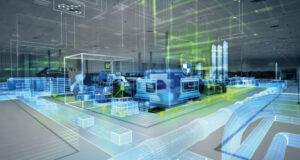
The most concrete industrial result came from Siemens at its Erlangen electronics plant, which the company has been using as a blueprint for autonomous manufacturing. Siemens reported that the work with NVIDIA reduced engineering effort in production preparation by up to 85% and cut costs by up to 20% through AI-driven production planning. Those are strong numbers, and they are company-reported results from one site, not a plant-wide productivity measure.
The mechanics are more useful than the headline. Production preparation is the engineering work that turns a product design into a routable, testable, documented manufacturing process. It is document-heavy, rule-heavy and specific to each product variant, which makes it a good target for models that can read drawings, propose process steps and check consistency. A reduction in that effort shows up as faster changeovers and fewer engineering hours per variant. It does not, by itself, raise line throughput or reduce the number of drives, controllers or safety relays on the floor.
NVIDIA also released cuDSS for general availability, a direct sparse solver for simulation workloads, and continued to position Omniverse and the Isaac libraries as the place where factories test lines and robots virtually before committing capital. The orchestration layer above the controller is converging in the same direction: Rockwell's FactoryTalk Conductor, launched with NVIDIA Nemotron support in October, is aimed at coordinating models and agents across a plant rather than replacing the PLC that runs the line. Separately, the German government and NVIDIA signed a joint declaration of intent on industrial AI, and NVIDIA said it had invested in four German startups: Agile Robots, Avelios Medical, Mirelo and Reflex Aerospace. The company put its European commitment at close to $10 billion, of which about $8 billion was invested over the past year and about $2 billion is additional.
The money behind the message
Physical AI is no longer a slide. NVIDIA reported revenue of $96.2 billion for its second fiscal quarter, up 106% year on year, with data centre revenue of $89 billion, up 117%. Goldman Sachs, summarising the Berlin keynote, put physical AI revenue at about $11 billion in the first half of fiscal 2027 — roughly 30% more than the whole of fiscal 2026.
Two cautions apply to that figure. NVIDIA's definition of physical AI is broad: it includes autonomous vehicles, robotics, industrial systems, medical imaging, radar and telecommunications infrastructure, not just humanoids. And a revenue mix shift is not the same as a replacement market. The installed base of PLCs, drives and safety systems will still be specified, maintained and replaced on 15-to-20-year cycles, which is precisely why physical AI will arrive in most plants as an overlay on existing equipment rather than as a new control layer.
The private-market signal points the same way. PitchBook data cited in Chinese technology press put robotics and physical-AI fundraising at close to $48 billion so far in 2026, about 1.7 times the whole of 2025. Capital is being deployed faster than safety standards, service networks and spare-parts channels are being built — and that gap is where the next few years of integration work sits.
What is confirmed, and what is not
| Claim | Status | What to watch |
|---|---|---|
| Vera Rubin is in full production | Confirmed by NVIDIA and repeated by analysts | Customer shipments and cloud availability through late 2026 |
| DSX POD deploys in 14 days | Conditional on site power, cooling and network being ready | First named customer and actual commissioning time |
| Agile ONE SN ships in early 2027 | Stated; price and safety certification not disclosed | Halos integration and independent safety assessment |
| Robotaxi fleets reach 25,000 vehicles | Planned; subject to regulatory approval | Madrid pilot results in 2027 and German approval |
| Siemens cut preparation effort by 85% | Company-reported, single site | Whether the result transfers to other products and plants |
| Physical AI revenue reached about $11 billion | Analyst estimate based on NVIDIA disclosures; broad definition | Segment disclosure and the mix between automotive and robotics |
| A European DSX POD customer exists | Not announced | Any 2027 delivery outside the United States and Asia |
What this changes inside an automation cabinet
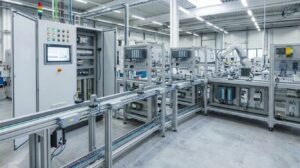
Most plants will not buy a Rubin rack. They will buy the consequences: more cameras and sensors on the line, more inference at the edge, more data moving between the cell and the plant network, and more pressure on the electrical and thermal envelope of the cabinet. Five practical steps follow from the Berlin announcements.
1. Budget power and cooling before you budget compute. An edge inference box is small, but the cameras, lighting, switches and UPS that support it are not. If a line is being prepared for vision-based inspection or robot guidance, size the 24 V supply and the cabinet thermal load for the peak, not the average. A Siemens S7-1500 power supply or a GE RX3i power module is a poor place to discover that the enclosure has no headroom.
2. Make the network deterministic and segmented. Physical AI adds bursty, bandwidth-heavy traffic to networks that were designed for cyclic I/O. Keep control traffic on its own segment, use managed switching where you need VLANs and diagnostics, and do not put camera streams on the same unmanaged switch as a safety controller. A Schneider managed Ethernet switch is the minimum viable starting point; unmanaged units such as the TCSESU083FN0 belong on the cell edge, not in the backbone.
3. Keep the safety loop deterministic. An AI model can recommend a speed, a path or a maintenance action. It should not be the thing that opens a safety relay. Keep emergency stops, interlocks and safe torque off in certified hardware, and treat the inference layer as an adviser. That means the PLC and I/O layer and the safety devices remain the reference of truth, while the model runs beside them. A Siemens S7-1200 CPU or a comparable controller still owns the scan cycle, and that is the layer the retrofit has to keep stable.
4. Instrument the assets the models will advise on. A model is only as good as its inputs. Vibration, temperature and current data from gearboxes, pumps and spindles are what turn a generic model into a useful maintenance adviser. A Bently Nevada 3500/42 monitor is the kind of channel that makes condition-based decisions auditable rather than anecdotal.
5. Plan spares around the installed base, not the announcement. The controllers, servos and HMIs in a plant today will outlive several generations of AI hardware. When a physical-AI pilot moves from one cell to a line, the constraint is usually the availability of the right part — a FANUC servo amplifier, a Mitsubishi servo amplifier, a Siemens TP1200 panel or the B&R servo motor behind the axis — and not the model. Standardising on a small number of families — Siemens, Allen-Bradley, ABB, FANUC or Yaskawa — is still the cheapest way to keep spares coverage sane.
The announcements do not change that arithmetic. They change the direction of the data. A line that already has a ControlLogix 5580 processor, a ABB ACS880 drive and a Yaskawa servo drive does not need to replace them to benefit from physical AI. It needs sensors, network segmentation and a place to run inference.
Frequently asked questions
What did NVIDIA announce at GTC Berlin 2026?
NVIDIA confirmed that its Vera Rubin platform is in full production, introduced the DSX POD containerised AI factory reference design, expanded its Isaac robotics platform with the Agile ONE SN humanoid and new software tools, and listed new European partners for its Hyperion vehicle architecture. It also described industrial AI work with Siemens and a joint declaration of intent with the German government.
Is Vera Rubin actually shipping?
Yes. NVIDIA said during its August 2026 earnings call that Vera Rubin is in full production, and repeated that position at GTC Berlin. Google Cloud said Vera Rubin NVL72 based A5X instances would open in November 2026, with existing and new customers beginning to use them.
What is the NVIDIA DSX POD?
It is a reference design for a complete AI factory built inside modular containers. Each module holds seven Vera Rubin NVL72 racks, or 504 Rubin GPUs, with power distribution, networking and liquid cooling integrated and tested before shipment. NVIDIA says deployment can take as little as 14 days after the site has power, cooling and network connections ready, with partner deliveries from early 2027.
What is Agile ONE SN?
It is a humanoid robot reference platform developed by Agile Robots for NVIDIA. The body is 1.40 m tall and listed at 40 kg, with 31 degrees of freedom and a 3 kg payload per arm. It uses two 20 degree-of-freedom hands, a Jetson Thor module with 2,070 FP4 teraflops and 128 GB of memory, and comes with the Isaac GR00T model preinstalled. NVIDIA says it will be available in early 2027.
Which carmakers are using NVIDIA Hyperion?
Mercedes-Benz, Volkswagen Commercial Vehicles, Volvo Cars, Jaguar Land Rover, Lucid through the Bolt robotaxi programme, and Einride for autonomous freight. All of the programmes announced at GTC Berlin are in development, testing or preparation, and most still require regulatory approval before commercial driverless operation.
Is physical AI already generating revenue?
Yes, but the definition is broad. Goldman Sachs put physical AI revenue at about $11 billion in the first half of NVIDIA fiscal 2027, roughly 30% more than the whole of fiscal 2026. NVIDIA includes autonomous vehicles, robotics, industrial systems, medical imaging and telecommunications infrastructure in that category, so the figure is not a pure humanoid robot market measure.
What should factory automation buyers do now?
Audit power and thermal headroom in the cabinet, segment control and camera networks, keep safety functions in certified hardware, add condition monitoring to the assets that models will advise on, and secure spares coverage for the installed base. The control layer will outlive several generations of AI hardware, so the retrofit path matters more than the model choice.
Sources
The event details, platform specifications and partner statements in this article were checked on 30 October 2026 against NVIDIA's own GTC Berlin keynote material and newsroom posts, including the DSX POD, Isaac platform and Hyperion announcements, and against the reporting of Reuters, Investing.com, HPCwire and Chinese technology outlets that covered the keynote. The Vera Rubin NVL72 figures were cross-checked against NVIDIA partner documentation published by Supermicro, and the 30-times-per-megawatt claim is NVIDIA's own result on the SemiAnalysis AgentX workload, not an independent benchmark. Siemens figures for the Erlangen plant are Siemens statements and were not independently audited. Revenue figures come from NVIDIA's fiscal 2027 second-quarter results and from Goldman Sachs research summarising the keynote; the physical AI total is an analyst estimate using a broad category definition. Where sources disagreed on a specification, the disagreement is noted in the text rather than resolved by assumption.
Talk to us
We stock and supply Siemens, Allen-Bradley, ABB, FANUC, Yaskawa and Bently Nevada automation hardware, and we quote by model and firmware revision. If you are planning a retrofit around edge inference, need a managed switch or a servo drive that fits an existing cell, or want a lifecycle answer on a specific part number, send the list through our contact page and we will respond with availability and lead time. For the automation layer underneath the pilot, start from the PLC and I/O range, the power supply range and the sensors and instrumentation range. The servo drive, HMI and communication module ranges cover the rest of the cell.
Looking for 2026?
Browse genuine 2026 units, specifications, and pricing — or request a quote from our automation specialists.
View 2026 Products & Get a Quote →