On October 21, 2026, Rockwell Automation announced FactoryTalk Conductor, a new AI‑native orchestration platform that connects AI agents, skills and workflows across the entire industrial automation lifecycle — from system design to operations and maintenance. Built on top of Rockwell's partnership with NVIDIA (which supplies open Nemotron models and NIM inference microservices), it makes Rockwell the third major PLC vendor — after Siemens and Schneider Electric — to wire generative and agentic AI directly into its automation stack. The practical upshot: AI agents can now sit above the controller layer to diagnose anomalies, optimize processes and answer natural‑language questions, while hard real‑time control stays in the PLC.
Key takeaways
- FactoryTalk Conductor is an AI‑native orchestration layer announced by Rockwell Automation on October 21, 2026; it will debut publicly at Automation Fair 2026 in Boston, with commercial availability expected in Q1 2027.
- It links AI agents and workflows to Rockwell tools including Studio 5000, Logix Echo, Emulate3D, FactoryTalk Optix, Design Studio, Historian, Plex and Fiix.
- NVIDIA contributes the model and inference layer — open Nemotron 3.5 agent models (released October 15, 2026) served through NIM microservices; a Nemotron small language model already powers offline generative AI inside FactoryTalk Design Studio.
- AI agents do not execute hard real‑time control inside the PLC; they orchestrate engineering, diagnostics and optimization above the controller and increasingly run on edge hardware near it.
- Rockwell's move mirrors Siemens (Industrial AI operating system, Digital Twin Composer, Eigen agent) and Schneider Electric, which on October 22, 2026 announced an industrial AI agent running at the plant edge with NVIDIA and HPE.
What FactoryTalk Conductor actually does
FactoryTalk Conductor is best understood as a conductor for a growing orchestra of industrial AI tools. Rather than shipping one more point copilot, Rockwell describes it as a single platform that coordinates AI‑driven work across the automation lifecycle, giving workflows from design through maintenance an "AI foundation." It connects three ingredients: agents (task‑specific AI workers), skills (reusable capabilities), and workflows (sequences that span engineering environments).
Matheus Bulho, Senior Vice President of Software & Control at Rockwell Automation, framed the platform as combining AI orchestration with trusted industrial expertise — the implicit argument being that generic large language models are not enough on a factory floor, where outputs must be grounded in validated engineering data.
The timing is not accidental. Rockwell's own 2026 State of Smart Manufacturing report finds that roughly one‑third of manufacturing operations are already AI‑augmented, and that adoption is accelerating as companies move from pilots to deployment. Conductor is Rockwell's answer to the integration problem that creates once many teams run many separate AI experiments.
Where NVIDIA NIM and Nemotron fit
The AI stack underneath is shared with NVIDIA. Rockwell and NVIDIA have been collaborating since November 2024 to bring AI and physics‑based simulation to industrial automation; that work produced Emulate3D Factory Test, a factory‑scale digital twin shown at NVIDIA GTC 2025 and built on the NVIDIA Omniverse and OpenUSD APIs.
On the model side, NVIDIA released Nemotron 3.5 on October 15, 2026 — a family of open‑weight models aimed squarely at agents, including a 120‑billion‑parameter multimodal flagship and compact edge models that fit in a few gigabytes. These are packaged as NIM microservices, which expose models through standard APIs so they can be deployed on‑premises or at the edge rather than only in a public cloud. For a B2B automation audience, that matters because plant data is often too sensitive or too latency‑sensitive to leave the site.
Does AI replace the PLC? No — it sits above it
Headlines about "AI in the PLC" are easy to misread. A programmable logic controller still runs deterministic, scan‑based ladder or structured‑text logic because safety and timing demand it; a probabilistic language model has no place in an emergency‑stop path or a high‑speed motion loop. What Conductor and its peers change is the layer around the controller.
Three jobs are moving to AI agents:
- Anomaly diagnosis — correlating alarms, historian tags and vibration data to explain why a machine tripped, the same category of work as condition‑monitoring root‑cause analysis.
- Process optimization — recommending setpoints and tuning that engineers validate before they are written to drives and controllers.
- Natural‑language interaction — letting a technician ask an HMI or historian a plain question and get a grounded answer.
The controller family that executes the deterministic logic — Rockwell's Allen‑Bradley ControlLogix and CompactLogix lines — remains the trusted actuator. The AI layer reads from and writes recommendations to it through the same industrial networks.
Siemens and Schneider: the same NVIDIA gravity
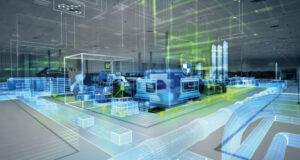
Rockwell is not moving alone. Siemens has gone furthest rhetorically, describing an "industrial AI operating system" built with NVIDIA: Digital Twin Composer on Omniverse, the Eigen engineering agent, and an Intelligence Center X layer that orchestrates multiple agents with traceability. Controller and I/O ecosystems on both sides are being asked to feed these agents clean, real‑time data.
One day after Rockwell, Schneider Electric announced on October 22, 2026 a partnership with NVIDIA and HPE to deploy what it calls an industry‑first industrial AI agent at the plant edge for process industries, built on HPE Private Cloud AI and NVIDIA Nemotron open models, and delivered through EcoStruxure Industrial Insights apps. Schneider reports its EcoStruxure AI Assistant cut equipment fault‑troubleshooting time from about 45 minutes to 12.
The pattern across all three vendors is consistent: open, edge‑deployable models (Nemotron/NIM), digital‑twin grounding (Omniverse/OpenUSD), and an orchestration layer — Conductor, Intelligence Center X, or EcoStruxure apps — that turns scattered copilots into coordinated workflows.
What plant owners should prepare
Agentic AI is only as good as the data and connectivity feeding it. Three hardware prerequisites stand out, and they map to equipment many facilities already buy through distributors:
- Industrial networking at the edge. Agents that run near the line need deterministic, secure traffic. Managed Stratix 5700 switches and communication modules are the plumbing that moves tag data to inference without exposing the control network.
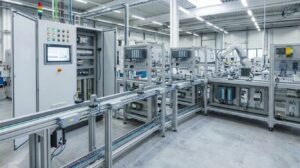
- Structured I/O and controllers. Reliable analog input modules and Flex I/O in the PLC & I/O modules category are what make "trusted industrial expertise" possible — the agents need clean measurements, not guesses.
- Visualization and drives as action endpoints. HMIs and operator panels surface agent recommendations to people, while VFD and drive hardware is where approved optimizations are applied.
For teams running mixed fleets, the same logic applies to Siemens and Schneider Electric hardware: the AI layer is cross‑vendor, but the data path is per‑device.
Frequently asked questions
What is FactoryTalk Conductor?
FactoryTalk Conductor is an AI‑native orchestration platform announced by Rockwell Automation on October 21, 2026. It connects AI agents, skills and workflows across the automation lifecycle — from system design to operations and maintenance — on top of Rockwell tools such as Studio 5000, Emulate3D, FactoryTalk Optix, Plex and Fiix. Commercial availability is expected in Q1 2027.
Is FactoryTalk Conductor built on NVIDIA?
It uses the NVIDIA AI stack. Rockwell and NVIDIA have partnered since November 2024; NVIDIA supplies open Nemotron models and NIM inference microservices, and a Nemotron small language model already powers offline generative AI inside FactoryTalk Design Studio, while Emulate3D Factory Test runs on NVIDIA Omniverse and OpenUSD.
Does AI run inside a PLC?
No. The PLC continues to execute deterministic, safety‑rated control logic. AI agents operate above the controller — diagnosing anomalies, optimizing processes and answering questions — and run on edge or on‑premises hardware, sending validated recommendations to the control layer rather than replacing its scan‑based logic.
Which other automation vendors have adopted NVIDIA AI agents?
Siemens has built an "industrial AI operating system" with NVIDIA, including Digital Twin Composer and the Eigen agent. Schneider Electric, with NVIDIA and HPE, announced an industrial AI agent deployed at the plant edge on October 22, 2026. Together with Rockwell, these are the three leading PLC and automation vendors now integrated with NVIDIA's agent stack.
Why does this matter for industrial hardware buyers?
Because agentic AI raises the bar on the data path. It rewards facilities with reliable industrial networking, clean I/O signals and modern controllers and HMIs. Upgrading Allen‑Bradley and comparable components is often the practical first step before AI workflows can be trusted on the line.
Source note: facts drawn from Rockwell Automation's October 21, 2026 announcement and its 2026 State of Smart Manufacturing report, NVIDIA's Nemotron 3.5 release (October 15, 2026) and Omniverse materials, and Schneider Electric's October 22, 2026 NVIDIA/HPE announcement.
Need help modernizing the control layer before AI workflows go live? Our team stocks genuine Allen‑Bradley, Siemens and Schneider Electric controllers, I/O, drives and networking. Read more industrial‑AI news, browse our engineering guides, or request a quote for the components behind your automation roadmap.