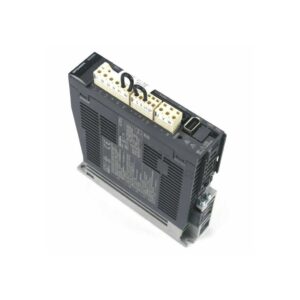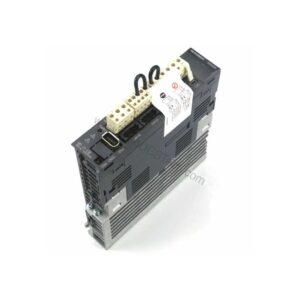
Why the TWDLCAE40DRF Stands Out for Maintenance Teams
When you manage industrial automation, unplanned downtime is your biggest enemy. The SOR TWDLCAE40DRF compact PLC base controller is designed to help you minimize that risk. It offers a robust set of features that simplify both installation and ongoing maintenance.
This guide looks at the TWDLCAE40DRF from a maintenance engineer's viewpoint. We will focus on its reliability, ease of service, and the practical details that make daily work easier.
Key Specifications That Matter for Reliability
The TWDLCAE40DRF operates on a rated supply voltage of 100...240 V AC, with supply voltage limits of 85...264 V. This wide range ensures stable operation even in facilities with fluctuating power. The network frequency is 50/60 Hz, with limits of 47...63 Hz, which adds flexibility for global installations.
For inputs, the controller provides 24 discrete inputs at 24 V DC, with input voltage limits of 20.4...26.4 V. This tolerance helps prevent false triggering from voltage sags. The discrete input logic supports both sink and source configurations, giving you wiring flexibility.
The output side includes 2 transistor outputs and 14 relay outputs. Relay outputs are rated for 2 A at 240 V AC resistive loads and 2 A at 30 V DC resistive loads, with a mechanical durability of at least 20,000,000 cycles. This high cycle rating means fewer replacements and less maintenance.
Built-In Diagnostics and Status Monitoring
Effective troubleshooting starts with clear diagnostics. The TWDLCAE40DRF includes multiple status LEDs: a green PWR LED, a green RUN LED, a red module error (ERR) LED, a user pilot light (STAT), an Ethernet status LED (LAN ST), and a 10/100 Mbit/s rate LED (LACT). Each channel also has a green I/O status LED.

These LEDs allow you to quickly identify power issues, communication problems, or I/O faults without needing a laptop. For example, a red ERR LED immediately signals a module error, while the LAN ST LED confirms Ethernet link status. This visibility reduces mean time to repair (MTTR).
Communication and Integration for Easy Monitoring
The controller features an integrated Ethernet TCP/IP port with RJ45 connector, supporting 10/100 Mbit/s speeds. It also includes a non-isolated serial link with mini DIN connector for Modbus master/slave RTU/ASCII RS485 half duplex communication at 38.4 kbit/s. These options let you connect the PLC to existing SCADA or HMI systems.
From a maintenance perspective, having both Ethernet and serial connectivity means you can monitor the controller remotely or on-site. The BOOTP client service simplifies IP address assignment, and Modbus messaging over Ethernet TCP/IP allows easy data exchange. This integration reduces the need for physical access to the controller.
Environmental Robustness for Harsh Conditions
Industrial environments can be tough on electronics. The TWDLCAE40DRF is rated IP20, meaning it is protected against solid objects larger than 12 mm, but it is not waterproof. It operates in ambient air temperatures from 0...55 °C and can be stored in temperatures from -25...70 °C.
Relative humidity tolerance is 30...95 % without condensation, which is typical for control cabinets. The controller also withstands vibration and shock, with vibration resistance up to 1 gn at 57...150 Hz on a DIN rail and shock resistance of 15 gn for 11 ms. These ratings ensure reliable operation in vibrating machinery.
Maintenance-Friendly Design and Data Backup
One of the most maintenance-friendly features is the data backup system. The controller uses internal RAM with an external battery (TSXPLP01) that provides 3 years of data retention. This means your program and critical data are safe even during power outages, reducing the need for reprogramming.

The I/O connection uses non-removable screw terminal blocks, which are secure and easy to wire. For expansion, you can add up to 7 I/O expansion modules, allowing you to scale the system without replacing the base controller. The real-time clock with a drift of ≤30 s/month helps with time-stamped event logging.
Practical Application Scenarios
Application & Integration Guidance
This controller is the processing core of a rack- or backplane-based automation system—coordinating I/O scanning, logic execution, and communication with supervisory and field devices. It is deployed wherever centralized or distributed control of motors, valves, sensors, and production equipment is required.
Integration & compatibility
- Confirm the controller seats in the correct slot of a compatible rack or backplane and that the rack power supply covers the total module draw.
- Verify supported I/O count, local/remote racks, and communication modules (Ethernet, Modbus, Profibus, etc.) against the controller’s documented limits.
- Plan the communication topology (Modbus Plus, Ethernet TCP/IP, Profibus DP, etc.) and seating of option modules before commissioning.
- Keep firmware/operating-system version and programming-software compatibility in mind when integrating with existing assets.
Before-you-buy verification
- Confirm the exact catalog number, series, and firmware/OS version.
- Verify rack, power-supply, and I/O-module compatibility.
- Check new vs. surplus condition and current lead time or availability.
- For discontinued lines, obtain the manufacturer’s current cross-reference or direct-replacement number before ordering.
Frequently Asked Questions
What is the input voltage range for the TWDLCAE40DRF?
The rated supply voltage is 100...240 V AC, with supply voltage limits of 85...264 V. The network frequency is 50/60 Hz, with limits of 47...63 Hz. This wide range ensures stable operation in various power conditions.
How many inputs and outputs does the TWDLCAE40DRF have?
It has 24 discrete inputs at 24 V DC and 16 discrete outputs: 2 transistor outputs and 14 relay outputs. The relay outputs are rated for 2 A at 240 V AC resistive loads, with high mechanical durability.
Does the TWDLCAE40DRF support Ethernet communication?
Yes, it has an integrated Ethernet TCP/IP port with RJ45 connector, supporting 10/100 Mbit/s. It also supports Modbus messaging over Ethernet TCP/IP and BOOTP client for IP assignment.
What is the memory capacity of the TWDLCAE40DRF?
The program memory is 3000 instructions, with an execution time of 1 ms per 1 K instruction. It includes internal RAM for 256 internal bits, 3000 internal words, 128 timers, and 128 counters.
What are the environmental ratings for the TWDLCAE40DRF?
It operates in temperatures from 0...55 °C and can be stored from -25...70 °C. It is rated IP20 and withstands vibration up to 1 gn at 57...150 Hz on a DIN rail, and shock of 15 gn for 11 ms.
Why Choose AutoDCSTech for Your Automation Needs
AutoDCSTech specializes in supplying industrial automation spare parts, including the SOR TWDLCAE40DRF. We understand the importance of reliable components for your operations. Our team can help you verify the current lifecycle status and availability of this product before ordering.
We focus on fast delivery and genuine parts to minimize your downtime. Contact AutoDCSTech today to discuss your requirements and ensure you have the right spare parts on hand.
Manufacturer reference: For official specifications, datasheets, and lifecycle information, visit the Schneider Electric resource center.
Browse our inventory of Schneider automation parts, modules & datasheets with same-day quotes.
Related components
- SOR TWDLCAE40DRF Compact PLC Base Controller, 100-240V AC, 40 I/O
- Schneider TSXETG100 RJ45 10/100 Mbps Ethernet Modbus Gateway Module
- Schneider TSXP571634M Ethernet TCP/IP and RS485 Communication Module for TSX Micro PLCs
- Schneider TSXP57203M TSX Micro PLC Processor with Ethernet TCP/IP and RS485
- KEB 09F5C1B-3A0A F5 Combivert Axis Drive: 1.5 kW IP20 Frequency Inverter
- KEB 07F5A1A-3E2F Combivert Axis Drive – 0.75 kW, IP20, Air-Cooled
Browse by brand: Proximitor Sensors · Schneider Electric
More in Guides
Looking for TWDLCAE40DRF?
Browse genuine TWDLCAE40DRF units, specifications, and pricing — or request a quote from our automation specialists.
View TWDLCAE40DRF Products & Get a Quote →