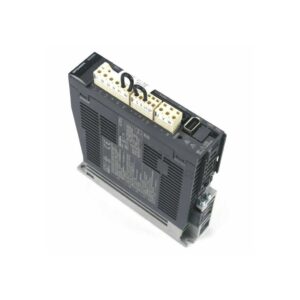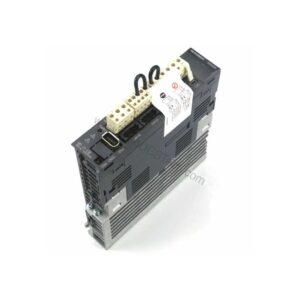
Bently Nevada's Orbit 60 Integrated System Module (ISM, order code 60R/ISM01) is real, orderable and documented — and it does exactly what the headline claim says: it folds the System Interface Module, the Protection Processing Module and the Communication Gateway into a single slot. What the circulating summary leaves out is the part that actually decides a specification: the ISM is only supported in the two Compact chassis, it cannot be configured as part of a redundant processor pair, and it is not supported in bridged systems at all. The two slots it saves are paid for in availability architecture, not in money. That trade is the story, and it is the one thing to check before you put an ISM on a critical train.
One more correction up front, because it changes the arithmetic: the power input module is not one of the seven slots. Baker Hughes documents the PIMs as sitting in a dedicated power-input slot in the first position of every chassis, with room for two stacked half-height modules. So a 7-slot Compact chassis has six general-purpose slots — and the ISM build that "supports 12 channels" fills those six exactly, which is a far more interesting fact than the slot count itself.
Quick answer
The Orbit 60 ISM is a single-slot module that replaces three separate Orbit 60 system modules — SIM, PPM and CGW — in Bently Nevada's Compact 7-Slot and Compact 11-Slot chassis. It provides system interface, protection processing and industrial protocol communication together, is documented under order code 60R/ISM01, occupies one slot and must sit adjacent to the power input module. Its processing envelope is stated as 16 dynamic channels, roughly four I/O modules. A 12-channel protection build in the 7-slot chassis is arithmetically consistent with the published slot and channel figures, but only because the ISM frees two general-purpose slots that the separate trio would consume. The costs are explicit in the datasheet: no redundant processor pair, no bridged systems, and — in the published ordering table — no SIL option for the ISM while the PPM lists SIL 2.
Key takeaways
- The consolidation is confirmed in first-party text. The Orbit 60 System Overview Datasheet (137M5182, Rev. AB) states that "in Compact Form Factor systems, the Integrated System Module (ISM) can be used in place of separate System Interface, Protection Processing, and Communication Gateway modules".
- Slot saving is two, not three. SIM occupies one slot, each PPM occupies one slot, the CGW occupies one slot. The ISM occupies one. So a non-redundant build saves two general-purpose slots; a redundant-PPM build saves three.
- The 7-slot chassis has six usable slots. Power does not eat one of them. The briefing's bill of materials — ISM, CMM, three 4-channel input modules, one relay module — is exactly six.
- 12 channels is inside the ISM's ceiling, not at it. The stated figure is 16 dynamic channels, about four I/O modules, and Baker Hughes warns the real limit is processing utilisation, measured in the Orbit Studio System Utilization Calculator, with a warning at 90%.
- Redundancy is the line in the sand. "The ISM cannot be configured as part of a redundant processor pair and is not currently supported in bridged system architectures." For a trip-critical compressor train, that is a stop condition, not a preference.
- The CMM is the second half of the slot story. The two-slot 60R/CMM01 now has one-slot siblings, 60R/CMM02 and the reduced-storage CMM Lite 60R/CMM03. Swapping down requires a 60R/BLK01 blank and System 1 version 25.2 or higher.
- Availability dates are inconsistent between two live Baker Hughes pages. One says both Compact chassis are "Available early 2027"; the other says the 7-slot Compact is current and the 11-slot is "upcoming … (2027)". The datasheet already describes both.
- The "single-slot simplex PIM, mid-2027" line is not in the record. Single-PIM operation is already permitted today with a blank over the second position; the 2027 dates in vendor material attach to the Compact chassis, not to a new power module.
What is verified, and what is not
The claim under review was attributed to a Baker Hughes Cordant blog entry updated on 5 November 2026. We could not locate that post at a public URL. That is not the same as the claim being false — the underlying product data is published, and in a document whose own generation timestamp is 22 October 2026, two weeks before the date in the summary. Here is the line-by-line position.
| Claim | Status | What the record actually says |
|---|---|---|
| Orbit 60 has a new Integrated System Module (ISM) | Verified | Named in the System Overview Datasheet 137M5182 Rev. AB with its own section, its own specification page and its own order code 60R/ISM01-AAA-B. |
| ISM = PPM + CGW + SIM in one slot | Verified | "…in place of separate System Interface, Protection Processing, and Communication Gateway modules, providing system interface, protection processing, and industrial communication functions within a single module." |
| Compatible with 7-slot and 11-slot chassis | Verified, with a limit | "The ISM is only supported in Compact 7-Slot and Compact 11-Slot chassis." It is not a drop-in for the 3U or 6U chassis. |
| 7-slot chassis can carry 12 channels of protection | Consistent, but not a vendor figure | Baker Hughes publishes no "12-channel 7-slot" configuration. It publishes 6 general-purpose slots, 4-channel dynamic inputs, an 8-channel relay module and a 16-channel ISM processing ceiling. The number follows from those; it is not quoted. |
| Power is one of the seven slots | Incorrect | PIMs "reside in a dedicated power-input slot located in the first position of each Orbit 60 chassis. This slot accommodates two stacked PIMs." Power sits outside the general-purpose count. |
| CMM reduced from two slots to one | Verified as an option, not a replacement | 60R/CMM01 is labelled "(Two-Slot)"; 60R/CMM02 "(One-Slot)" and 60R/CMM03 "(One-Slot Limited Storage)" are listed alongside it. All three are current part numbers. |
| Single-slot simplex PIM expected mid-2027 | Not found | The datasheet lists only 60R/PIM01 (3U) and 60R/PIM02 (6U) and states they "are not interchangeable". Single-PIM running is already allowed with a 60R/BLK03 blank. No 2027 PIM date appears in the material we can cite. |
| The source blog post, updated 5 November 2026 | Not located | No public Baker Hughes or Cordant blog URL describing the ISM surfaced in search. Cite the datasheet instead; it is the stronger source anyway. |
Inside the ISM: three jobs, one slot
To understand what the ISM is, it helps to be precise about the three functions it absorbs, because they are not three versions of the same thing. They are three different directions of traffic.
The System Interface Module is the human and machine entry point. Baker Hughes is explicit that one SIM defines a system and that it "occupies one slot and must be adjacent to the Power Input Module (PIM) in the chassis". It is where protection configuration is managed, where the local display attaches, where system-level diagnostics, system LEDs, system contacts and the system protection fault relay live, and where the key-lock switch sits to stop unauthorised configuration changes.
The Protection Processing Module is the computational engine. It "extracts all machinery measurements for the protection system and performs alarm determinations", analyses transducer signals, generates measurements and statuses, and publishes them to other modules. Each PPM occupies a single slot, and the datasheet is candid that capacity is a function of processing, not of sockets: if a system needs more than one PPM can do, you add another — and "for protection systems, redundant PPMs are recommended".
The Communication Gateway is the control-system door. It sends measurements, alarms, statuses and configuration outward over standard industrial protocols and pulls process data inward from control systems, HMIs and historians. It is designed to sit inside a protection loop and carries SIL certification in its own right. It also occupies one slot.
The ISM takes all three. In the datasheet's own sequencing, it first satisfies the SIM requirement — "each Bently Nevada Orbit 60 system requires a single module providing system interface functionality" — then adds that it "also serves as the computational engine for the Orbit 60 monitoring system", and finally that it "provides information to external hosts including measurements, alarms, statuses, and system controls using standard industrial protocols". The physical constraints travel with it: one slot, adjacent to the PIM, and in Compact chassis the front panel is built for a chassis carrying an ISM or a SIM in slot two.
Two details matter for anyone designing the panel. First, the ISM is not the end of the communications story: "if additional communication interfaces are required, additional Communication Gateway (CGW) modules can be added to the system", and the ISM "supports the same industrial protocols as the CGW". Second, the ISM's processing ceiling is not the system's ceiling. Where more computation is needed, you add PPMs alongside the ISM rather than replacing it.
The slot math: does 12-channel protection fit a 7-slot chassis?
This is the question the briefing is really asking, and it is answerable from published numbers. Take the four chassis Baker Hughes documents — Compact 7-Slot with 6 general-purpose slots, Compact 11-Slot with 10, 3U with 19, 6U with 28 — and price the modules at their documented slot costs: SIM 1, PPM 1 each, CGW 1, ISM 1, CMM01 2, CMM02 or CMM03 1, dynamic input module 1 (4 channels), relay module 1 (8 channels).
| Build | Modules, by slot | Slots used of 6 (7-slot) | Dynamic channels | Reading |
|---|---|---|---|---|
| Separate trio + two-slot CMM | SIM 1 + PPM 1 + CGW 1 + CMM01 2 = 5 | 5 of 6 | 0 input modules fit | A chassis with no sensors is not a monitoring system. |
| Separate trio + one-slot CMM | SIM 1 + PPM 1 + CGW 1 + CMM02 1 = 4 | 4 of 6 | 2 × 4-ch = 8, and no slot left for a relay module | Eight channels, no hardwired trip output. |
| ISM build (the briefing's bill of materials) | ISM 1 + CMM02 1 + 3 × dynamic input 3 + relay 1 = 6 | 6 of 6 | 12 | Fills the chassis exactly and stays under the ISM's 16-channel ceiling. |
| ISM, maximum inputs, no CMM | ISM 1 + 4 × dynamic input 4 + relay 1 = 6 | 6 of 6 | 16, at the ceiling | Protection only; no System 1 data path. |
| 11-slot, ISM + PPM for headroom | ISM 1 + PPM 1 + CMM02 1 + 5 × input 5 + relay 1 = 9 | 9 of 10 (11-slot) | 20 | The documented escape hatch when ISM processing runs out. |
| 11-slot, redundant protection | SIM 1 + PPM 2 + CGW 1 + CMM02 1 + 4 × input 4 + relay 1 = 10 | 10 of 10 (11-slot) | 16 | Redundancy needs the 11-slot or a 3U; it will not fit a 7-slot. |
Read the third row against the second and the value of the ISM becomes concrete rather than marketing. The two slots it frees are precisely the difference between an eight-channel build with no relay output and a twelve-channel build that has one. That is the real claim, and it survives checking.
Two cautions on the twelve. First, channel count is not the binding constraint — processing is. The datasheet says the number of inputs "is a function of the processing required for each input", that extra measurements, setpoints and enabled functions raise utilisation and "may reduce the number of inputs that can be supported", and that the Orbit Studio System Utilization Calculator is the instrument to settle it, with a warning at 90%. Second, twelve dynamic channels is a real machine, not a rounding exercise. A typical build is two 4-channel proximitor sets for radial position on a horizontal rotor plus one 4-channel case for axial, seismic or velocity, and the speed signal does not need its own card: Orbit 60 lets any dynamic input channel carry Keyphasor, with up to two speed channels per card to 12,000 rpm and a dedicated high-speed keyphasor module above that.
What the two saved slots cost you
The constraint sentence is short and should be read in full: "The ISM is only supported in Compact 7-Slot and Compact 11-Slot chassis. The ISM cannot be configured as part of a redundant processor pair and is not currently supported in bridged system architectures."
Each clause removes something a machinery protection buyer usually assumes they have.
No processor redundancy. The PPM path is built around the idea of a pair — the datasheet recommends redundant PPMs for protection systems and, when it tells you to add processing, it says "another PPM or two PPMs if the system is redundant". The ISM has no equivalent. A single ISM is a single point of failure inside the trip path, which is exactly the failure mode API 670-class protection design tries to engineer out.
No bridging. Bridge modules are how Orbit 60 becomes a distributed system — connecting chassis so that a plant can place instrumentation near the machine and pull the wiring count down. The datasheet caps a bridged pair at two chassis and notes that bridging does not raise bandwidth or processing limits, and the older platform material claims a 50%+ reduction in field wiring for new projects from that distributed architecture. None of that is available to an ISM system today. If your project is "one compact box per machine, wired to a marshalling cabinet", the ISM is a poor fit; if it is "one small cabinet, one machine, no remote I/O", it is a very good one.
SIL needs to be asked about, not assumed. The system-level claim in the same document is "SIL 1 Certified / SIL 2 Capable", with the SIL User Guide (134M0398) covering "SIL 1 simplex and SIL 2 redundancy applications". The relay modules carry a note that they "are SIL1 certified for simplex operations". But the ordering tables are asymmetric: the PPM lists a SIL option of "0 – No SIL" and "2 – SIL 2", while the ISM's table lists only "0 – No SIL". Combined with the no-redundant-pair rule, the practical reading is that an ISM-based chassis is a simplex protection architecture, and any SIL claim has to be confirmed with Baker Hughes against your specific loop rather than inferred from the platform brochure.
Put those three together and the ISM's target customer is clear: plant-wide and secondary machine monitoring, skid-mounted packages, pumps and auxiliaries, and brownfield panels where a 7-slot cutout is all the space you are allowed — not the compressor train whose trip matrix is the reason the plant has a SIL argument at all.
The CMM is the other half of the slot story
The ISM alone does not produce the twelve-channel build; the single-slot condition monitoring module makes it possible. The Condition Monitoring Module is the System 1 path. It listens to everything in the system — measurements, waveforms, digital transducer signals, controls, status, configuration, external process data, alarm and event logs — and, importantly, "it only listens, with no capability to write, allowing interface to System 1 over the business networks, with no risk to the protection system". The business-network connection runs through a cyber-secure access port, described elsewhere as a data diode.
Three part numbers now cover that role: the two-slot 60R/CMM01, the one-slot 60R/CMM02, and the one-slot CMM Lite 60R/CMM03, which "provides the core condition monitoring and System 1 interface capabilities of the standard CMM, with reduced onboard storage". On the Lite variant, data streams continuously to System 1 and non-volatile storage buffers history only while the link is down. Placing more than one CMM lets two independent System 1 clients attach to the same Orbit 60 system.
Two procurement traps sit in the fine print. Replacing an installed 60R/CMM01 with a one-slot module means "an additional blank module (part number 60R/BLK01) must be ordered to fill the unused slot" — a blank is not optional, and it does not arrive with the card. And "if connected, System 1 software must be version 25.2 or higher to completely support new module", which turns a card swap into a software dependency on the historian side.
Availability dates: two Baker Hughes pages, two answers
If you are standardising a fleet on the Compact chassis, the date is the whole decision — and the vendor's own pages disagree.
| Source | What it says about Compact chassis | Consequence |
|---|---|---|
| Orbit 60 Series product page (Bently Nevada path) | "Chassis are available in five types: 3U 10 slot, 3U 19 slot, and 6U 28 slot, 11-slot compact, 7-slot compact" — then lists "7-slot – Compact (Available early 2027!)" and "11-slot – Compact (Available early 2027!)" | Neither Compact chassis is purchasable now. |
| Orbit 60 platform page (Cordant path) | "…including the 3U-19 general-purpose, 6U double-height, 7-slot compact, and upcoming 11-slot compact (2027), all platforms utilize the same Orbit 60 modules" | The 7-slot is presented as current; only the 11-slot is future. |
| System Overview Datasheet 137M5182 Rev. AB (document generated 22 October 2026) | Describes both Compact chassis in detail, with panel and bulkhead drawings, voltage ranges, front-panel variants and the ISM as a Compact-only module | The engineering content is already released even where the hardware is not. |
The honest position is that the ISM is documented now and shippable only with a Compact chassis, and that Baker Hughes has not reconciled when that is. Anyone quoting an ISM into a project schedule should get the date in writing, because the two live pages support two different answers. Note also that the Compact chassis are not simply smaller: they take a wider input range, +18 Vdc to +32 Vdc against +21 to +32 Vdc for the 3U and 6U, they use integrated heavy-duty front panels on bulkhead versions that are not separately replaceable, and the 11-slot keeps the same 4.75-inch panel cutout height as a 3U while offering rack, panel and bulkhead mounting.
Power: the part of the briefing that the record does not support
The claim that a "single-slot simplex PIM" is expected in mid-2027 does not match anything citable, and the reason it is worth calling out is that the underlying capability already exists in a different form.
Orbit 60 power is not a slot question at all. The PIMs live in a dedicated first-position slot that "accommodates two stacked PIMs", the module itself is half-height, and at least one PIM must power every chassis. Redundant PIMs on independent sources mean "failure of one PIM or power source doesn't interrupt system operation". If you do not want redundancy, the datasheet already allows it: "a single PIM can be used when redundant input power isn't required", with a 60R/BLK03 PIM Blank covering the empty position — and the blank is explicitly cosmetic and protective, since it "doesn't provide power or redundancy".
What is not documented is a Compact-specific PIM. The ordering tables list 60R/PIM01 for 3U and 60R/PIM02 for 6U, state that "specific PIM modules are exclusively used with either the 3U or 6U chassis" and that they "are not interchangeable", and tie them to chassis-specific external supplies of 240 W for 3U and 480 W for 6U, fed by DIN-rail AC/DC supplies with a nominal +24 Vdc output. The 2027 dates in the vendor material belong to the Compact chassis. Treat the simplex-PIM line as unverified until Baker Hughes publishes a part number for it.
Networking, security and power draw in one slot
Consolidating three modules into one also consolidates three network paths into three physical ports, and that is where a panel designer gets hurt or saved.
| Attribute | Integrated System Module (60R/ISM01) | Reference point |
|---|---|---|
| Slots | 1, adjacent to the PIM | SIM 1 + PPM 1 + CGW 1 = 3 separate |
| Processing envelope | 16 dynamic channels, about four I/O modules | PPM capacity is processing-dependent and addable |
| Ethernet | 3 RJ-45 ports: 1 public side, 2 utility side; 1000/100/10 Base-T auto-negotiation; 100 m max | CGW has 2 ports, utility or rear side |
| Protocols | Modbus, EGD, PROFINET; EtherNet/IP planned. PROFINET and EtherNet/IP run on Port A only | Same protocol set as the CGW |
| System contacts | 4 on utility/rear side: Trip Multiply, Alarm Inhibit, System Reset, Configuration Lock (RUN/PRG) | 24 V max, <1 mA to 125 mA |
| Protection fault relay | Solid-state, single-pole double-throw; 1–125 Vdc, 0.01–125 mA; NO, ARM and NC contacts | Relay modules are 8-channel EMR or SSR |
| Power draw | 7.6 W typical, 10.9 W maximum | CGW 6.8 W typical, 10.2 W maximum |
| Cyber posture | Aligned to IEC 62443-4-2, TLS-encrypted communications, PKI-signed firmware for secure boot and trusted updates, certificate-based device identity, user/role/rights management, physical Run/Program control | Platform designed to meet IEC 62443-4-2 |
| Local display | Supports Orbit Display; 10-inch and 15-inch VGA touch displays, some hazardous-area rated, each needing its own supply | Display attaches at the SIM/ISM |
Two engineering consequences follow. Heat is trivial — under 11 W — so thermal loading of a sealed Compact enclosure is not an ISM problem. Port allocation is. A designer who expected to keep configuration traffic, NTP, a local display and a Modbus path to the DCS on separate physical networks now has three ports and a rule that PROFINET and the planned EtherNet/IP live on Port A. If your plant network design requires four isolated paths, you will buy a CGW anyway, and the slot saving shrinks from two to one.
What a buyer can order today — and what we stock
Plainly: this site does not currently list Orbit 60 hardware. There is no 60R/ISM01, no Compact chassis and no Orbit 60 input module in our catalogue, and we will not pretend otherwise. What we do carry is the sensing chain and the 3500 machinery protection generation that most Orbit 60 projects are migrating from — which is, in practice, the part of the bill of materials that survives the migration.
That matters more than it sounds, because Bently Nevada's own comparison material argues the Orbit 60 input side is where the savings live: a single PAV-class dynamic card "can cover 90% of typical inputs, allowing greater flexibility and parts consolidation", with a claimed 50%+ reduction in spares requirement and 50%+ reduction in field wiring for a new project. Consolidating inputs is a transducer decision as much as a card decision, and the probes, cables and accelerometers you already own are the assets in it.
| Orbit 60 role | What it does | Equivalent we stock today |
|---|---|---|
| ISM / SIM + PPM + CGW | System interface, protection processing, control-system comms | No Orbit 60 stock. Nearest in our range: 3500/22M TDI module and I/O and 3500/25 2-channel enhanced Keyphasor module for the speed path. |
| 4-channel dynamic input (PAV/PAS/PAA/PAD) | Proximity, acceleration and velocity in one card type | 3500/42-02-00 4-channel Proximitor seismic monitor, 3500/42M-01-00, 3500/40M Proximitor monitor |
| Relay module (8-channel EMR/SSR) | Programmed trip outputs from alarm logic | 3500/33-01-00 16-channel relay module |
| Temperature input | RTD and thermocouple, including isolated | 3500/60-01-00 RTD temperature monitor, 3500/61 6-channel temperature monitor, 3500/61-03-02 isolated thermocouple monitor |
| Position and expansion input | AC LVDT and differential paths | 3500/45-05-00 AC LVDT position monitor |
| Machine speed | Tachometer and zero-speed functions | 3500/50M tachometer module, TACH100 digital tachometer |
| Reciprocating machinery | Impulse and velocity monitoring | 3500/70-01-00 recip impulse velocity monitor |
| Local display | Operator view of alarms and channel data | 3500/94M 10-inch VGA display module |
| Chassis power | 24 Vdc and universal AC input | 3500/15 low-voltage DC supply, 3500/15-05-05 universal AC supply module, legacy high-voltage DC power input module |
The field side is where our stock lines up almost one-to-one with an Orbit 60 migration, because the transducers do not change when the rack does. That means 3300 XL 8 mm probes and the DIN-rail 330980-71-00 NSv Proximitor sensor, 21747 extension cable for the run to the monitor, 190501 Velomitor CT velocity transducers, the Trendmaster 2000 accelerometers and AP3500 and 86517 accelerometer interface module pair, 9200 Seismoprobe and 177230 seismic transmitters for plant-wide seismic coverage. Browse the full line at the Bently Nevada brand index, or by function under sensors and instrumentation, protection relays, communication modules, I/O modules and cables and connectors. Our long-form guide to the range is here: Bently Nevada automation parts and modules — specs, datasheets and quote.
Migration math from 3500
Most readers of this article are not choosing between Orbit 60 architectures; they are choosing whether to leave a 3500 rack. The comparison is not one-for-one, and the differences that matter are architectural rather than cosmetic.
- Processing is decoupled from the input card. In 3500, each monitor card is the measurement, the alarm and the relay. In Orbit 60, "each processor supports the 4 channels on that module" and "any input channel can have redundant processor", which is why a single PAV-type card can replace several application-specific 3500 cards. Bently Nevada's own comparison puts the spares effect at a 50%+ reduction.
- Keyphasor stops being a card. 3500 needs a dedicated Keyphasor module; Orbit 60 lets any dynamic input channel carry it, with a high-speed module reserved for above 12,000 rpm.
- Diagnostics move to the channel. 3500 racks have no status indication on the rear; Orbit 60 puts per-channel LEDs front and rear with health data covering module, wiring and transducer. For a maintenance team, that is the difference between tracing a loop and reading a fault.
- The system gets a network boundary. The CMM's listen-only data path and the ISA/IEC 62443-aligned module security are things a 3500 chassis cannot be retrofitted with. If the reason for the project is an OT security finding, that is the argument — see our coverage of CISA 2030 and what it means for legacy control hardware and spares and of the EU Cyber Resilience Act meeting machinery rules.
- Space is not automatically saved. A 6U double-height Orbit 60 chassis holds more channels than a 3500 rack in the same panel cutout, and the 11-slot Compact keeps the 3U cutout height. But a 7-slot Compact holding twelve channels is a smaller system, not a denser one — it is for machines you previously did not monitor at all.
Buyer checklist before you specify an ISM
- Confirm the chassis is Compact 7-Slot or Compact 11-Slot. The ISM is not supported on 3U or 6U.
- Ask for the availability date in writing. Two live vendor pages currently disagree about whether the 7-slot is shipping.
- Decide, before anything else, whether the train needs redundant processing. If it does, the ISM is the wrong module and you want SIM + PPM pair + CGW.
- Decide whether you need bridging or remote I/O. The ISM does not support bridged architectures today.
- Run the Orbit Studio System Utilization Calculator on your real measurement list, not on channel count. Twelve channels with extra setpoints can be closer to the ceiling than sixteen with defaults.
- Count your physical network paths. Three ports, with PROFINET and EtherNet/IP confined to Port A. Four paths means you buy a CGW and lose a slot again.
- Get the SIL position in writing for the specific loop. The ISM ordering table lists only "No SIL" while the PPM table lists SIL 2.
- Choose the CMM variant deliberately: 60R/CMM02 for full storage, 60R/CMM03 CMM Lite if buffered history during link loss is acceptable.
- If replacing a two-slot CMM01, order the 60R/BLK01 blank and confirm System 1 is at 25.2 or later.
- Confirm hazardous-area certification at order time — 00 for none, 01 for CSA/NRTL/C Class I Div 2, 02 for multi-standard CSA, ATEX and IECEx.
- Check the power range. Compact chassis accept +18 to +32 Vdc; 3U and 6U accept +21 to +32 Vdc. Existing supplies may or may not be in scope either way.
- Price the PIM blank if you run single-feed power. The blank is a separate line item and the datasheet is explicit that it provides neither power nor redundancy.
Bottom line
The Orbit 60 ISM is a genuine architectural change, not a rebrand: three functions, one slot, order code 60R/ISM01, described in a datasheet that predates the announcement date in the summary by two weeks. It converts the 7-slot Compact chassis from a curiosity into a twelve-channel protection and monitoring system, and it does that by freeing exactly the two general-purpose slots the input modules and the relay module need. The trade is availability, and it is documented rather than hidden — no redundant processor pair, no bridged systems, and a SIL option table that differs from the PPM's. For auxiliaries, skids, pumps and space-constrained brownfield panels, take the consolidation. For a trip-critical machine train where the protection architecture has to survive a processor failure, buy the separate modules and the slots they need. And whatever you do, do not quote a "single-slot simplex PIM" from the circulating summary — that part is not in the record.
Frequently asked questions
What is the Orbit 60 Integrated System Module?
It is a single-slot module, order code 60R/ISM01, that replaces three separate Orbit 60 modules at once: the System Interface Module, the Protection Processing Module and the Communication Gateway. It carries system configuration access, protection computation and alarm determination, and industrial protocol communication to control systems, in one slot positioned next to the power input module.
How many channels can an ISM process?
Baker Hughes states the ISM "is designed to support processing for 16 dynamic channels (approximately four I/O modules)". The company also warns that the real limit depends on how much processing each input needs, that adding measurements, setpoints and functions reduces what can be supported, and that Orbit Studio's System Utilization Calculator issues a warning at 90% utilisation.
Does a 7-slot Orbit 60 chassis really support 12 channels of protection?
It can, and the arithmetic works only because of the ISM. The datasheet gives the Compact 7-Slot chassis six general-purpose slots, with power in a separate dedicated position. An ISM, a one-slot CMM, three 4-channel dynamic input modules and one relay module fill those six slots exactly, giving twelve dynamic channels inside the ISM's sixteen-channel envelope. Without the ISM, the same chassis has only two slots left after the separate trio and a one-slot CMM, which means eight channels and no relay output.
Can an ISM be used for redundant machinery protection?
No. The datasheet states plainly that "the ISM cannot be configured as part of a redundant processor pair and is not currently supported in bridged system architectures". Redundant protection on Orbit 60 means a SIM with a PPM pair, which needs the 11-slot Compact or a 3U chassis. Separately, the published ordering table gives the PPM a SIL 2 option but lists only "No SIL" for the ISM, so any safety claim must be confirmed per loop with Baker Hughes.
Is the Orbit 60 Compact chassis available to buy now?
Unclear, and the vendor's own pages disagree. The Bently Nevada Orbit 60 Series page lists both "7-slot – Compact (Available early 2027!)" and "11-slot – Compact (Available early 2027!)", while the Cordant Orbit 60 platform page describes the 7-slot Compact as one of the current configurations and calls only the 11-slot "upcoming … (2027)". The System Overview Datasheet, generated 22 October 2026, already documents both. Get the date confirmed before committing a project schedule.
Do I have to replace my sensors when migrating from 3500 to Orbit 60?
The transducers are the part that carries over. Orbit 60 consolidates measurement types onto general-purpose dynamic input cards — Bently Nevada's own comparison says a single PAV-class card covers about 90% of typical inputs, with a claimed 50%+ reduction in spares and in field wiring for new projects — while the proximity, velocity, acceleration and temperature sensors stay the same family. What does change is the rack architecture, the network path and, if you want System 1 history through a CMM, the software version: System 1 must be 25.2 or later to fully support the current CMM modules.
Sources
- Baker Hughes, Orbit 60 Series System Overview Datasheet, 137M5182 Rev. AB — the primary document for the ISM, chassis slot counts, module constraints and ordering tables
- Baker Hughes, Orbit 60 Series Machinery Monitoring and Protection System — chassis types and module roles
- Baker Hughes, Bently Nevada Orbit 60 — One Platform. Every Industry. — the Cordant-side configuration list
- Baker Hughes, Orbit 60 System Interface Module Datasheet, 142M9054
- Baker Hughes, Orbit 60 Protection Processing Module Datasheet, 142M8515
- Baker Hughes, Orbit 60 Communication Gateway Module Datasheet, 137M0700
- Baker Hughes, Orbit 60 Condition Monitoring Module Datasheet, 145M9028
- Baker Hughes, Orbit 60 Dynamic Input Modules Datasheet, 137M0698
- Baker Hughes, Orbit 60 Relay Modules Datasheet, 137M0699
- Baker Hughes, Orbit 60 AC and DC Industrial Power Supply Datasheet, 142M8947
- Baker Hughes, Bently Nevada Orbit 60 versus 3500 Comparison Factsheet
- Baker Hughes, Bently Nevada 3500 Machinery Protection Systems
- Baker Hughes, Orbit 60 Series Update: API 670
Related coverage
- Bently Nevada automation parts and modules: specs, datasheets and quote
- Bently Nevada SSA online monitoring catches a CO compressor imbalance
- CISA 2030: what the U.S. cyber strategy means for OT, legacy PLCs and spare parts
- Rockwell SecureOT, the EU Cyber Resilience Act and machinery rules
- AVEVA on industrial AI agents staying advisory in the control layer
- Yokogawa 2026 OpreX releases: what was actually announced
- All industry news
Related components
- GE Fanuc IC695SPF010 RX3i PacSystem Scanner Module 1000 Mbps
- 3500/94M-06-00-01 15" Display VGA Module
- 3500/94M-06-00-00 Bently Nevada 15" VGA Display Module
- 3500/94M-05-00-CN 15" VGA Display Module | Bently Nevada
- 3500/94M-07-00-00 4.7W VGA Display Module
- 3500/94M-07-12-00 VGA Display Module | Bently Nevada
Browse by brand: Ge · Bently Nevada
More in News
Looking for 60?
Browse genuine 60 units, specifications, and pricing — or request a quote from our automation specialists.
View 60 Products & Get a Quote →