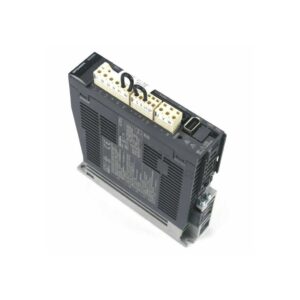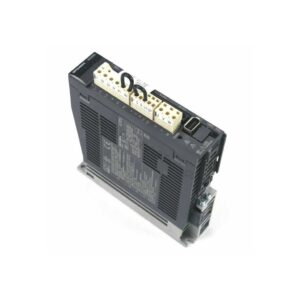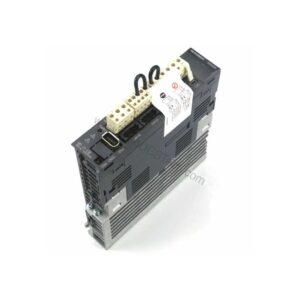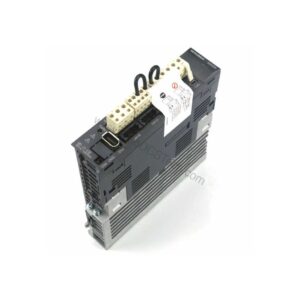
Siemens announced on 2 November 2026 a new extra-low-voltage drive pair for battery-powered mobile machines: the Sinamics E210 converter and Simotics E-1EE1 servomotors. The combination targets automated guided vehicles (AGVs), autonomous mobile robots (AMRs) and driverless transport systems running from 24 V or 48 V batteries. Siemens says the products are matched, the converter connects directly to the battery, and integration into TIA Portal and the SIMOVE modular system reduces engineering work and simplifies safety concepts.
The move matters because it puts Siemens hardware at the traction, steering, lifting and auxiliary axes of a mobile robot, not only at the cell controller. It is also a limited announcement. Siemens has published the architecture, the safety claim and the integration story, but not the electrical ratings, dimensions, environmental ratings, price or availability needed to select a drive. This article separates what is new from what is not, explains the engineering implications of a 24/48 V architecture, and lists what buyers should verify.
Quick answer
The new product is the Sinamics E210 converter. The Simotics E-1EE1 motor family is not new. It came to Siemens with the acquisition of ebm-papst Industrial Drive Technology, completed on 1 July 2025, and public catalog listings for E-1EE1 variants already existed before the November 2026 release. What is new is the coordinated E210 plus E-1EE1 package, the E210 itself, the shaft-height 40 to 63 extension described in the release, and the specification of an absolute 14-bit BiSS-C safety encoder with a dual-channel design supporting safety applications up to SIL 2.
The release is a platform announcement, not a datasheet. It does not publish power, current, input voltage tolerance, dimensions, weight, IP rating, ambient temperature, certifications, the list of safety functions, the TIA Portal version, price, lead time or orderability. Buyers should not infer any of those values from the marketing text.
Key takeaways
- Converter: Sinamics E210 is a compact regenerative converter for 24 V and 48 V battery systems. Siemens lists traction and wheel drives plus steering, lifting and auxiliary axes.
- Motor: Simotics E-1EE1 covers shaft heights 40 to 63, is designed for 24 V and 48 V, and is offered with an absolute 14-bit BiSS-C safety encoder, internal dual-channel design, electronic nameplate, optional holding brake, gearbox options and flexible connections.
- Safety: Siemens says the motor and encoder support safety-related applications up to SIL 2. The release does not list which safety functions are implemented or the achieved SIL or PL for each function.
- Integration: TIA Portal, PROFIsafe, PROFINET IRT and SIMOVE are named. No TIA Portal version or SIMOVE module compatibility list is published.
- Not new: The E-1EE1 family name and several catalog variants predate this release. The release does not say whether every variant is new or only the 40 to 63 shaft-height range.
- Not published: Power, torque, current, voltage window, dimensions, weight, IP rating, certifications, safety function list, price and availability.
- Buyer action: Request the datasheet, safety manual, battery voltage window, regenerative energy strategy and exact article number before designing the vehicle harness.
Sinamics E210: the converter layer
The Sinamics E210 is a compact regenerative converter designed specifically for battery-powered 24 V and 48 V applications. Siemens lists two groups of axes. The first is traction and wheel drives, where the converter has to deliver high torque at low speed, handle frequent direction changes and absorb energy during braking. The second is steering, lifting and auxiliary axes, where requirements vary: a steering axis needs smooth low-speed control, a lifting axis needs holding torque and safe load handling, and an auxiliary axis may run a pump, fan or conveyor.
Direct connection to the battery is the architectural centrepiece. In a conventional 400 V vehicle, the battery feeds a DC link, the drive inverts to a motor, and auxiliary loads need their own converters. In an ELV vehicle, the 24 V or 48 V battery can feed the drive directly, so there is no additional conversion stage between battery and motor. Removing a stage removes losses, cost, volume and a failure point. The qualification is that the converter input window has to match the battery chemistry and charge profile, and Siemens has not published that window.
Regenerative operation is the second architectural point. When a traction or wheel drive decelerates, the motor becomes a generator, and a regenerative converter can return that energy to the battery instead of dissipating it in a brake resistor. On a mobile robot, that can extend runtime and reduce thermal load in the chassis. The engineering question is what happens when the battery cannot accept the energy: when it is fully charged, cold or limited by the battery management system. The release does not state whether the E210 has an integrated brake chopper, how it coordinates with a battery management system, or what overvoltage strategy it uses.
Siemens also highlights compact design, high overload capability and flexible installation. Those are the properties that matter in a vehicle where the drive sits close to the wheel or lift mechanism, often in a space not designed for a drive. But without dimensions, weight, mounting positions, IP rating and thermal derating curves, the claim cannot become a layout. Designers should ask for the 3D model and the derating table before freezing the chassis.
Integrated safety and the network interface
The E210 is described as having integrated safety functions, PROFIsafe support and PROFINET IRT communication. PROFIsafe carries safety data over the same PROFINET cable as standard control data, reducing cabling and letting the vehicle use one network for motion, I/O and safety. PROFINET IRT adds isochronous real-time behaviour for coordinated motion, which matters when several axes must follow a common clock, for example a steering and traction pair or a lifting mechanism with synchronised columns.
Those features only work if the rest of the vehicle supports them. PROFIsafe requires a fail-safe controller and a safety program, such as a fail-safe SIMATIC S7-1200 like the CPU 1215FC or the smaller CPU 1212FC. PROFINET IRT requires IRT-capable switches and a planned topology; a daisy chain of unmanaged switches will not deliver deterministic motion. Siemens offers managed switches such as the 8-port managed switch and the 6-port managed IE switch, plus industrial connectors such as the 90-degree RJ45 connector for tight vehicle panels.
For distributed I/O on the vehicle, an IP67 block such as the ET 200eco PN can sit near the sensors and actuators instead of pulling every wire back to a central cabinet. For local diagnostics and manual control, an MTP1000 Unified Comfort Panel or a smaller KTP700 Basic Panel can be mounted on the vehicle. These are conventional Siemens components, not part of the E210 release, but they show the integration path the release points to.
Simotics E-1EE1: the motor and feedback layer
The Simotics E-1EE1 is a servomotor family for extra-low-voltage applications. Siemens describes the new motors as covering shaft heights 40 to 63 and extending the portfolio into higher power and torque ranges. The motors are designed for 24 V and 48 V systems and are matched to the E210. The target is dynamic mobile equipment, where the motor has to deliver torque quickly, survive vibration and fit into a compact wheel or lift assembly.
The most important technical detail is the feedback system. Siemens specifies an absolute 14-bit BiSS-C safety encoder and an internal dual-channel design that supports safety-related applications up to SIL 2. A 14-bit absolute encoder provides 16,384 positions per revolution, or about 0.022 degrees per count. That is sufficient for many traction and wheel applications, especially when a gearbox multiplies resolution at the output. It may be less than ideal for a direct-drive steering axis that needs very fine angular control, and the release does not state whether the encoder is single-turn or multi-turn. Designers should calculate the required resolution at the output shaft, including gearbox ratio and backlash, before assuming 14 bits is enough.
The dual-channel design is what makes the encoder relevant to functional safety. A single-channel encoder can report position, but it cannot by itself support a safety function because a failure may be undetected. A dual-channel encoder with internal monitoring gives the drive two independent position signals to compare. That is the foundation of safe speed, safe position and safe direction monitoring. It is not a complete safety function: the converter, motor, wiring, safety program and validation all contribute to the achieved SIL or PL.
The electronic nameplate is a practical commissioning feature. The E210 can read motor data automatically, removing manual entry of rated current, torque constant, encoder resolution and other parameters. That reduces typing errors and shortens commissioning, especially when a vehicle uses several identical motors. The release does not say whether the nameplate includes safety-relevant parameters, firmware compatibility data or gearbox identification. Buyers should confirm what is read, what is written and what still has to be configured manually.
The options are a holding brake, various gearboxes and flexible connection technology. A holding brake is not the same as a safety brake. It is designed to hold a load at standstill, not necessarily to stop a moving load or provide a safe braking function. If the vehicle needs a safe stop or a safe holding function, the brake has to be selected, rated and controlled as part of the safety function. The release does not state the brake torque, control interface or whether the brake can be used in a safety function.
Teams comparing the E-1EE1 with a conventional servo axis should note that Siemens offers separate feedback and cable families, such as the 6FX2001-5FP24 encoder and the V90 servo encoder cable. Those are not E-1EE1 accessories, but they show the component ecosystem a machine builder may already have. The E-1EE1 is different because encoder, motor and converter are specified as one matched ELV system.
What is actually new, and what is not
The release uses the phrase new Simotics E-1EE1 servomotors, which can easily be read as a new motor family. The history is more nuanced. Siemens completed the acquisition of ebm-papst Industrial Drive Technology on 1 July 2025 and integrated the business into the Simotics E portfolio. Siemens communication at the time named two families: the E-1EE1 with an inner-rotor brushless design for battery-powered conveying, warehousing and sorting systems, and the E-1EV1 with an outer-rotor design for compact logistics robots. Both were offered in 24 V and 48 V versions.
Public catalog listings also show that E-1EE1 variants existed before the November 2026 release. The Siemens Industry Mall lists variants with rated torques including 0.12 Nm and 1.6 Nm and a 720 W, 48 V variant, among others. Some listings show incremental encoders, for example a 100 pulses-per-revolution TTL encoder, while the new release specifies an absolute 14-bit BiSS-C safety encoder. That difference suggests the encoder is a selectable option or that the release describes a new variant, not that every E-1EE1 in the catalog has the new safety encoder.
| Element | Status | Evidence |
|---|---|---|
| Sinamics E210 converter | New | Introduced in the 2 November 2026 release as a new converter |
| E210 plus E-1EE1 matched package | New | The release describes the products as a coordinated ELV drive solution |
| Simotics E-1EE1 family | Not new | Acquired with ebm-papst IDT on 1 July 2025 and already listed in Siemens catalogs |
| Shaft heights 40 to 63 | Described as a new extension | The release says Siemens is expanding into higher power and torque ranges |
| Absolute 14-bit BiSS-C safety encoder | Specified in this release | Earlier catalog variants list incremental encoders, so the exact article number matters |
| SIL 2 safety claim | Specified in this release | The release says up to SIL 2; the SIMOTICS E system page elsewhere refers to SIL 3 and PL e |
The practical consequence is that buyers should not assume a new release means a new article number for every motor. They should ask for the product change notification, the current catalog section and the exact ordering code that combines the desired shaft height, winding, encoder, brake, gearbox and connection. The release is a system story; the catalog is the transaction document.
Why 24 V and 48 V matter in mobile robots
Mobile robots use 24 V and 48 V batteries for three reasons. The voltage is low enough to simplify touch protection and service procedures, the components are widely available, and the battery can be built from standard cells. The difference between 24 V and 48 V is mostly current. For the same mechanical power, doubling the voltage halves the current. That reduces resistive losses in cables and connectors, reduces heat, and allows smaller conductors.
The table shows ideal current at several power levels. It ignores efficiency and peak overload, so real currents will be higher, but it shows why 48 V becomes attractive as power grows.
| Mechanical power | Ideal current at 24 V | Ideal current at 48 V | Typical use |
|---|---|---|---|
| 250 W | 10.4 A | 5.2 A | Small auxiliary axis or low-power wheel drive |
| 750 W | 31.3 A | 15.6 A | Traction or lifting axis on a compact AGV |
| 1,500 W | 62.5 A | 31.3 A | Heavy traction or fast lift; cable and connector sizing becomes critical |
| 3,000 W | 125 A | 62.5 A | Large vehicle; 24 V is usually impractical because of current and losses |
The battery voltage is not a single number. A nominal 24 V lead-acid battery has two 12 V blocks and a charging voltage around 28.8 V. A nominal 48 V lead-acid battery has four blocks and a charging voltage around 57.6 V. A 13-cell lithium-ion battery has a nominal voltage around 48 V and a full-charge voltage around 54.6 V. A 16-cell lithium iron phosphate battery has a nominal voltage around 51.2 V and a full-charge voltage around 58.4 V. All are usually described as 48 V systems, but their voltage windows differ. The E210 input window is not published, so the battery chemistry and charge profile must be checked against the datasheet, not the nominal label.
Regenerative braking adds another voltage consideration. When the drive returns energy, battery voltage rises. If the battery is full or cold, or if the battery management system limits charge current, voltage can rise further. The converter needs enough headroom, a brake chopper or a coordination strategy with the battery management system. Siemens describes the E210 as regenerative but does not describe the overvoltage strategy. That is a question for the datasheet and for a test with the actual battery.
Cabling is the other practical constraint. At 48 V and 1,500 W, ideal current is about 31 A; with efficiency and peak overload, the harness may see 40 A or more. At 24 V, the same power needs about 63 A ideal and more in practice. Connectors, fuses, contactors and cable glands must be rated for continuous current and fault current. A 24 V system is not automatically safer just because the voltage is low; the energy available during a short circuit can still be significant.
For test benches and auxiliary circuits, Siemens offers 24 V supplies such as the SITOP 24 V 10 A supply and the 4-channel selectivity module. A selectivity module is useful when several 24 V branches feed sensors, controllers and cooling fans, because a fault in one branch should not take down the whole vehicle. Motor protection and switching on a test bench can use a motor protection circuit breaker and a 24 V DC contactor. More options are listed in the power supplies category and the sensors and instrumentation category.
Safety: what SIL 2 does and does not mean
The release says the E-1EE1 encoder and its internal dual-channel design support safety-related applications up to SIL 2. SIL 2 is a safety integrity level from IEC 61508. In the machinery world it is often compared with Performance Level d under ISO 13849-1. The concepts are related but not identical: SIL is a probabilistic target for a safety function, while PL is a category-based measure that includes architecture, diagnostics and component reliability. A drive component suitable for SIL 2 does not make the whole AGV a SIL 2 machine. The vehicle manufacturer still has to define each safety function, calculate the achieved PL or SIL, validate the function and document the result.
The relevant standards for a driverless industrial truck are ISO 3691-4:2023, which covers safety requirements and verification for driverless industrial trucks and their systems, and EN 1175:2020, which covers electrical requirements for battery-powered industrial trucks. ISO 13849-1:2023 provides the general methodology for safety-related control systems. Typical AGV safety functions include safe stop, safe speed, safe direction, safe load handling and protective-stop functions linked to safety laser scanners or bumpers. The release lists integrated safety functions and PROFIsafe but does not say which functions are implemented in the E210, what their SIL or PL is, or what the safe state is.
That gap matters because the safety architecture is distributed. The drive may provide safe torque off, safe brake control or safe speed monitoring; the controller may provide the safety logic; the scanner may provide the protective field signal; the brake may provide the holding function. The achieved SIL or PL depends on the weakest part of the chain and on validation of the complete function. A buyer who reads SIL 2 on the motor page and assumes the vehicle is SIL 2 has skipped the most important engineering step.
There is also a documentation discrepancy worth flagging. The Siemens SIMOTICS E system page markets the platform as supporting safety functions according to SIL 3 and PL e, while the E210 release specifies SIL 2 for the E-1EE1 encoder and dual-channel design. Those claims can coexist only if they refer to different scopes, for example a complete system with a different encoder or converter. The release does not explain the difference. Buyers should ask for a written clarification that maps each safety function to its achieved SIL or PL, its PFHd, its proof-test interval and its safety manual reference.
The optional holding brake deserves separate attention. A holding brake is normally rated for static holding, not dynamic emergency stopping. If the vehicle needs a safe stop under load, the brake may need to be a safety brake with a defined dynamic rating and dual-channel control. The release says the brake is optional but does not give its torque, response time, control voltage or safety rating. Those details determine whether the brake can be part of a safety function or only a parking function.
For the safety controller, Siemens offers fail-safe S7-1200 CPUs and safety-related drive control units such as the CU240E-2 PN-F for conventional Sinamics drives. The E210 is a different product, but the principle is the same: the safety function is engineered across controller, drive and feedback, not inside a single component. More background is available in the safety and protection category.
Integration: TIA Portal, PROFINET IRT, PROFIsafe and SIMOVE
Siemens says the E210 integrates into TIA Portal and the SIMOVE modular system, and that this lets the converter be incorporated into higher-level automation and vehicle concepts. The phrase covers several tasks. In TIA Portal, the drive is configured, commissioned and diagnosed. With PROFINET IRT, it participates in an isochronous network. With PROFIsafe, it exchanges safety data with a fail-safe controller. With SIMOVE, the vehicle is integrated into a higher-level fleet or carrier control system.
The SIMOVE portfolio is Siemens' modular software and hardware platform for AGVs and AMRs. It includes carrier control for line-guided, track-guided and RFID-based vehicles, a fleet manager for heterogeneous fleets, and navigation modules such as SIMOVE ANS+ for laser-based navigation. Siemens states that the fleet manager can manage vehicles using different communication protocols, including VDA 5050. That matters because many logistics operators do not want a single-vendor fleet; they want to add vehicles from different suppliers to an existing management system. The E210 release does not say which SIMOVE modules are qualified with the drive, or whether the drive exposes the data a fleet manager needs for battery state, energy consumption and fault diagnosis.
The network design is part of the integration. PROFINET IRT requires a planned topology with IRT-capable switches, and the vehicle harness should keep the network short and well shielded. Managed switches and industrial connectors, in the ethernet switches category and the communication modules category, provide diagnostics and segmentation. For cybersecurity, a SCALANCE S602 firewall module can separate the vehicle network from the plant network.
Cybersecurity is no longer separate from safety. The EU Machinery Regulation 2023/1230, which applies from 20 January 2027 and replaces the Machinery Directive 2006/42/EC, brings safety-related software and connected machinery into conformity assessment. A vehicle that can be updated remotely or connected to a fleet manager needs access control, software version management and protection against unintended commands. Siemens mentions cybersecurity in the E210 release, but does not list concrete features. That is another item for the technical file.
For the control layer, the E210 can be paired with a SIMATIC S7-1200 controller such as the CPU 1215C, with distributed I/O such as the ET 200eco PN, and with an onboard HMI. The exact controller choice depends on the number of axes, the safety functions and the cycle time, none of which the release specifies. More options are listed in the PLC and I/O modules category and the HMIs and operator panels category.
ELV engineering checklist for AGV and AMR designers
The release is a starting point, not a design. The following checklist turns the announcement into the questions that determine whether the E210 and E-1EE1 fit a specific vehicle.
- Battery voltage window. Confirm minimum, nominal and maximum battery voltage, including charge, regen and low-temperature conditions. Compare them with the E210 input range, not the 24 V or 48 V label.
- Regenerative energy path. Confirm how the converter handles braking energy when the battery is full, cold or charge-limited. Ask whether a brake chopper or resistor is required.
- Continuous and peak current. Calculate current for the worst-case grade, acceleration and payload. Compare it with the E210 continuous and overload ratings at the actual ambient temperature and mounting position.
- Cable and connector rating. Size conductors for continuous current, voltage drop and fault current. Check connector, fuse, contactor and gland ratings. At 24 V, high current makes this a first-order design task.
- Thermal and IP rating. Confirm ambient temperature, mounting orientation, airflow and the IP rating of drive and motor. A compact drive in a sealed chassis may derate significantly.
- Encoder resolution and safety. Calculate the required resolution at the output shaft. Confirm whether the 14-bit encoder is single-turn or multi-turn, how the dual-channel signals are monitored, and which safety functions use them.
- Brake function. Decide whether the brake is a holding brake or a safety brake. Check dynamic rating, response time, control interface and diagnostic coverage. Do not assume an optional holding brake is a safe brake.
- Safety validation. Define each safety function, calculate the achieved PL or SIL, verify PFHd and proof-test interval, and document the validation. The motor SIL 2 claim is an input, not the result.
- EMC and grounding. Plan motor cable shielding, PE bonding, filter placement and separation between power and signal cables. Regenerative drives can inject noise into the vehicle network.
- Lifecycle and spares. Confirm lifecycle status, article numbers, firmware update path, spare-part strategy and lead time. A new platform may not have distribution stock in every region.
What the announcement does not say
The most useful part of the release for a technical buyer is the list of things it leaves out. The table below is a due-diligence list, not a criticism. Platform launches often precede datasheets, and Siemens may publish details later.
| Decision area | Missing data | Why it matters |
|---|---|---|
| Power and torque | Continuous and peak power, torque, current ratings | Determines whether the drive can climb, accelerate and lift the load |
| Electrical input | Input voltage window, tolerance, ripple, inrush, regen behaviour | Determines compatibility with battery chemistry and charge profile |
| Mechanical and thermal | Dimensions, weight, mounting pattern, IP rating, ambient temperature, derating curves | Determines whether the drive fits and how much continuous torque it can deliver |
| Feedback | Single-turn or multi-turn, accuracy, repeatability, safety data | Determines positioning performance and safety function capability |
| Safety | Safety function list, SIL or PL per function, PFHd, proof-test interval, safety manual | Determines whether the vehicle can meet ISO 3691-4 and the machinery regulation |
| Brake and gearbox | Holding or safety brake, torque, response time, ratios, backlash, efficiency | Determines stopping, holding and positioning performance |
| Integration and commercial | TIA Portal version, firmware, SIMOVE module list, telegrams, cybersecurity, price, lead time, lifecycle | Determines engineering effort, compatibility and sourcing |
E210 versus SIMATIC MICRO-DRIVE: the overlap buyers should clarify
Siemens already sells an extra-low-voltage converter family under the SIMATIC MICRO-DRIVE name. Public catalog information describes 24 V to 48 V operation, a family power range from about 100 W to 1,000 W, PROFINET and PROFIsafe support, integrated braking choppers on some modules, and hardware STO with different SIL levels depending on the module. Some modules are 20 mm wide and integrate into TIA Portal. That description overlaps with the E210's target application, at least at the low-power end.
The E210 release does not explain how the new converter relates to SIMATIC MICRO-DRIVE. It does not say whether the E210 replaces a MICRO-DRIVE module, complements it, sits above it in power or below it in cost. It does not say whether the engineering telegrams, safety functions or firmware tools are shared. That is a significant gap for any customer with an existing MICRO-DRIVE design, because a platform decision made today may affect spare parts and engineering reuse for years. The two families may serve different segments, but Siemens should provide a positioning matrix before a customer can choose between them with confidence.
Who should care, and what to do next
AGV and AMR OEMs designing a new 24 V or 48 V platform should treat the E210 as a candidate for traction, steering, lifting and auxiliary axes. The value proposition is a matched converter and motor with integrated safety, PROFINET IRT and TIA Portal engineering, plus a path into SIMOVE for fleet integration. The risk is that published data is not yet sufficient to size the drive. Request the datasheet and safety manual before committing the chassis layout. Teams that keep a 400 V architecture can compare conventional drives such as the Sinamics V20 or older MASTERDRIVES converters, but the ELV value proposition depends on removing the DC-DC stage. More conventional options are listed in the VFD drives category.
System integrators retrofitting an existing vehicle should check whether the E210 is a drop-in replacement for the current drive, or whether motor, encoder, harness and safety program also change. The release does not describe a retrofit kit or migration path. A retrofit may be attractive if the vehicle already uses PROFINET and a fail-safe controller; it may be uneconomic if the vehicle uses a different network or a central safety relay.
Exporters to the European Union should plan for the Machinery Regulation 2023/1230, which applies from 20 January 2027. The regulation replaces the Machinery Directive, adds cybersecurity obligations for connected machinery and requires a technical file covering safety-related software. A drive with SIL 2 capability helps, but the vehicle manufacturer remains responsible for CE marking, risk assessment and the declaration of conformity.
For broader context on how Siemens is positioning automation and robotics, see our coverage of GTC Berlin 2026 and physical AI deployment, the Mengying AMHS acquisition and motion control patents, and the Rockwell SecureOT and EU Machinery Regulation analysis. For a drive comparison at the conventional 400 V end, see our article on the Nidec Commander S 11 kW extension. The Siemens brand page and the servo drives category list the conventional products that teams often compare with an ELV platform.
Bottom line
The Sinamics E210 and Simotics E-1EE1 announcement is a credible step into the traction and motion layer of mobile robots. Siemens is combining a regenerative 24/48 V converter, a motor family with a safety encoder, PROFIsafe and PROFINET IRT, TIA Portal engineering and the SIMOVE fleet platform. For an OEM that already uses Siemens automation, that combination can reduce the number of suppliers and the engineering effort behind a vehicle.
The announcement is not yet a specification. The absence of power, current, voltage window, dimensions, IP rating, safety function list, price and availability means the E210 cannot be selected from the release alone. The E-1EE1 family is also older than the headline suggests, and the catalog contains encoder variants that differ from the new safety encoder. Buyers should welcome the platform direction and then ask for the documents that turn it into a design: datasheet, safety manual, battery compatibility statement, regenerative energy strategy, exact article numbers and lifecycle plan.
Frequently asked questions
What is the Sinamics E210?
The Sinamics E210 is a compact regenerative converter from Siemens for 24 V and 48 V battery systems. Siemens lists traction and wheel drives, steering, lifting and auxiliary axes as target applications. The converter connects directly to the battery, supports PROFIsafe and PROFINET IRT, and integrates into TIA Portal and the SIMOVE modular system. Siemens has not published its power, current, dimension or price data.
What is the Simotics E-1EE1?
The Simotics E-1EE1 is a servomotor family for extra-low-voltage mobile applications. The release describes shaft heights 40 to 63, 24 V and 48 V operation, an absolute 14-bit BiSS-C safety encoder, an internal dual-channel design for safety applications up to SIL 2, an electronic nameplate, optional holding brakes, gearbox options and flexible connections. The release does not publish torque, speed, power or efficiency ratings.
Is the Simotics E-1EE1 a brand new motor?
No. The E-1EE1 family came to Siemens with the acquisition of ebm-papst Industrial Drive Technology, completed on 1 July 2025. Siemens catalogs already listed E-1EE1 variants before the November 2026 release. The new announcement presents a coordinated package with the Sinamics E210 converter and describes an extension into shaft heights 40 to 63 and higher power and torque ranges. Buyers should check the exact article number.
What does SIL 2 mean for an AGV drive?
SIL 2 is a safety integrity level from IEC 61508. It describes the reliability target of a safety function, not of a single component in isolation. The E-1EE1 encoder and its dual-channel design support safety-related applications up to SIL 2, but the vehicle manufacturer must still define each safety function, calculate the achieved SIL or PL, validate the complete chain and document the result. The release does not list the implemented safety functions.
Does the Sinamics E210 replace the SIMATIC MICRO-DRIVE?
Siemens has not said. The release does not explain how the E210 relates to the existing SIMATIC MICRO-DRIVE family, which also operates at 24 V to 48 V and covers a power range around 100 W to 1,000 W in catalog data. The E210 may complement, replace or sit above that family. Buyers with an existing MICRO-DRIVE design should ask for a positioning matrix, lifecycle plan and compatibility statement.
What should buyers verify before specifying the E210 and E-1EE1?
Buyers should verify the battery voltage window, the regenerative energy strategy, continuous and peak current, cable and connector ratings, thermal derating, IP rating, encoder resolution and safety functions, brake type, safety validation, EMC and lifecycle. They should also request the datasheet, safety manual, exact article numbers, price, lead time and availability. The announcement does not publish these values, so they must come from Siemens documentation and a test with the actual battery.
Sources and further reading
- Siemens press release, 2 November 2026: Siemens launches new ELV drive solution for AGVs and mobile robotics
- Siemens news, acquisition completed: Siemens completed the acquisition of ebm-papst Industrial Drive Technology
- Siemens SIMOTICS E system page: SIMOTICS E drive system
- Siemens, SIMOTICS E drive system product page: SIMOTICS E extra-low-voltage motors
- Siemens, SIMATIC MICRO-DRIVE product page: SIMATIC MICRO-DRIVE extra-low-voltage converters
- Siemens events page, SPS 2026: Siemens at SPS 2026, 24 to 26 November, Nuremberg, Hall 11
- European Union: Regulation (EU) 2023/1230 on machinery, applicable from 20 January 2027
- Standards: ISO 3691-4:2023, EN 1175:2020, ISO 13849-1:2023, IEC 61508, VDA 5050
Related components
- 6ES7212-1HF40-0XB0 Siemens CPU 1212FC DC/DC/Relay
- Schneider TSXETG100 RJ45 10/100 Mbps Ethernet Modbus Gateway Module
- 6XV1871-5TH20 2m IE Connecting Cable M12/RJ45
- 6GK7443-1EX30-0XE0 2-Port RJ45 CP 443-1 Communications Processor
- 6GK1901-1BB20-2AA0 90° RJ45 Industrial Ethernet Connector
- 6GK1901-1BB10-2AA0 RJ45 Plug 180 2x2 | Siemens IE FC
Browse by brand: Siemens · Schneider Electric
More in News
Looking for E210?
Browse genuine E210 units, specifications, and pricing — or request a quote from our automation specialists.
View E210 Products & Get a Quote →